A shirt size chart lists chest width and body length for each size, so measure a shirt that already fits and match it. For a group order, a typical adult split is about 14% Small, 25% Medium, 28% Large, 21% XL, 9% 2XL and 3% 3XL+. Here's how to measure, the charts, and how to collect sizes without a spreadsheet.
Ordering shirts for one person is easy. Ordering for 60 people is where sizing gets real. Someone's always swimming in an XL, someone else can't lift their arms, and three people never answered the email.
This guide gives you a simple shirt size chart, shows you how to measure, explains how women's and youth sizes differ, and then gets into the part we help with every week: how many of each size to order for a group, and how to collect sizes without losing your mind.
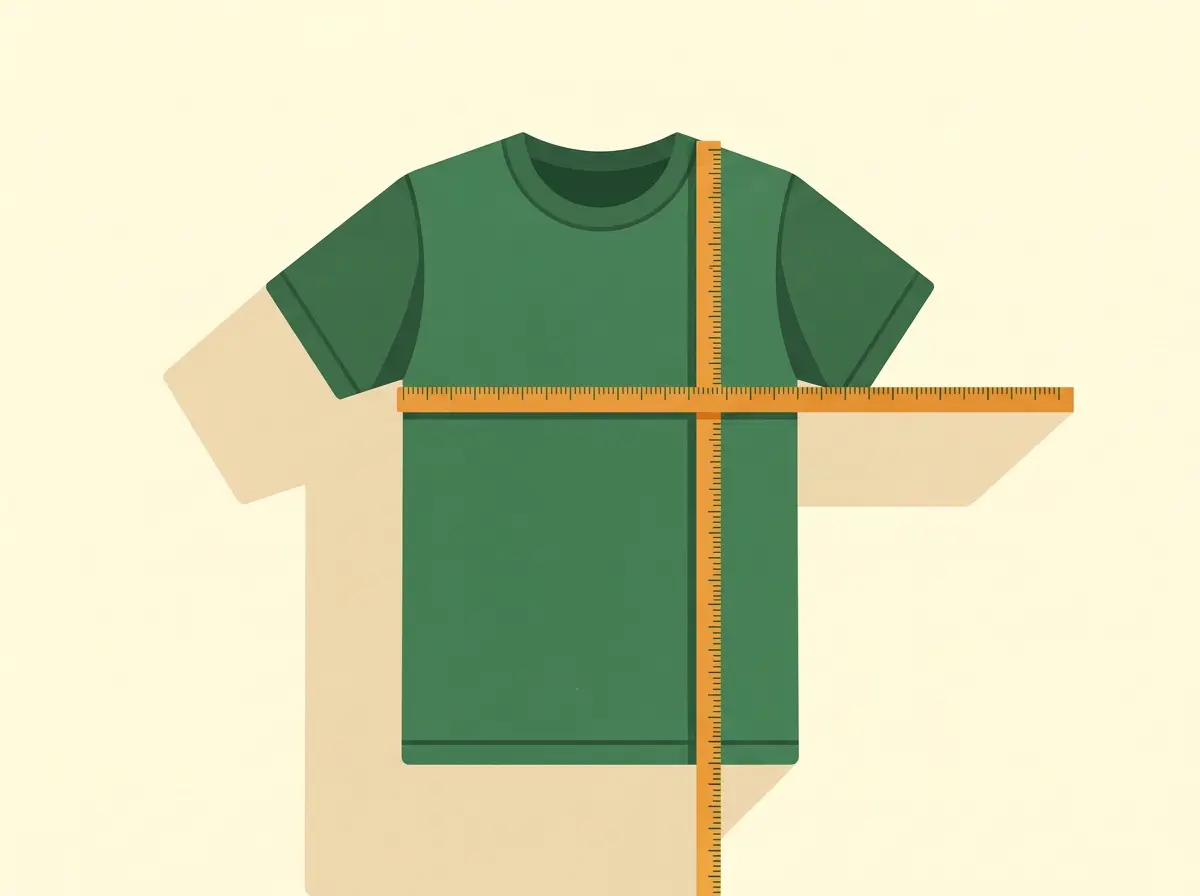
How to read a shirt size chart
A shirt size chart lists two key measurements for each size: chest width (measured flat, armpit to armpit) and body length (from the top of the shoulder to the hem). To find your size, lay a shirt that fits you well flat, measure it, and pick the size with the closest numbers.
That's the trick most people skip. Don't measure your body and guess. Measure a shirt you already love wearing, and match it.
How to measure a shirt
Chest width: Lay the shirt flat and smooth. Measure straight across, one inch below the armpits, from side seam to side seam.
Body length: Measure from the highest point of the shoulder (where the collar meets the seam) straight down to the bottom hem.
Sleeve length (optional): From the shoulder seam to the end of the sleeve. Mostly matters for long sleeves.
If you're between two sizes, size up. Cotton shirts shrink a little in the wash, and almost nobody complains that their shirt is a touch roomy.
Adult unisex t-shirt size chart
Here's a typical adult unisex tee. These are garment measurements (the shirt laid flat), plus the body chest each size usually fits.
| Size | Chest width (flat) | Body length | Fits body chest |
|---|---|---|---|
| S | 18 | 28 | 34–37 |
| M | 20 | 29 | 38–41 |
| L | 22 | 30 | 42–45 |
| XL | 24 | 31 | 46–49 |
| 2XL | 26 | 32 | 50–53 |
| 3XL | 28 | 33 | 54–57 |
Quick way to use it: each size up adds about 2 inches across the chest (4 inches around). So if your Large feels a bit snug, an XL gives you real room, not just a little.
Fit also changes by style. A slim, fashion-fit tee runs about a size smaller than a classic heavyweight tee. Polos and hoodies have their own charts, too. That's why we always send the exact chart for the specific garment before you collect sizes.
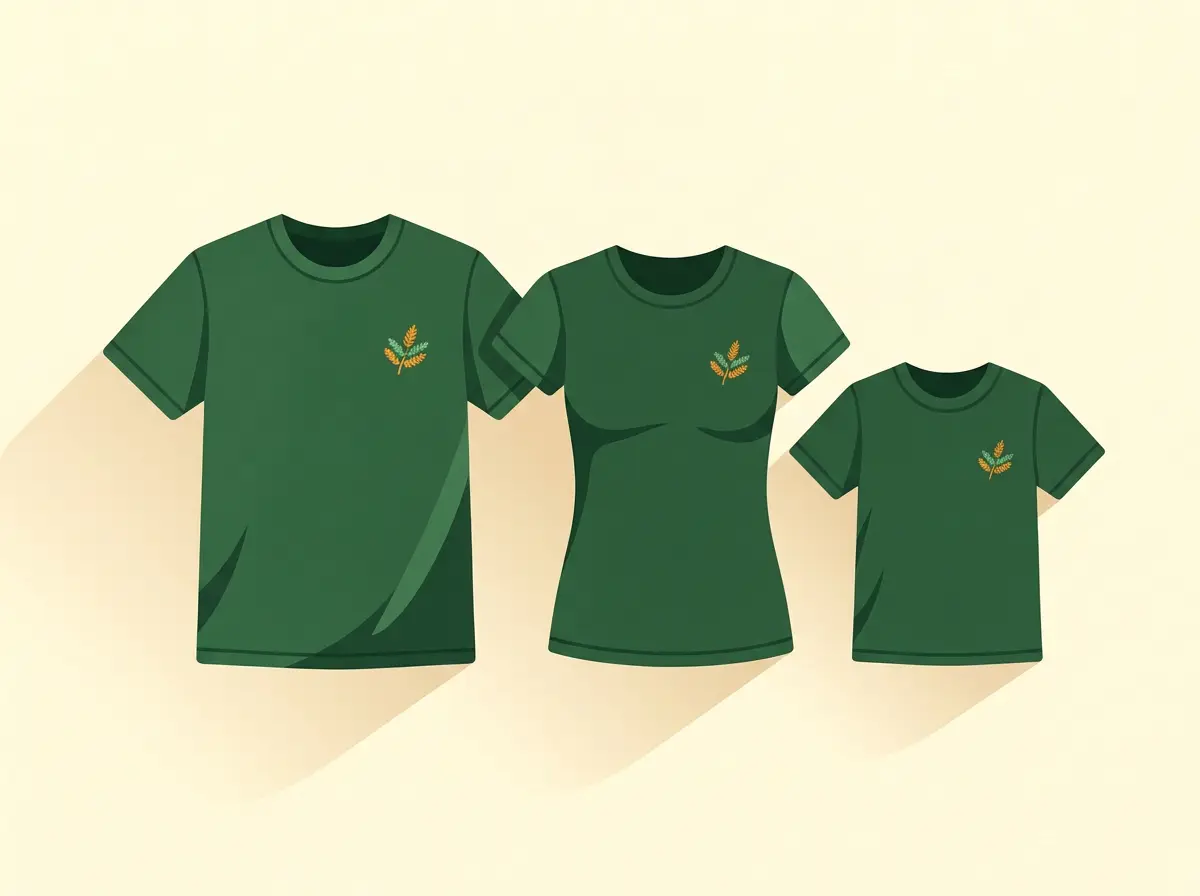
Women's and youth sizing
Women's vs unisex
Unisex sizing is really men's sizing. A women's fitted tee runs about one to two sizes smaller than unisex, with a shaped waist, shorter sleeves, and often a slightly longer body. A woman who wears a women's Large often wears a unisex Medium.
For a group order, offer both and ask people to pick a style and a size together, like "Women's M" or "Unisex L." It cuts down on swaps a lot.
Youth sizes
Youth shirts are sized by age range, roughly:
| Youth size | Typical age | Chest width (flat) |
|---|---|---|
| XS | 4–5 | 15 |
| S | 6–8 | 16 |
| M | 10–12 | 17 |
| L | 14–16 | 18 |
| XL | 18–20 | 19 |
A Youth XL is close to an Adult Small, so teens often move to adult sizes around middle school. For kids' events, tell parents to size up. A slightly big shirt still gets worn. A tight one doesn't. Our VBS shirts guide has more tips for kids' orders.
How many of each size to order for a group
If you can't collect real sizes (for a giveaway, an event, or a fundraiser with walk-up sales), use a typical size split. Here's what an adult group usually looks like:
| Size | Share | Per 100 shirts |
|---|---|---|
| S | 14% | 14 |
| M | 25% | 25 |
| L | 28% | 28 |
| XL | 21% | 21 |
| 2XL | 9% | 9 |
| 3XL+ | 3% | 3 |
Then adjust for your crowd:
Trade crews and construction: shift up. More XL and 2XL, fewer Smalls.
Mostly women, or a fitted style: shift down a size, or split the order between women's and unisex.
Students and young adults: more Small and Medium.
Churches and family events: add youth sizes and a few 3XL. Every age shows up.
One tip: order 5 to 10% extra in M, L, and XL for late additions. It's much cheaper than a reprint of six shirts later.
Sizing mistakes we see a lot
Using one chart for every garment. A tee, a polo, and a hoodie from the same brand can fit differently. Collect sizes for the exact garment you're ordering.
Skipping 2XL and up. Bigger sizes are usually a few dollars more for the blank shirt, so some people leave them off to save money. Then the people who need them don't get a shirt. Include them, and budget for them upfront.
Mixing up women's and unisex. If the form just says "size," half your women's Mediums will really mean unisex Small. Ask for style and size together.
Guessing for people who didn't answer. Use your default size instead of guessing. It's consistent, and nobody can say you picked wrong.
How to collect shirt sizes without a spreadsheet
Collecting sizes is the part everybody dreads. Here's what makes it painless:
1. Send the chart with the ask. Include the actual size chart for the shirt you picked, plus "measure a shirt you love." People pick better when they can see numbers.
2. Use a form, not an email thread. A quick online form with name, style, and size drops everything into one list. No reply-all chaos.
3. Set a real deadline. "Sizes due Friday." Then follow up once.
4. Pick a default. Anyone who doesn't answer gets a Large (or whatever fits your crowd). Tell people that upfront. It works like magic.
5. Order a few extras. See above. Someone always gets hired, joins, or spills coffee on theirs.
Skip the size collecting entirely with an online store
If you order shirts for your team more than once or twice a year, there's an easier way. An online company store lets every person pick their own style and size and get it shipped. You approve the garments once, and nobody has to collect anything again. New hires order on day one, no minimum.
For a one-time group order, we're happy to help with sizes too. Send us your headcount and who the group is, and we'll suggest a size split along with a free mockup and quote. Printed tees start at 48 pieces (smaller runs as DTF), and embroidery starts at 12. Check out our custom work shirts and custom polo shirts, or just get in touch!
Frequently asked questions
- How do I know my shirt size?
- Lay a shirt that fits you well flat and measure the chest from armpit to armpit and the length from the shoulder to the hem. Pick the size on the chart with the closest numbers. If you're between sizes, size up.
- What size is a medium shirt?
- A typical unisex Medium tee measures about 20 inches across the chest laid flat and 29 inches long, and fits a 38 to 41 inch body chest. Every brand varies a little.
- Do women's shirts run smaller than unisex?
- Yes. A women's fitted tee usually runs one to two sizes smaller than unisex, with a shaped waist and shorter sleeves. A women's Large is often close to a unisex Medium.
- How many of each size should I order for a group?
- A typical adult group splits about 14% Small, 25% Medium, 28% Large, 21% XL, 9% 2XL and 3% 3XL and up. Shift up for trade crews, down for mostly women, and add 5 to 10% extra in M, L and XL.
- Is a youth XL the same as an adult small?
- They're close. A youth XL is roughly the same chest width as an adult Small but often a bit shorter. Teens usually move into adult sizes around middle school.
- How do I measure a shirt for size?
- Lay it flat. Measure straight across one inch below the armpits for chest width, and from the highest point of the shoulder to the hem for body length.
Got a project in mind?
Send us your idea and quantities — we'll come back with a free mockup and quote.
Bulk runs start at 48 pieces. Embroidered polos are $26 each at 48, printed tees about $12.