T-shirt fundraiser ideas that actually raise money — the three formats, what you clear per shirt, and how to collect sizes without chasing people.
How does a t-shirt fundraiser work?
You design a shirt, sell it above what it costs to make, and keep the difference. A shirt that costs $9 to produce and sells for $22 nets you $13. Sell 100 and you've raised $1,300 — plus a hundred people are now walking billboards for your cause.
That's the appeal. Unlike a car wash or a bake sale, a shirt keeps working after the event is over. But the margin depends almost entirely on which format you run, and that's the part most groups get wrong. So let's start there.

The three ways to run a t-shirt fundraiser
1. Bulk pre-order — the highest margin
Collect orders and money first, then place one bulk print run. Because everything prints at once, your per-shirt cost drops hard — this is where screen printing gets cheap. Best margin of the three, and zero risk, because you never print a shirt nobody paid for.
The tradeoff is legwork. Somebody has to collect sizes, chase payments, and hand out shirts at the end. If you've got a committed group — a team, a class, a congregation — this is almost always the right call.
2. Online store — the lowest effort
You get a link. People order and pay individually, shirts get made on demand, and you collect the profit at the end. No sizes to collect, no money to chase, no leftover boxes in somebody's garage.
Margin per shirt is lower, because each shirt is produced individually rather than in a run. But it scales past your own network — you can text the link to alumni, grandparents, and people three states away, which a paper sign-up sheet can't reach. If your group is spread out or nobody has time to run collections, take the lower margin. An online store that anyone can order from all season beats a perfect bulk order that never gets organized.
3. Buy inventory and sell it
Print a bulk run up front and sell shirts at games, services, or events. Great impulse sales and instant gratification for the buyer — but you're carrying the risk. Guess sizes wrong and you eat the leftovers.
If you go this way, order conservatively and lean on mediums and larges. My honest advice: run a pre-order first, then buy a small extra batch of the sizes that sold best. You get the impulse sales without gambling on the whole run.

The money: what you will actually clear
Here's the math in plain terms. Your profit per shirt is selling price minus production cost, and production cost moves with quantity and color count.
A simple one- or two-color design on a standard cotton tee, printed in a run of 50 to 100, generally lands somewhere in the $8 to $12 range per shirt. Add colors, upgrade to a soft premium blend, or drop your quantity to a dozen and that number climbs.
Most groups price fundraiser shirts at $20 to $25. That's the sweet spot — high enough for a real margin, low enough that nobody hesitates. Above $30 you start losing casual buyers who were mostly supporting the cause anyway.
So a realistic pre-order looks like: 100 shirts at $10 each to make, sold at $22, netting $1,200. That's a good day. And the two rules that protect it: never price below double your cost, and get your quote before you set your price, not after. It's a rough conversation to discover your margin is $4 when you already told everyone $18.
One more thing worth saying plainly — ask your printer what the price includes. Setup, screens, art fees, and shipping should all be on the table before you commit. We put ours in the quote so there's nothing to discover later.

10 t-shirt fundraiser ideas that work
The shirts that sell are the ones people would wear even without the cause attached. Here are the campaigns we see succeed most often.
1. Spirit wear drive
The reliable classic. School colors, mascot, one shirt everyone wants for game day. Run it before the season starts, not halfway through. More on this in our school spirit wear guide.
2. Class year or graduation tee
Built-in urgency and a built-in keepsake. Seniors buy these without being asked twice, and so do parents and grandparents.
3. Mission trip or service project
Sell the shirt to fund the trip, and the team wears it while they serve. Supporters get a tangible connection to something they helped pay for. Very popular with the churches we work with.
4. Memorial or tribute shirt
Handle with care, but these matter enormously to the families involved. Keep the design simple and dignified, and give people a long enough window to order.
5. Medical or family support drive
A community rallying around one family. These often outsell everything else because the buyer knows exactly where the money goes.
6. Design contest
Let students or members submit designs and vote on a winner. You get free creative, and every person who entered becomes a promoter of the shirt.
7. Event or race shirt
5Ks, tournaments, VBS, camp. Bundle the shirt into the registration fee and your sell-through rate goes to nearly 100%.
8. Anniversary or milestone tee
A church's 25th year, a club's 50th. Limited-edition framing gives people a reason to buy now instead of later.
9. Booster or sponsor shirt
Local businesses sponsor the run and get their name on the back. The shirts can end up nearly free to produce, which means almost all of the sale price is profit.
10. Seasonal or holiday design
A fall or Christmas design with a hard cutoff date. Deadlines sell shirts. An open-ended campaign quietly dies.
Designing a shirt people actually want
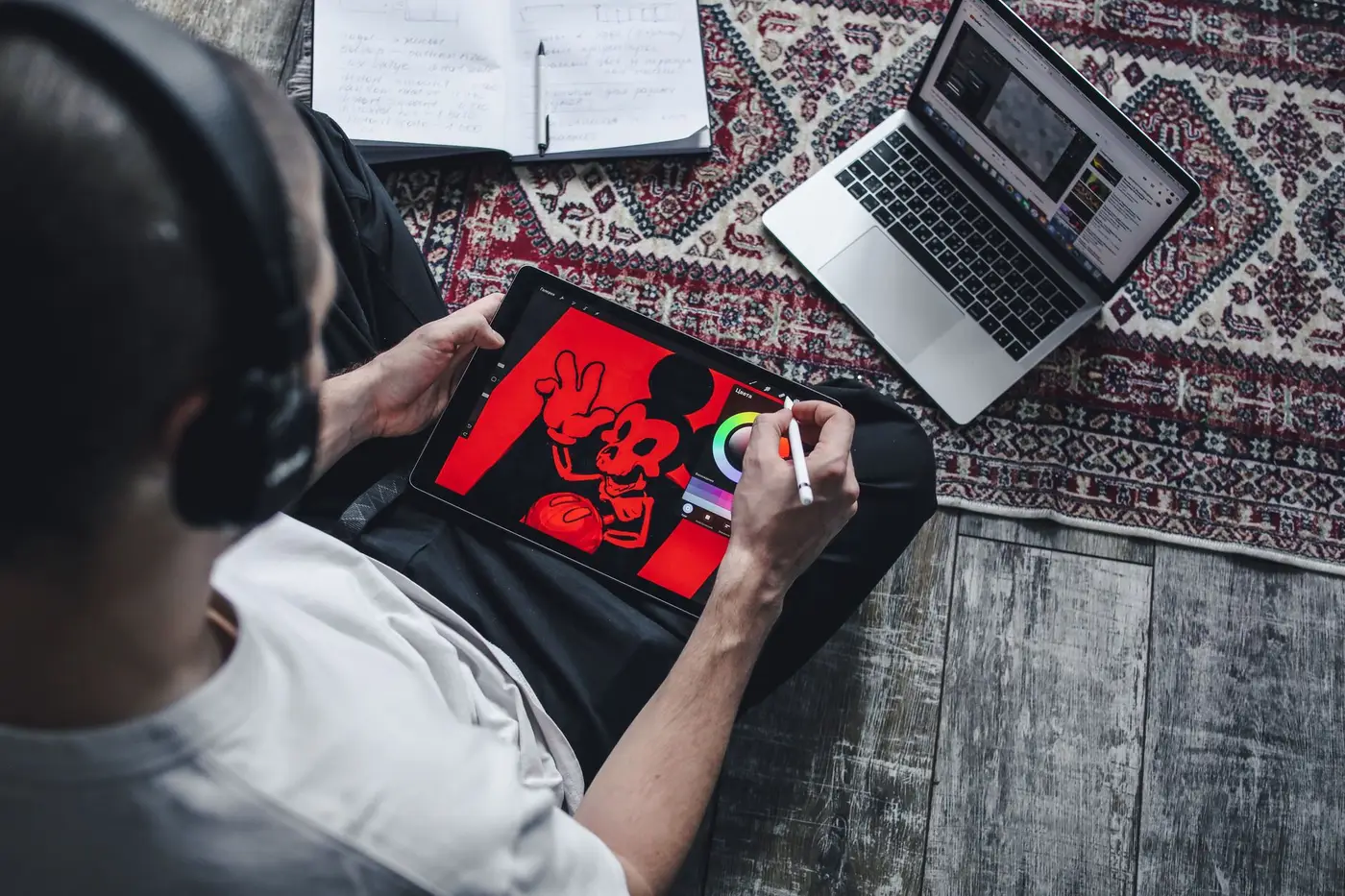
This is where fundraisers leak money. A shirt that reads like a flyer — logo, sponsor names, dates, a slogan, and a phone number — doesn't get worn twice. A shirt that looks like something from a store sells more and keeps advertising you for years.
Keep it to one idea and big type. The message should read from across a parking lot. Keep the colors low — one or two colors on screen printing is both the cheapest and, honestly, the best-looking option. Put sponsors small on the back, never crowded onto the front.
And pick a shirt people like wearing. A slightly nicer blank costs a dollar or two more and dramatically improves how often it leaves the drawer. That's worth more than the dollar. For more on layout and contrast, we go deeper in our t-shirt design guide.
Collecting sizes and money without losing your mind
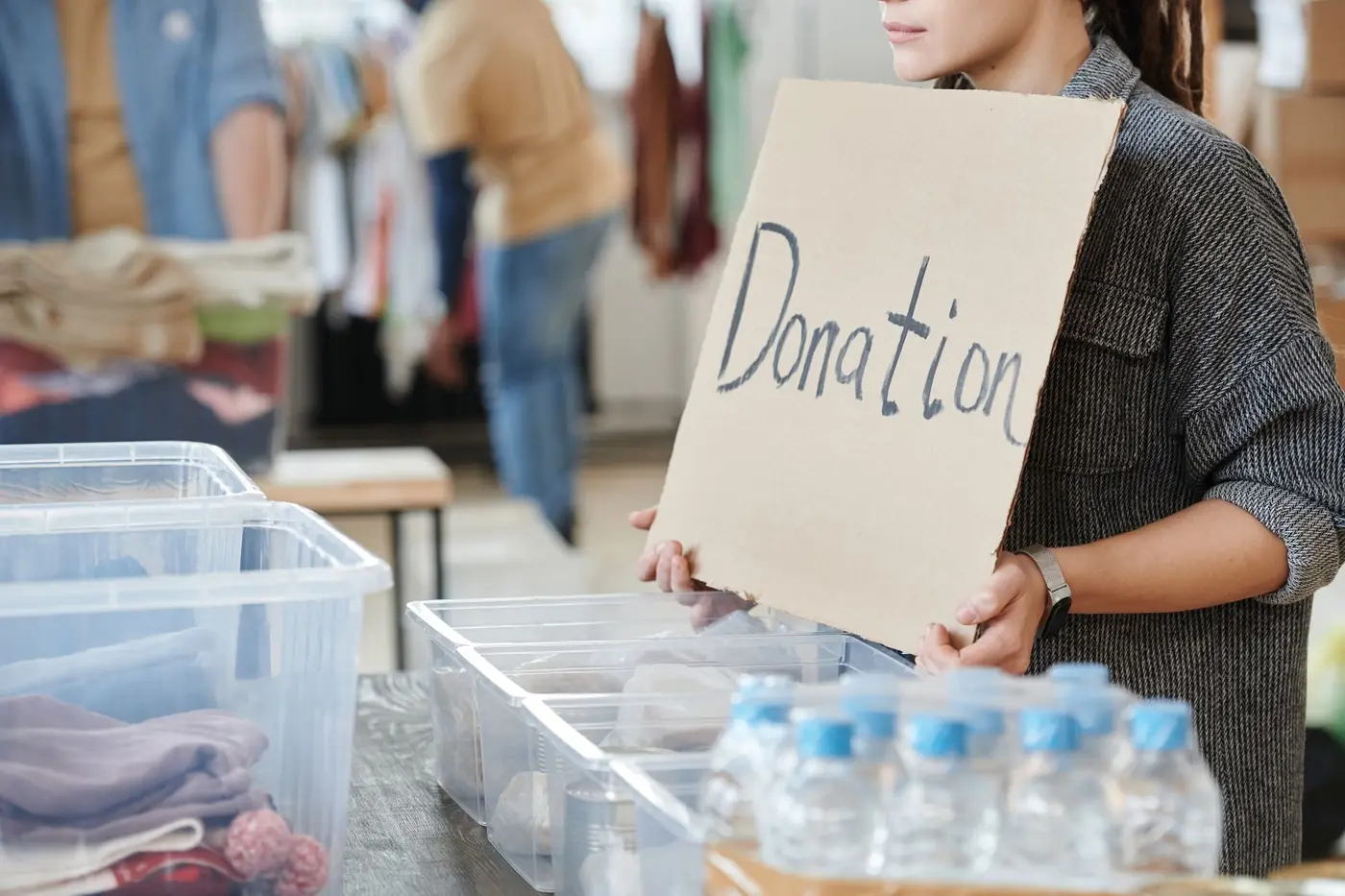
Nobody warns you about this part, and it's the part that actually sinks fundraisers. The design takes an afternoon. Chasing 60 people for sizes and payment takes three weeks and all your patience.
Use one form and one deadline. A simple online form that captures name, size, quantity, and payment in a single step. Not a paper sheet, not a group text, not four different people collecting cash. One link.
Take payment at order time. This is the big one. Collecting money later means chasing people, and you'll never get all of it. Payment up front also gives you an exact count, so you order precisely.
Set a real cutoff and mean it. Two weeks is plenty. Announce it three times: launch, halfway, and the day before. Most orders arrive in the final 48 hours no matter how long the window is, so a longer window doesn't help — it just delays the panic.
Show a size chart, and order a few extra larges. Adult sizing surprises people, and you'll always have a couple of late additions. If this whole process sounds like more than your volunteers can take on, that's exactly the problem an online store solves — it collects the sizes and the money for you.
Promoting it so people actually buy
Show the shirt on a person. A flat mockup gets scrolled past. Someone wearing it gets shared. Take a photo the day the sample arrives.
Say what the money does. Not "support our program" — "this pays for the team's tournament travel." Specific reasons convert. Vague ones don't.
Give everyone the same link and ask them to share it. Twenty people posting to their own networks beats one post from an official account every single time.
Post the countdown. Launch, halfway, last call. That final reminder routinely doubles a campaign's total, because deadlines are what actually make people click.
Mistakes that sink a t-shirt fundraiser
Almost every disappointing campaign we see made one of these five mistakes. They are all avoidable.
Pricing before quoting. Someone announces $18 shirts, then finds out the shirts cost $13 to make. Now you are raising $5 a shirt and it is too late to change the number without looking disorganized. Always quote first.
No deadline. An open-ended campaign never builds urgency, so people mean to order and simply never do. A hard cutoff is the single biggest lever you have on total sales.
Cramming everything onto the front. Sponsors, dates, slogan, logo, and a Bible verse all fighting for the same eleven inches. The shirt becomes a flyer, and flyers do not get worn. Sponsors go small on the back.
Guessing sizes. Ordering a spread you invented, then ending up with fourteen smalls nobody wants and no XLs left. Collect real sizes with payment, or run a store and skip the guessing entirely.
Starting too late. Printing takes time — usually a couple of weeks once artwork is approved, plus your ordering window on top. Work backwards from the date you need shirts in hand, then add a buffer. Rush fees are real, and they come straight out of your margin.
Which groups do best with this
T-shirt fundraisers work best when there is an existing group of people who already feel connected to something — a team, a class, a congregation, a cause with a face attached to it. The shirt gives that feeling something to hang on.
Schools and booster clubs have the easiest time of it, because spirit wear sells itself and the audience renews every year. Churches and ministries do well with mission trips, camps, and anniversary tees, where the shirt doubles as a keepsake. Sports teams get near-total sell-through when the shirt is bundled into registration. Nonprofits succeed when the shirt clearly states what the money does — vague causes sell far fewer shirts than specific ones.
Where it struggles: groups with no shared identity, or a design that nobody would wear if the cause were removed. If you cannot picture someone putting it on for a normal Saturday, rework the design before you launch.
Let us help you run the numbers
Tell us your group, your rough headcount, and what you're raising money for, and we'll come back with a free mockup and a quote that shows your cost per shirt — so you can set a price and know your margin before you announce anything.
We'll also tell you honestly which format fits. If a bulk run makes you more money, we'll say so. If your group is scattered and a store is the realistic option, we'll say that too. We print for schools, churches and ministries, and nonprofits across Arizona and ship nationwide from our shop in Mesa. Get in touch whenever you're ready!
Frequently asked questions
- How much can you make from a t-shirt fundraiser?
- Most groups clear $8 to $14 per shirt. A common setup is a shirt that costs about $10 to produce in a run of 100, sold for $22, netting around $1,200 total. Your margin depends on quantity, color count, and whether you run a bulk pre-order or an on-demand store.
- How much should I charge for fundraiser t-shirts?
- Price at least double your production cost. For most groups that lands at $20 to $25 per shirt, which is high enough for a real margin and low enough that people do not hesitate. Get your printing quote before you announce a price, not after.
- What is the best way to run a t-shirt fundraiser?
- A bulk pre-order gives the best margin and zero risk, because you collect orders and payment before anything is printed. An online store earns less per shirt but takes almost no work and reaches people outside your local network. Pick based on how much volunteer time you actually have.
- How many shirts do I need to order for a fundraiser?
- Screen printing gets efficient from about 48 pieces up, since setup spreads across the run. Below that, DTF is usually cheaper. If you cannot predict your numbers, an on-demand store removes the guesswork entirely.
- Do t-shirt fundraisers actually work?
- They work well when the shirt is something people would wear anyway and there is a real deadline. They stall when the design looks like a flyer or the campaign runs open-ended. A good design and a two-week window matter more than the cause being compelling.
- How long should a t-shirt fundraiser run?
- About two weeks. Most orders come in during the final 48 hours regardless of how long the window is, so a longer campaign mostly delays the rush. Announce it at launch, at the halfway mark, and the day before the cutoff.
- What sizes should I order for a fundraiser?
- Collect exact sizes with payment up front and you will not have to guess. If you are buying inventory to sell at events, weight it toward medium and large, which move fastest, and order a few extra XL. Always share a size chart, since adult sizing catches people out.
- Can a small group run a t-shirt fundraiser?
- Yes. DTF printing has no per-color setup cost, so a run of a dozen shirts is perfectly reasonable. Small groups often do better with an online store, since it lets supporters outside the immediate circle order without anyone coordinating collections.
Got a project in mind?
Send us your idea and quantities — we'll come back with a free mockup and quote.
Get a free quote