What actually belongs in a new employee welcome kit, what it costs per hire, when to send it, and how to run one without chasing sizes every time you hire.
What is a new employee welcome kit?
A new employee welcome kit is a package of branded and practical items given to someone when they join — typically apparel, a notebook, drinkware, and a note from their manager. A good one costs $40 to $75 per hire and arrives before the first day rather than on it.
The reason companies bother isn't the merchandise. It's that the first day sets a tone that's hard to reset later. Someone who walks in and finds nothing prepared learns something about how organized the place is. Someone whose kit arrived at home the Friday before learns something different.

Why they're worth doing
It removes first-day awkwardness. New hires spend day one feeling conspicuous. Wearing the same shirt as everyone else fixes a surprising amount of that.
It's the cheapest retention lever available. Not because a hoodie makes someone stay, but because the first week is when people decide whether they made a good call. A prepared welcome is evidence that they did.
It solves a real operational problem. Most companies bulk-order apparel once or twice a year, so anyone hired in between waits months for gear. A kit program means every hire is outfitted on day one regardless of when they start.
It gets photographed. Not universally, but often enough to matter — a good kit turns up on LinkedIn the week someone starts, which is recruiting content you didn't have to make.
What to include
Every kit that works covers three needs: practical so they can do the job, cultural so they feel part of the team, and personal so they feel like a person rather than a headcount. Here's how that breaks down.
Apparel — the anchor
This is the piece that matters most, and the one worth spending on. A soft, well-fitting tee or a quarter-zip gets worn; a boxy shirt with an oversized chest print doesn't. Restrained branding wins — a left-chest logo gets worn far more often than a full-front print.
Consider a cap as well, because it dodges sizing entirely, and socks, which sound like a joke item and are consistently the most photographed thing in any kit.
Desk and daily-use items
A good notebook and a pen with some weight to it. An insulated bottle or tumbler — genuinely used daily for years, and one of the highest-mileage items you can include. A laptop sleeve or tote if people commute.
Something consumable
Coffee, snacks, or a local treat. Small cost, disproportionate effect, and it's the item people use on day one rather than day thirty.
The note
Handwritten, from the person's actual manager, referencing something specific about why they were hired. This is the cheapest item in the kit and the one people keep. A printed generic welcome letter is not the same thing and everybody can tell.
The practical paperwork
First-week schedule, who to ask about what, the wifi password. Unglamorous, and it removes the specific anxiety of not knowing what happens Monday morning.
What to leave out
Anything with your tagline in small print. Nobody reads it and it makes the design worse. Logo only.
Cheap electronics. Off-brand earbuds that fail within weeks attach your name to a bad experience during someone's first month.
Too many items. A box of eleven things reads as a storeroom clear-out. Four or five good pieces reads as considered.
Guessed sizes. Handing someone a large when they're a small is worse than giving them nothing — now they own a shirt they can't wear and you've made it slightly awkward. Ask.
Food without checking. Allergies and dietary preferences are easy to ask about on the same form where you collect a shirt size.
Anything that needs assembly or a manual. A new hire's first week is already full. An item that requires setting up will sit in its box.
And one worth saying plainly: don't send a kit instead of preparing properly. A great box does not make up for a laptop that isn't ready or a manager who's on holiday. The kit works because it signals that someone thought ahead — if nothing else was thought ahead, people notice that too.

When to send it
Before the first day, if you can manage it. A box arriving at someone's home the weekend before they start does more than the same box handed over at a desk on Monday, for a simple reason: they're still slightly nervous about the decision, and it arrives as reassurance rather than as admin.
It also means they can wear the shirt on day one, which sounds small and isn't.
On the desk for day one is the fallback and works fine. A week or two in is the least effective version — by then the welcome has already happened and the box is just merch.
For remote hires, shipping ahead isn't optional, it's the whole thing. It's the only physical contact with the company they'll have in week one.

What it costs per hire
$25–$40. A branded tee, a notebook, a pen, and something consumable in a kraft box. Genuinely fine, and better than most companies manage.
$40–$75. The bracket most companies land in and the one we'd point you to. A quarter-zip or good hoodie as the hero, a tee, an insulated bottle, a notebook, and a note.
$75–$150. Senior hires, or companies where the kit is part of the employer brand. Premium outerwear, quality drinkware, custom-printed packaging.
Add shipping if you're sending to home addresses — real money at volume, and boxes price dimensionally, so a big light box can cost more to ship than a small heavy one.
Set the number against your cost per hire rather than in isolation. Against a recruiting spend that usually runs into the thousands, a $60 kit is a rounding error attached to the moment someone decides how they feel about the place.
The problem with running this as a bulk order
Here's where most kit programs quietly fall apart, and it's worth being honest about because it's the reason so many stop after a year.
You bulk-order fifty kits in March. By August you've run out of mediums and have fourteen extra XLs. Somebody's storing the boxes. Somebody's assembling each one by hand when a hire starts. The new marketing person who joined in October is wearing last year's logo because the rebrand happened in July and you still have stock to use up.
None of that is a failure of planning. It's what happens when a continuous need — you hire year-round — is served by a batch process.
Running it on demand instead
The alternative is an online company store holding your approved kit. When someone is hired, they get a link. They pick their own size, enter their own address, and the kit is produced and shipped direct.
No inventory sitting in a cupboard. No size guessing — they choose. No leftover stock blocking a logo update. No minimum, so hiring one person is as easy as hiring twenty. And nobody on your team spends an afternoon packing boxes.
Some companies let the hire order freely from an approved set; others fund a fixed allowance so it stays on budget. Either works. The point is that the process runs itself instead of being somebody's recurring task.
If you're weighing this against a bulk run properly, we broke down the real trade-offs — including when bulk genuinely wins — in online company store for employees.
Kit ideas by the kind of hire
One kit for everybody is the simplest thing to run, and it's what most companies should do. But if you're hiring into genuinely different roles, a few adjustments make the kit land much harder.
Office hires
The standard kit works as-is. Lean toward desk-useful items — a good notebook, a decent pen, a bottle that lives next to a monitor. A tote or laptop sleeve earns its place if people commute. Keep the apparel wearable outside work, because that's where the impressions happen.
Remote hires
Shift the budget toward things that make a home setup better and away from anything office-specific. A quality mug, a hoodie rather than a polo, a laptop stand, good coffee. Ship it to arrive before the start date without exception — for a remote hire this box *is* the onboarding experience in a way it isn't for someone walking into a building.
One small thing that lands well: include something local to your city. It gives a remote hire a tangible sense of where the company actually is.
Field and frontline hires
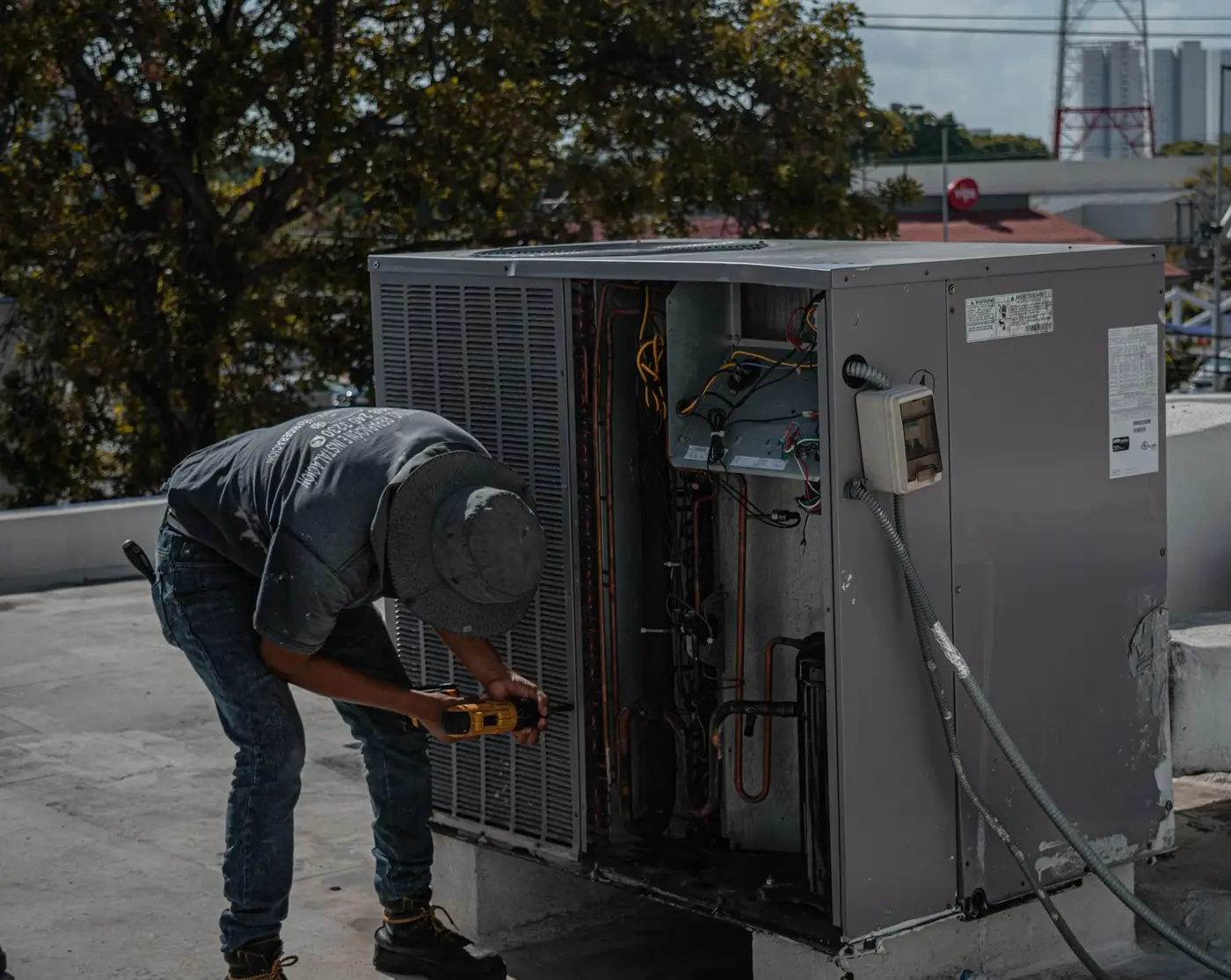
Technicians, drivers, crews, restaurant staff. Here the kit is genuinely functional rather than symbolic, and it should be weighted almost entirely toward the uniform — the right number of work shirts, a jacket if they'll need one, a cap. Skip the notebook and the desk items; they'll never be used.
The most useful thing you can do for a frontline hire is get them enough shirts. Five or six means laundry happens on a weekend instead of every night, which is the actual reason people end up working in off-brand clothing. We covered this properly for trades in HVAC technician uniforms.
Senior and executive hires
Fewer items, noticeably better quality, lighter branding. A premium jacket with a small embroidered mark rather than a printed tee. At this level the kit is a signal about standards, and an obviously cheap item sends the wrong one.
Getting the branding right so it gets worn
This is where most kits are won or lost, and it has almost nothing to do with budget. We've printed plenty of expensive apparel that never got worn and plenty of modest apparel that did.
Go smaller than feels natural. A left-chest logo around 3 to 4 inches gets worn constantly. A full-front print gets worn to company events and nowhere else. If the goal is impressions, the smaller mark generates more of them, because it's on more often.
Spend the extra dollar on the blank. The difference between a stiff basic tee and a soft ringspun one is a dollar or two and it completely changes whether something gets worn. That's the best money in the whole kit.
Embroider anything with a collar. Thread on a polo or quarter-zip reads as established and survives years of washing without cracking. Print the tees, where ink is softer and cheaper. If you're deciding between the two, embroidery vs. screen printing walks through it.
Pick colors people already wear. Heather grey, navy, black, and cream get worn. A shirt in an unusual brand color often doesn't, however much the brand team likes it. If your palette is loud, put it in the print and keep the garment neutral.
Who owns it, and keeping it running
Kit programs rarely die because someone decided to stop. They die because the person who ran it left, or got busy, and it quietly stopped happening.
Give it one owner, usually whoever runs onboarding rather than whoever runs marketing. Marketing designs it; onboarding triggers it. If those are the same person, fine — but the trigger has to sit with whoever knows a hire is starting.
Attach it to an existing step. The kit should be sent by the same action that creates the email account or the payroll record. Anything that depends on somebody remembering will eventually be forgotten during a busy month.
Review it once a year, not never. Logos change, garments get discontinued, and a kit that was current three years ago starts to look it. An annual look is enough.
Keep the note manual. Automate the ordering, the sizing, and the shipping — all of it. Do not automate the note. The moment it becomes a template, everyone can tell, and you've lost the only part of the kit that was genuinely personal.
How to split the budget
Say you've settled on $60 a hire. The instinct is to divide it roughly evenly across five items, and that's the wrong move — it produces five mediocre things instead of one good one and some supporting cast.
A split that works: roughly half on the hero apparel piece, a quarter across the two or three supporting items, and the last quarter on packaging, the consumable, and shipping. On $60 that's about $30 on the quarter-zip, $15 across the tee and bottle, and $15 covering the box, the coffee, and getting it to their door.
The reason to weight it this way is that the hero item is the only piece with a long life. The consumable is gone in a week and the notebook fills up. The quarter-zip is still being worn in three years, in front of people who don't work for you — which is where the actual return is.
If the budget is genuinely tight, cut item count before you cut quality. A good tee, good coffee, and a real note at $30 lands better than five forgettable things at the same price. Nobody has ever been disappointed by a kit with fewer, better things in it.
A simple kit to copy
If you want somewhere to start, this is the one we'd build for most companies, and it lands around $55 to $65 a hire:
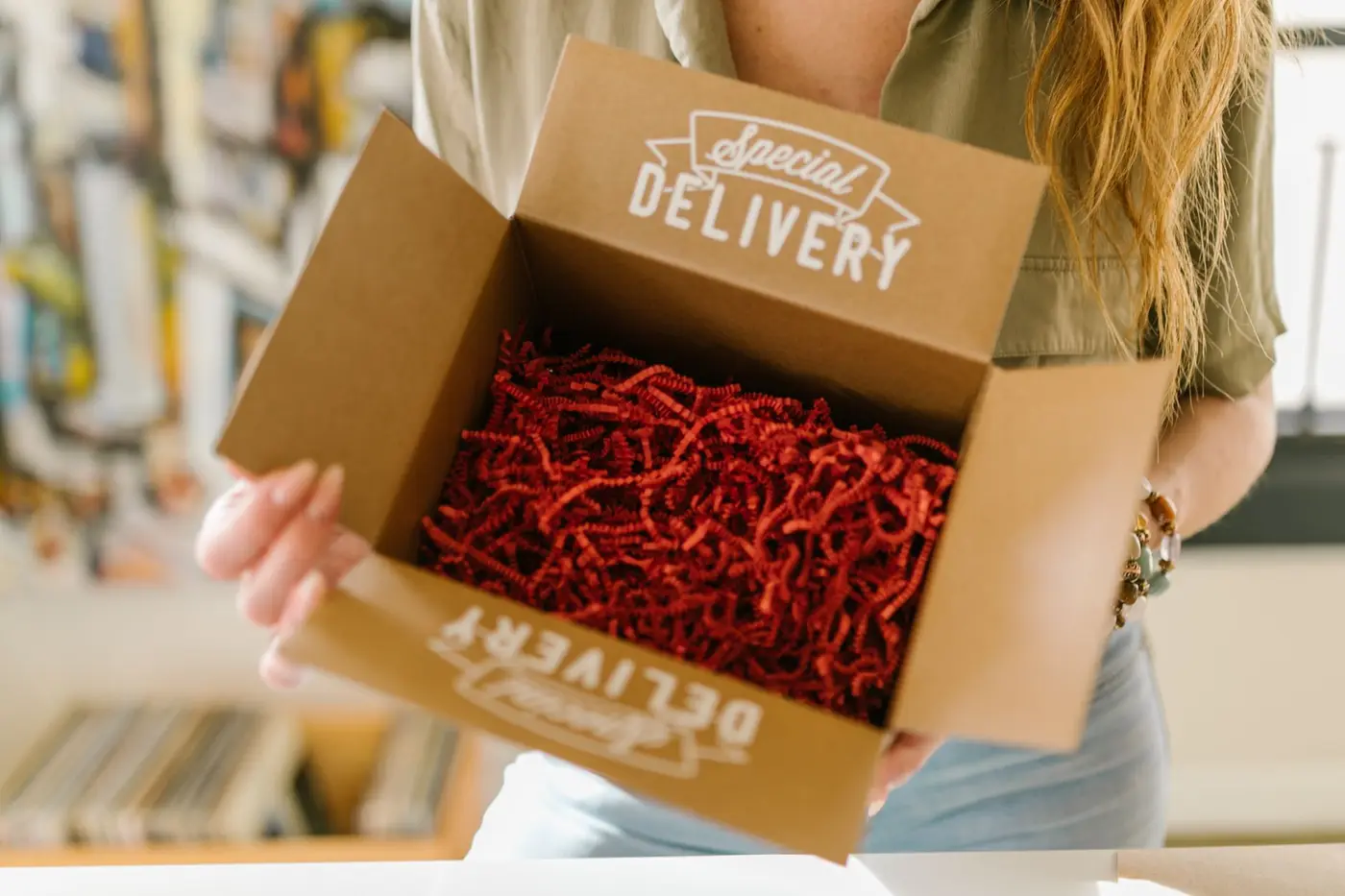
An embroidered quarter-zip in your primary color, left-chest logo. A soft tee with a simple front design. An insulated bottle. A decent notebook and pen. Local coffee or snacks. A handwritten note from their manager, on top so it's read first. All in a kraft box with branded tissue and a sticker seal.
Five items, one clear hero, one consumable, and a note. That's the formula, and it works from a ten-person company to a five-hundred-person one.
Want one built?
Tell us roughly how many people you hire a year and your budget per person. We'll put together a kit at that number, mock up the branded pieces for free, and set it up so it runs on demand rather than becoming a quarterly project.
Everything is embroidered and printed in house in Mesa, and we can assemble and ship direct to home addresses. Have a look at our new hire kits page, or just get in touch — happy to talk it through!
Frequently asked questions
- What should be in a new employee welcome kit?
- Branded apparel as the hero item, a notebook and pen, an insulated bottle, something consumable like coffee or snacks, and a handwritten note from their manager. Four or five good items beat ten cheap ones, and the note is consistently the piece people keep.
- How much should a new hire welcome kit cost?
- Most companies land between $40 and $75 per hire. A simpler kit works fine at $25 to $40, and senior hires or employer-brand-led programs run $75 to $150. Add shipping separately if you send to home addresses, since it is real money at volume.
- When should you send a welcome kit?
- Before the first day, ideally arriving at their home the weekend before they start. It lands as reassurance rather than admin, and they can wear the shirt on day one. On the desk for day one is a fine fallback; a week or two in is the least effective.
- What should you not put in a welcome kit?
- Cheap electronics that fail quickly, anything with your tagline in small print, too many items, and guessed sizes. Handing someone the wrong size is worse than giving them nothing. Ask about sizes and dietary preferences on the same form.
- Do welcome kits work for remote employees?
- They matter more for remote hires, not less — the kit is often the only physical contact with the company in week one. Ship to their home ahead of the start date and lean toward home-office useful items rather than office desk items.
- How do I handle sizes for welcome kits?
- Ask, do not guess. The cleanest method is an online store where the new hire picks their own size and enters their own address, so the kit ships direct with nobody chasing anybody. A form works too, but it needs following up.
- Is it better to bulk order welcome kits or produce on demand?
- On demand suits most companies, because hiring is continuous and bulk ordering is a batch process. Bulk leaves you with leftover sizes, stored inventory, and stock that blocks a logo update. On demand has no minimum and always reflects your current branding.
- How many items should be in an onboarding kit?
- Four or five. Put most of the budget into one hero item — usually apparel — rather than spreading it evenly. A box of eleven things reads as a storeroom clear-out; a curated handful reads as considered.
- Are welcome kits worth the cost?
- Set against cost per hire rather than in isolation. Recruiting spend typically runs into the thousands per person, so a $60 kit is a rounding error attached to the exact moment a new hire decides whether they made a good decision.
Got a project in mind?
Send us your idea and quantities — we'll come back with a free mockup and quote.
Get a free quote