What HVAC technicians actually wear, and why fabric matters more than anything else — plus hi-vis rules, logo placement, and renting vs. owning.
What do HVAC technicians wear?
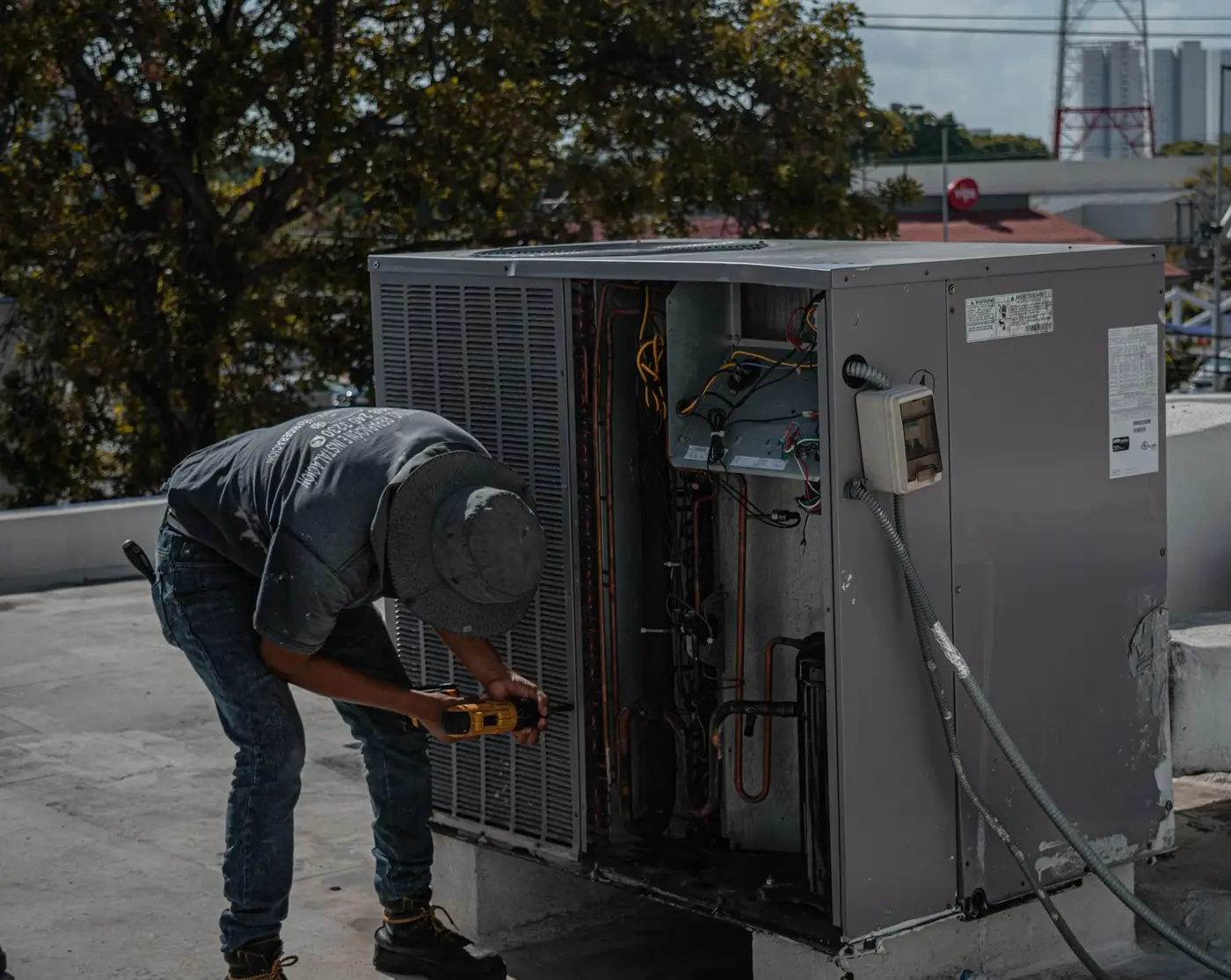
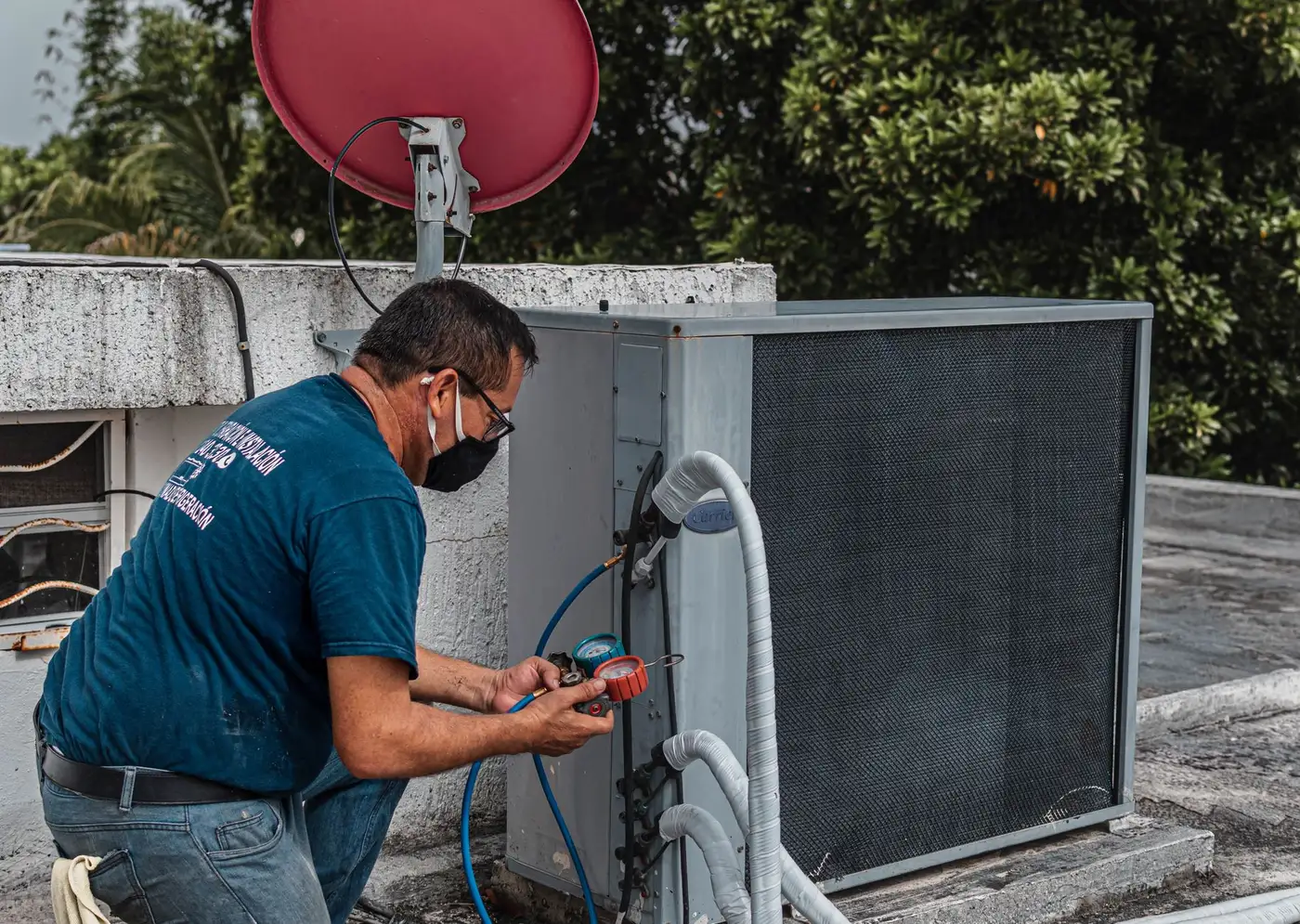
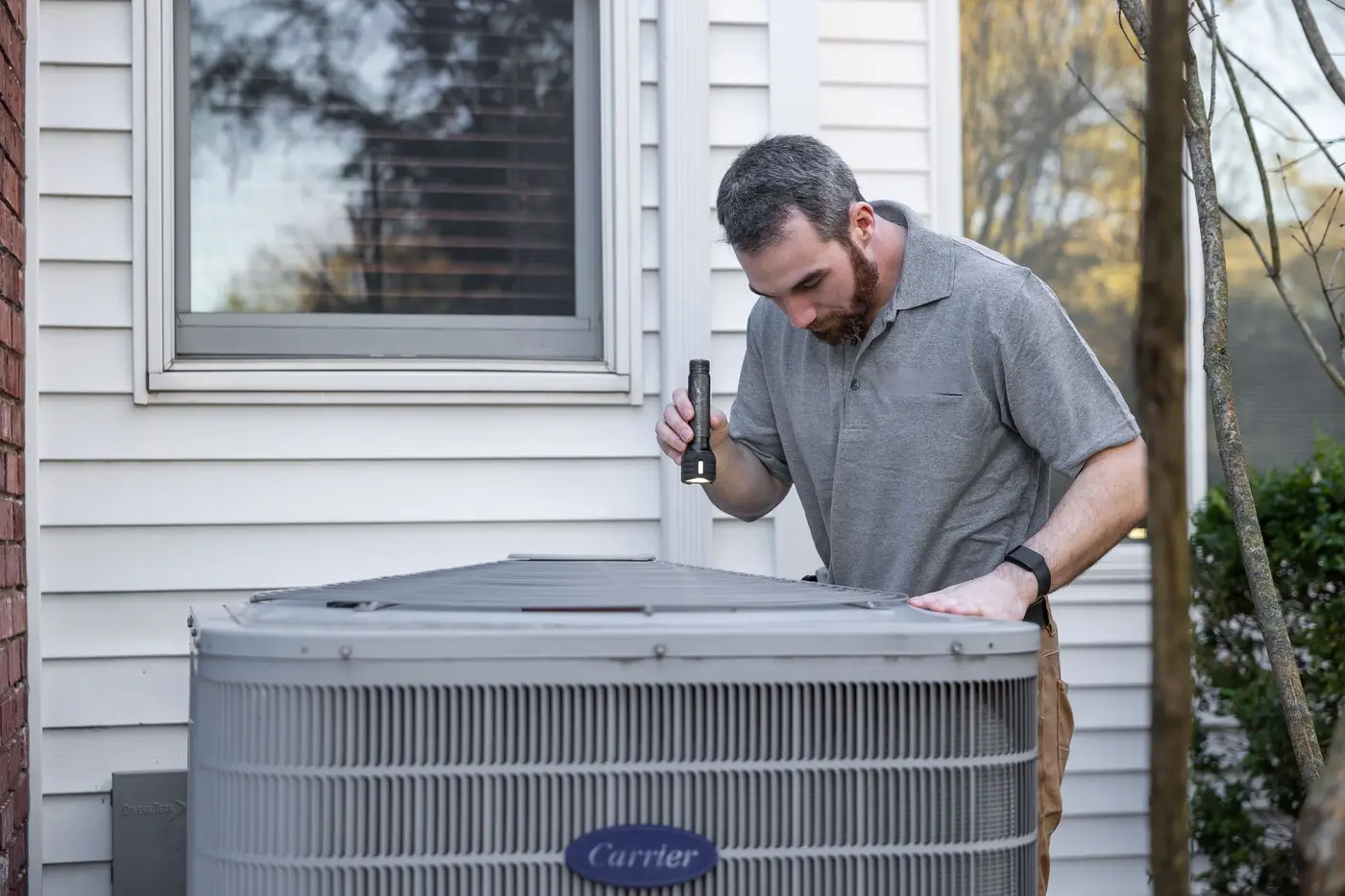
Most HVAC techs wear a moisture-wicking polo or button-up work shirt, durable work pants, and steel-toe boots, with the company logo embroidered on the left chest and often the tech's first name beside it. The shirt is almost always a poly or poly-cotton performance blend — not 100% cotton.
That last part is the one that actually matters, and it's the thing most companies get wrong on their first order. Everything else is preference. Fabric is physics. When you're ready to order, the garments, pricing, and minimums are on our custom HVAC uniforms page.
We outfit HVAC and field-service crews out of our shop in Mesa, where summer attics hit numbers that would be a national news story most other places. So this guide is written from that end of the thermometer.
The kit, piece by piece
Work shirts
The centerpiece, and the piece you'll brand. Three common choices: a performance polo (most popular — comfortable, looks sharp at a customer's door), a button-up work shirt (more traditional, more pockets, reads as established), or a branded tee for install crews who aren't customer-facing.
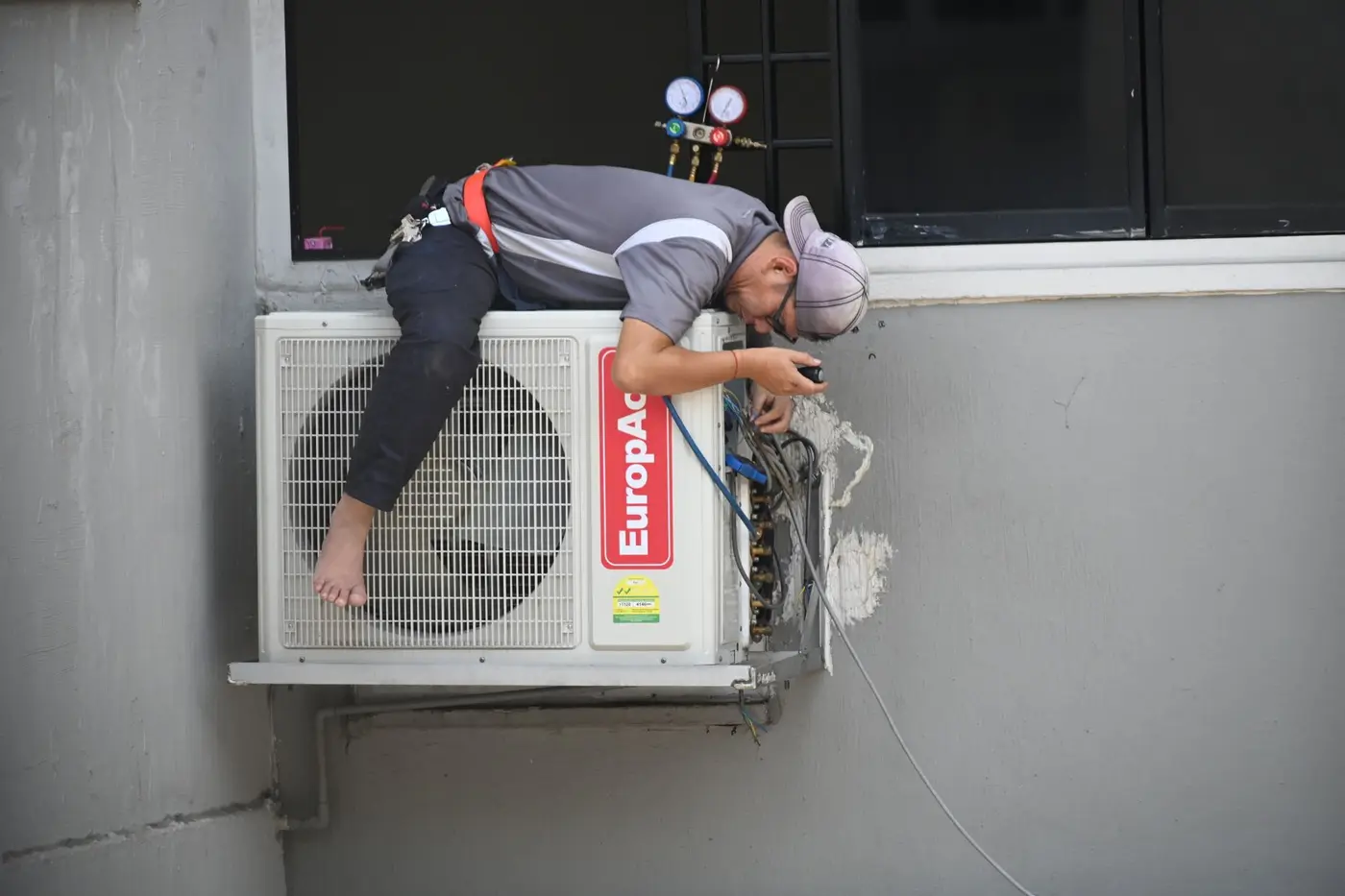
Sleeve length is a real decision, not a style one. Residential service techs usually want short sleeves — they're at someone's front door and it's 110 out. Anyone spending their day in attics or crawl spaces wants long sleeves, because fiberglass insulation on bare forearms is genuinely miserable. Most crews we outfit order both and let techs choose by the job.
Work pants
Ripstop or duck canvas with reinforced knees. Techs kneel constantly, and knees are where pants die. Cargo pockets earn their keep here — a tech carrying a meter, a flashlight, and a fistful of zip ties needs somewhere to put them.
Outerwear
Even in Arizona you need it. Winter mornings start cold, and walk-in coolers and commercial rooftops don't care what month it is. A branded quarter-zip or softshell is the usual answer, and it's the piece techs are most likely to wear off the clock — which makes it your best rolling advertisement.
Boots and gloves
Not something we make, but worth stating: composite or steel toe, slip-resistant, and gloves rated for sheet metal. Ductwork edges are unforgiving.
Fabric is the whole decision
If you take one thing from this page, take this: do not put your techs in 100% cotton.
Cotton absorbs sweat and holds it. It gets heavy, it clings, and it stops breathing right when the tech needs it most. In a Phoenix attic in July, a soaked cotton shirt isn't just uncomfortable — it stops the evaporation that keeps a body cool. In winter, wet cotton pulls heat out of you fast. Neither is what you want from a shirt someone works twelve hours in.
A 65/35 poly-cotton blend or a full performance poly is the standard, and it's standard for a reason. It wicks moisture to the surface, dries quickly, resists wrinkling in a truck cab, and holds color through industrial washing. It also releases oil and grease stains far better than cotton does.
One trade-off worth knowing before you order: performance polyester is harder to screen print. The dye in the fabric can migrate up into the ink and discolor it — a white print on a red poly shirt can turn pink a few weeks in. It's solvable with low-cure inks and a dye blocker, and DTF printing sidesteps it entirely, but embroidery is usually the better call on poly work shirts anyway. More on that below.
Hi-vis and safety requirements
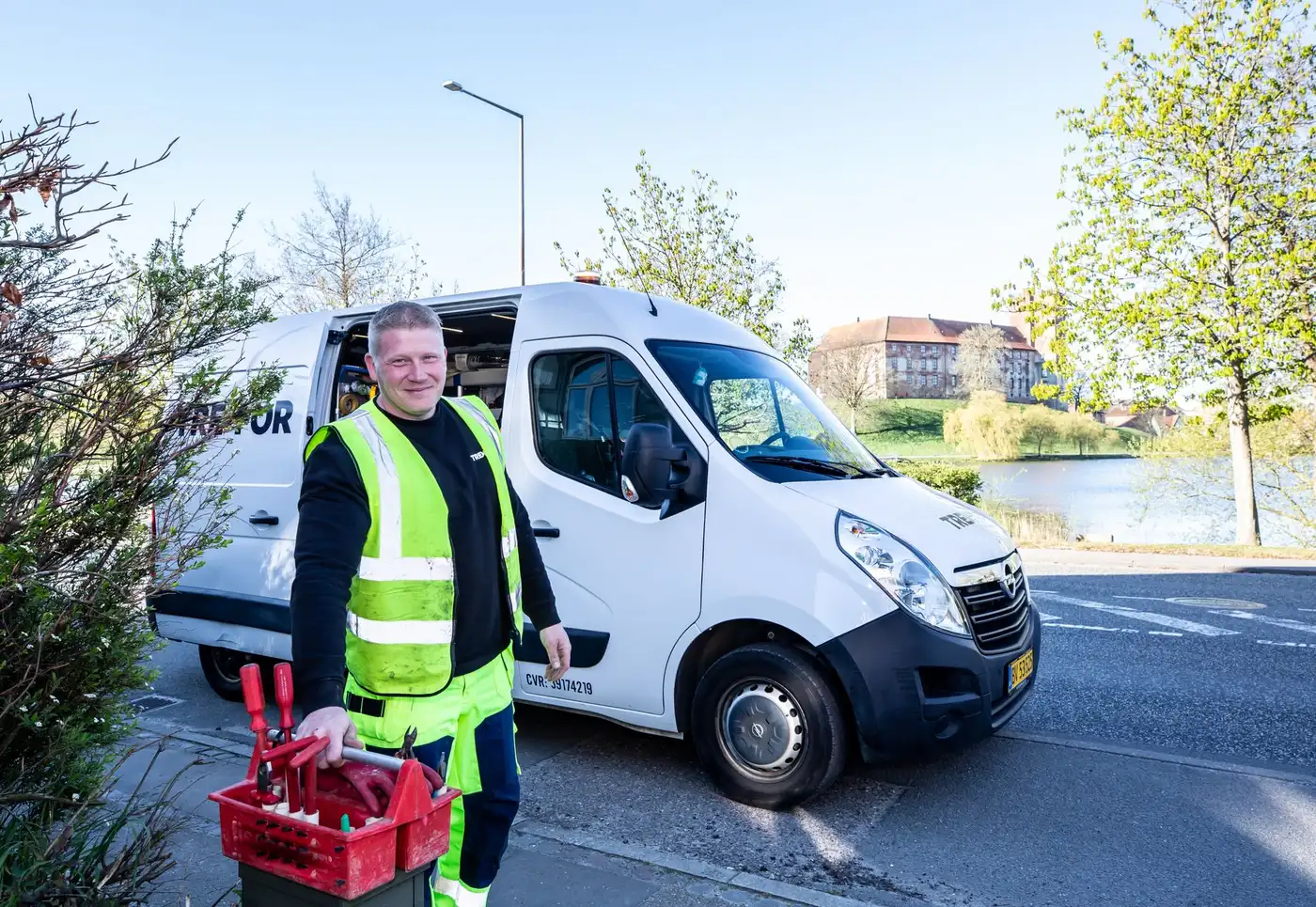
If your crews work near moving traffic, on commercial sites, or for general contractors, high-visibility apparel usually isn't optional — the site or the client sets the rule.
Hi-vis garments are graded by ANSI/ISEA 107 classes. Class 2 covers most field-service work near traffic; Class 3 is for higher-speed roadways and adds sleeves. Plenty of commercial GCs simply require Class 2 to set foot on site, so it's worth asking before you get turned away on a Monday morning.
The practical version: a hi-vis polo or tee for crews who need it daily, and a stock of hi-vis vests that go over the normal uniform for occasional jobs. We can embroider or print your logo on hi-vis just like anything else — just keep the logo off the reflective striping, since decoration over the tape defeats its purpose and can void the rating.

Branding: where the logo goes
The layout that has become standard in field service, and the one we'd recommend by default:
Left chest — your logo, embroidered, about 3 to 4 inches wide. Right chest — the tech's first name, stitched. Back — company name and phone number, big enough to read from a driveway. That back hit is the one that actually generates calls; a neighbor watching a van sit outside for two hours will read it.
Go with embroidery for work shirts. It survives industrial laundering and years of wear without cracking or fading the way a print eventually will, it looks more established at a customer's door, and it sidesteps the dye-migration problem on polyester entirely. The one limit: thread can't hold detail below about a quarter inch, so a logo with a tagline usually needs a simplified version for the chest. We'll build that and show you before anything gets stitched.
Adding names does cost a little more per shirt, since each one is its own stitch file. It's worth it. A homeowner who can greet a tech by name before he says a word is a homeowner who already trusts the visit a little more.

Rent or own? Our honest answer
Most HVAC companies get pitched a uniform rental service early on, so it's worth laying out the real trade-off — including the part where renting sometimes wins.
Renting bundles laundering and replacement into a weekly per-tech fee. If your techs come home genuinely filthy every day and you don't want to think about it, that convenience is real. The costs are that you never stop paying, you don't own the garments, you're locked into a contract, and you wear whatever the rental catalog stocks.
Owning means you buy the shirts once and they're yours. For most small and mid-size HVAC companies the math favors owning by a wide margin — rental fees over a couple of years will exceed what the shirts cost outright, and you get to pick the garment, the color, and the fit. Techs also tend to take better care of a shirt that's theirs.
If the laundry side is the reason you were considering renting, the honest fix is usually more shirts per tech, not a rental contract. Five or six shirts each means laundry happens on a weekend instead of every night.
Running the program without the headaches
The ordering is what usually falls apart, not the shirts. A few things that make it survivable:
Do one sizing round properly. Get every tech's actual size in the actual garment before the first order — work shirts run differently than the tees people are picturing. Order a size set to try on if the crew is big enough to justify it.
Solve for new hires on day one. This is where every program breaks down. You hire a tech in October and the last bulk order was in March, so he wears a plain shirt for a month. An online company store fixes it — your approved garments sit at a link, the new hire orders his sizes, and it ships. No minimum, no waiting for the next bulk run, no one digging through a closet of leftover XLs.
Keep the logo file with your printer. Once your design is digitized for embroidery, that file gets reused on every reorder — same stitch count, same placement, no setup charge again. It's also why your second order costs less than your first. If you want the deeper version of all this, we wrote a full guide to setting up an employee uniform program.
Want a quote on your crew?
Tell us how many techs you've got and what they spend their day doing — attics, rooftops, commercial sites — and we'll come back with garment recommendations, a free mockup of your logo on the shirt, and a straight quote with nothing hidden in it.
We stitch and print in house in Mesa and ship anywhere. Have a look at our HVAC uniforms page or just get in touch — happy to talk it through!
Frequently asked questions
- What do HVAC technicians wear?
- Typically a moisture-wicking polo or button-up work shirt, durable work pants with reinforced knees, and steel-toe boots. The company logo is usually embroidered on the left chest with the tech's first name on the right. Shirts are almost always a poly or poly-cotton blend rather than cotton.
- What is the best fabric for HVAC work shirts?
- A 65/35 poly-cotton blend or a full performance polyester. Both wick sweat away, dry fast, and resist wrinkling and stains. Avoid 100% cotton — it absorbs sweat and holds it, which is genuinely dangerous in a hot attic because it stops the evaporation that cools the body.
- Should HVAC uniforms be embroidered or printed?
- Embroider them. Thread survives industrial laundering for years without cracking or fading, looks more established at a customer's door, and avoids the dye migration that can discolor a screen print on polyester. Printing is fine for install-crew tees that are not customer-facing.
- Do HVAC techs need high-visibility clothing?
- It depends on the work. Crews near traffic or on commercial sites usually need ANSI Class 2 at minimum, and many general contractors require it to be on site at all. A common setup is hi-vis polos for crews who need it daily plus a stock of vests for occasional jobs.
- Should I rent or buy HVAC uniforms?
- For most small and mid-size companies, buying costs less over any reasonable timeframe — rental fees never stop, and after a couple of years they exceed what the shirts cost outright. Renting mainly buys convenience on laundering. If laundry is the concern, more shirts per tech usually solves it more cheaply than a contract.
- How many uniform shirts does each technician need?
- Five or six is the number that works. That covers a full week without laundry becoming a nightly chore, which is the main reason techs end up wearing something off-brand. Fewer than four and you will see plain shirts on the schedule.
- Should we put technician names on the shirts?
- Yes, if the budget allows. It costs a little more because each name is its own stitch file, but a homeowner who can greet a tech by name before he introduces himself starts the visit already trusting him a little more. It is one of the cheapest trust signals available.
- How do we handle uniforms for new hires?
- An online company store is the cleanest answer. Your approved garments sit at a link, a new hire orders their own sizes, and it ships without waiting for the next bulk run. Otherwise new techs end up in plain shirts for weeks between orders.
Need uniforms for your crew?
Tell us how many people need gear and what they wear on the job. We'll send a free logo mockup and a quote, and keep your logo on file so every reorder matches.
Get a free uniform quote