
A volunteer shirt does two jobs: it makes your team findable in a crowd, and it says thank you. Here's what to put on the front and back, how to color-code roles, which garment to pick, and how many to order so you're not stuck with 40 smalls.
A volunteer shirt has two jobs, and they pull in different directions. On event day it has to make your people findable in a crowd — someone with a question should be able to spot help from thirty feet away. And afterward, it's a thank-you gift. If it ends up in a drawer, you paid for a one-day uniform. If it gets worn to the grocery store, you got a year of quiet advertising for your cause.
The good news is you can hit both with one shirt. Here's what to put on the front and back, how to color-code roles, which garment is worth the extra dollar, and how to order sizes so you're not left with a box of smalls.
What should a volunteer shirt say?
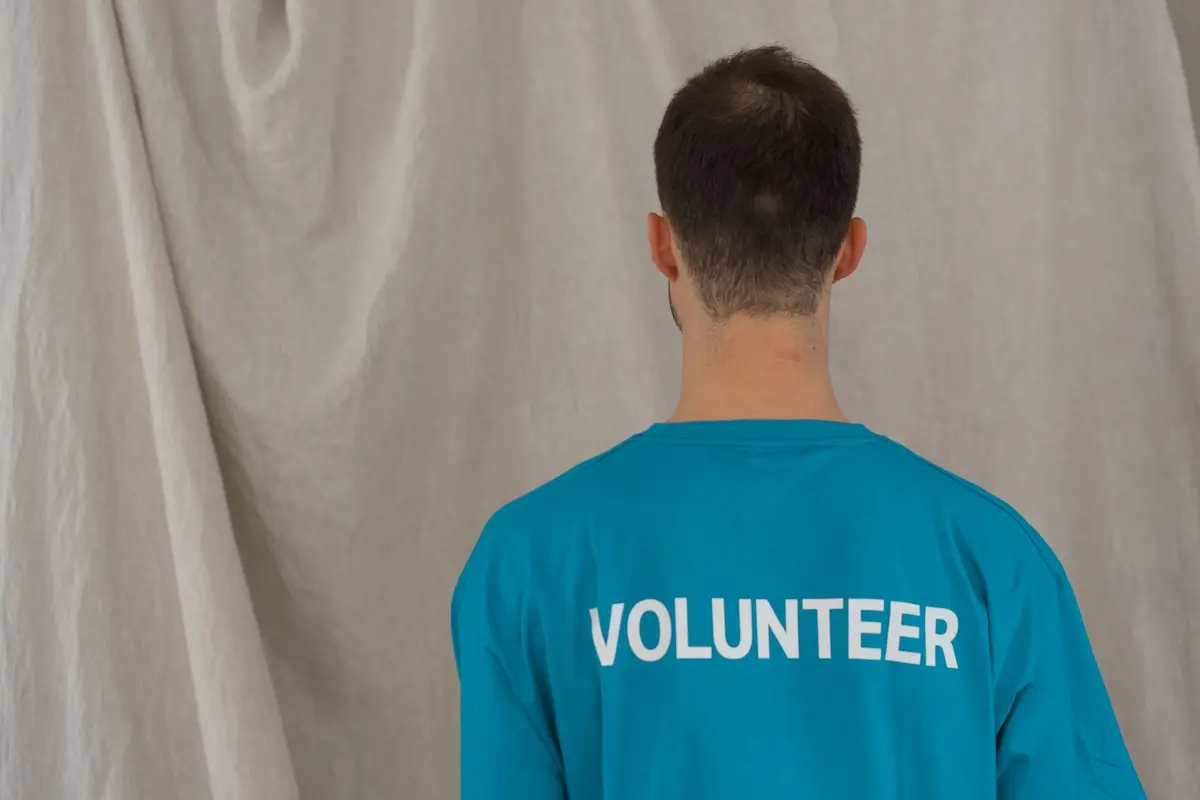
Put VOLUNTEER in large, plain type across the back, and your organization's logo on the left chest or front center. Add the event name and year underneath if it's a one-time event. Pick a single bright color nobody in the crowd will be wearing, and keep the design simple enough to read from a distance.
That's the working version. The word on the back is doing real work on event day — it's what lets an attendee find help without asking three people first. Keep it big, keep it high-contrast, and resist the urge to run it through a decorative script font. Legible beats clever here every time.
Volunteer shirt design ideas
Make the front worth keeping
This is the trick that turns a uniform into a gift: put the functional stuff on the back and the wearable stuff on the front. A nice front design — your logo, the mission, the event art — means the shirt still looks good after the event, while VOLUNTEER on the back does the job on the day. Nobody wants to wear a shirt to brunch that shouts VOLUNTEER across the chest.
Add the year
A year or an event name turns a shirt into a keepsake, and for anything recurring it starts a collection. We've had groups where returning volunteers show up in three years of shirts stacked in a drawer, and that's a genuinely nice problem to have. It also stops last year's shirt from getting confused with this year's crew.
Say thank you somewhere
A sleeve hit, an inside-neck print, or a small line under the back design — something like *thanks for showing up* — costs almost nothing and lands well. It's the kind of detail volunteers actually mention.
Keep sponsors small and few
If sponsors are paying for the shirts, group their logos in a tidy row on the back below the main design or on a sleeve. A shirt covered in eight logos looks like a race bib and nobody wears it twice — which quietly cheats the sponsors out of the long tail they're paying for.
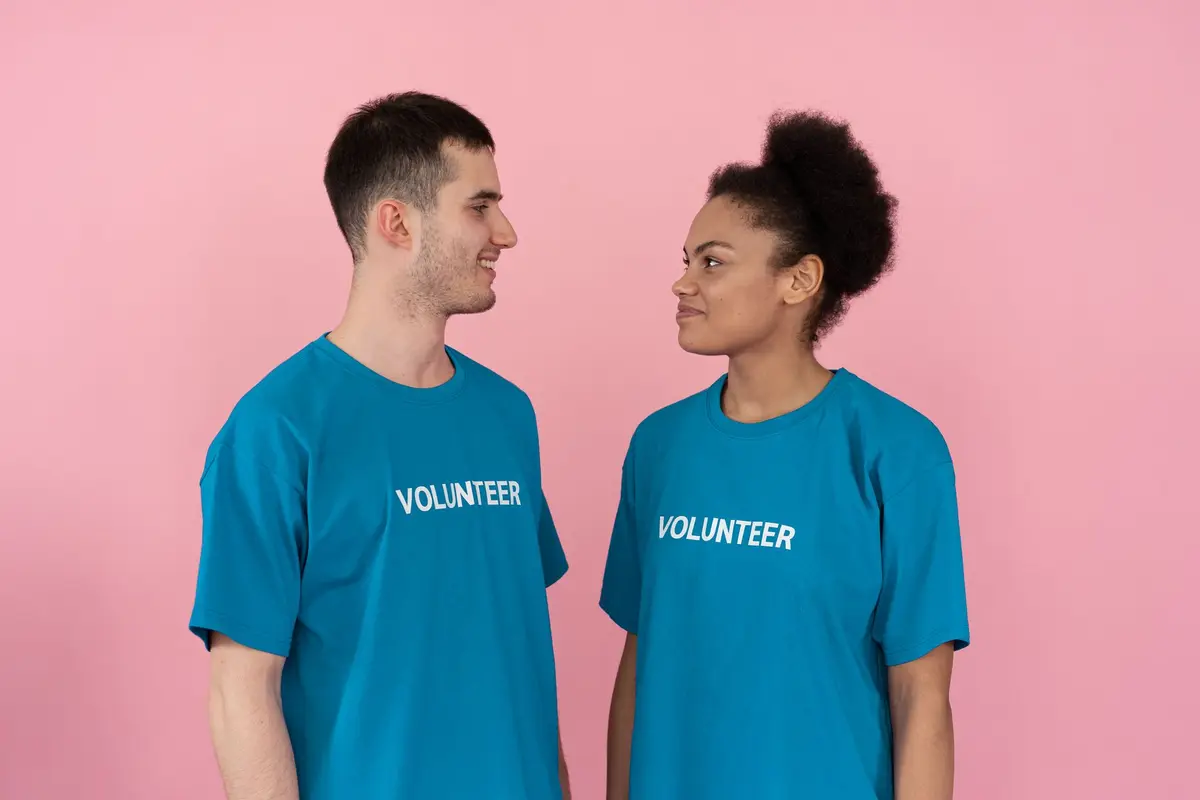
Color-coding volunteers, leads, and staff
Once you're past about twenty people, one shirt color stops being enough. The standard setup is three: one color for general volunteers, a second for team leads or crew chiefs, and a third for staff or organizers. Print the role on the back of each — VOLUNTEER, CREW LEAD, STAFF — and suddenly anyone on site can find the right person without a radio.
For color choice, the rule is to pick something your attendees won't be wearing. Bright teal, orange, or lime read instantly in a crowd. School and church colors are a nice touch but a bad choice if half the crowd is already in them. And if any of your crew is working near parking, traffic, or a loading area, a hi-vis shirt or vest is the safer call — the safety vest guide covers what's required there.
Choosing the garment
Be honest about which kind of shirt this is. For a one-day event with a hundred volunteers, a basic cotton or poly-cotton tee is the right call — it's cheap, it prints well, and nobody expects a keepsake. For ongoing volunteers who wear the shirt every week at a food bank, a shelter, or a Sunday service, spend the extra dollar or two on a softer ringspun tee. They're wearing it fifty times, and the difference is obvious after the first wash.
Beyond tees: aprons for kitchen and serving crews, hats for anyone working outside in Arizona, and polos for volunteers at a front desk or greeting table. And for outdoor summer events, a lightweight moisture-wicking tee is worth it — it's a small upgrade that keeps people comfortable through a long shift.
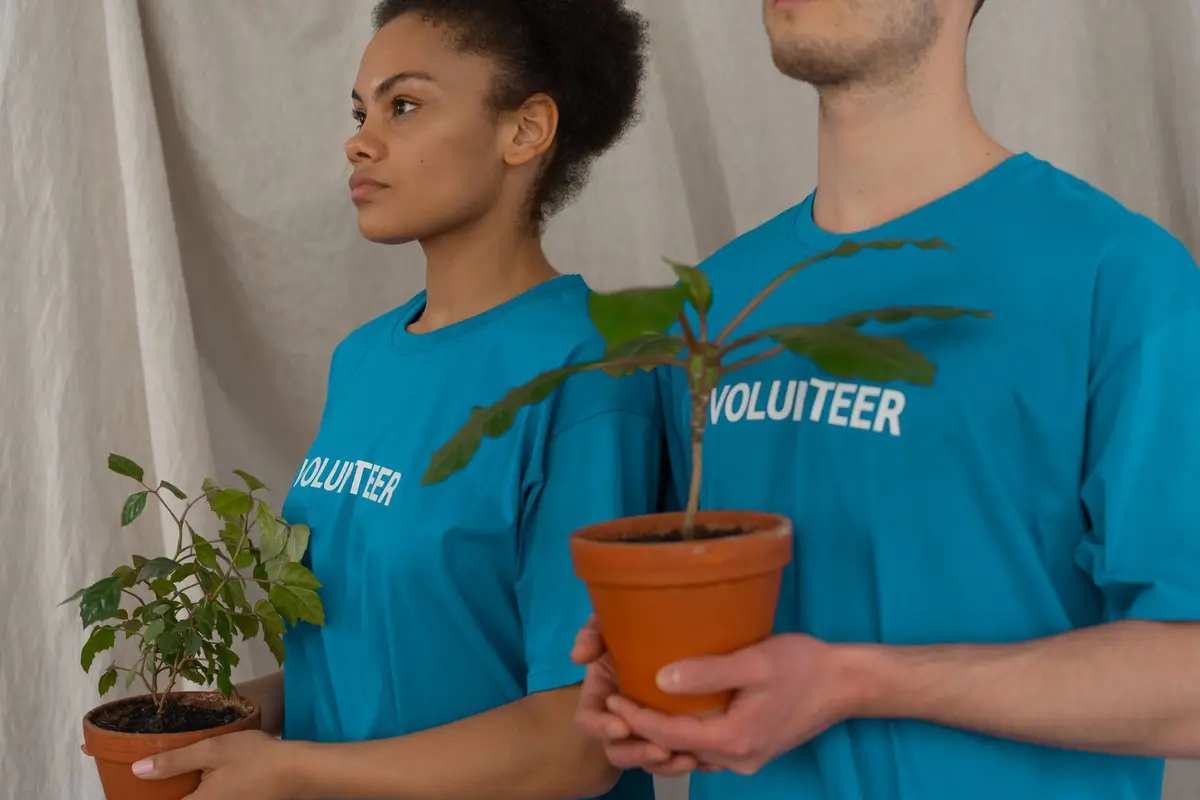
Screen print, DTF, or embroidery?
For most volunteer shirts, screen printing is the answer — a one- or two-color design on a run of 48 or more gives you the lowest cost per shirt, and the ink holds up through years of washing. It's what we'd quote for a typical event.
DTF is better for small groups and full-color art, with a minimum of just 12 pieces and no per-color setup, so a twenty-person crew with a detailed logo comes out cheaper this way. Embroidery is for the pieces you want to feel like a gift — a polo or hat for long-serving volunteers or the board. If one method is genuinely the better deal for your design and headcount, we'll tell you, even when it's the smaller sale for us.
How many to order, and what sizes
The classic mistake is ordering by headcount with an even size spread and ending up with a box of smalls. A rough starting point for a general adult volunteer group is heavier in the middle: a handful of S, a solid block of M and L, a bigger block of XL, and a few 2XL and up. Order 10–15% over your headcount for day-of walk-ups, the volunteer who brings a friend, and the shirt that gets a coffee spilled on it before the doors open.
Better yet, stop guessing. An online store lets volunteers pick their own size when they sign up, which gets you a real size breakdown instead of an estimate — and it stays open so people who join late can still get a shirt. It's the same setup we build for churches running ministry and camp apparel, and it's genuinely the fix for the size-guessing problem.
One more thing: volunteering rates in the U.S. are tracked nationally, and retention is the whole game for most organizations. A shirt is a small budget line that makes people feel like part of something — which is a much cheaper way to keep volunteers than recruiting new ones.
Custom volunteer shirts from Heart & Hook
We print volunteer and event shirts for churches, nonprofits, schools, and community events and camps across Arizona and ship anywhere — tees, hoodies, hats, aprons, and polos, all printed and stitched in our own Mesa shop. Low minimums, an online store so people pick their own sizes, and a proof before anything runs.
If you're raising money as well as recruiting, our t-shirt fundraiser guide covers how to run it so the shirts pay for themselves. Send us your logo and a rough headcount and we'll come back with a free mockup and a clear quote. Just tell us about your event!
Frequently asked questions
- What should a volunteer shirt say?
- Put VOLUNTEER in large, plain type across the back and your organization's logo on the left chest or front center, with the event name and year underneath for a one-time event. Pick one bright color your attendees won't be wearing and keep the design readable from a distance.
- What color should volunteer shirts be?
- One bright color that nobody in the crowd will be wearing — teal, orange, and lime all read instantly. Avoid school or church colors if most attendees will already be wearing them, and use hi-vis for anyone working parking or traffic.
- Should volunteer shirts have the word volunteer on the front or back?
- The back. A large, plain VOLUNTEER across the back is what lets attendees find help from a distance, while a nicer front design keeps the shirt wearable afterward. Putting it big across the chest usually means the shirt never gets worn again.
- How do you color-code volunteers and staff?
- Use three shirt colors — one for general volunteers, one for team leads, and one for staff or organizers — with the role printed on the back of each. Past about twenty people this makes a site far easier to run.
- How many volunteer shirts should I order?
- Order 10 to 15 percent over your headcount to cover walk-ups, last-minute additions, and spills. Weight the size run toward M, L, and XL rather than an even spread, or use an online store so volunteers pick their own sizes when they sign up.
- What is the best shirt for volunteers?
- For a one-day event, a basic cotton or poly-cotton tee is the right call. For ongoing volunteers who wear the shirt weekly, spend a little more on a softer ringspun tee — the difference is obvious after the first wash and they'll actually keep wearing it.
- How much do custom volunteer shirts cost?
- It depends on the garment, quantity, and number of print colors. A one- or two-color screen print on a run of 48 or more gives the lowest cost per shirt; smaller groups usually come out cheaper with DTF, which has no per-color setup and a 12-piece minimum.
- Can sponsors be added to volunteer shirts?
- Yes, and it's a common way to cover the cost. Group sponsor logos in a tidy row on the back below the main design or on a sleeve. Avoid covering the shirt in logos — a shirt that looks like a race bib doesn't get worn again, which shortchanges the sponsors too.
Outfitting your church?
Send us your logo, verse, or rough idea and a headcount. We'll mock it up for free and send a quote — no commitment, and no one on staff has to become a shirt expert.
Get a free church mockup