You can absolutely put your logo on a safety vest — as long as you don't cover the reflective tape or cut into the required fluorescent material. Here's how ANSI classes 1, 2, and 3 work, where the logo can go, and which printing method holds up outdoors.
A safety vest is the one piece of company apparel that has an actual standard behind it. Everything else on your crew is a preference — the vest is a rated piece of equipment, and decorating it wrong can quietly take it out of compliance. That's the part most shops won't tell you before they print it.
The good news is that a custom safety vest is easy to get right once you know two things: which ANSI class you need, and where the logo is allowed to go. Here's both, plus which print method survives sun and washing, and what features are actually worth paying for.
Can you put a logo on a safety vest?
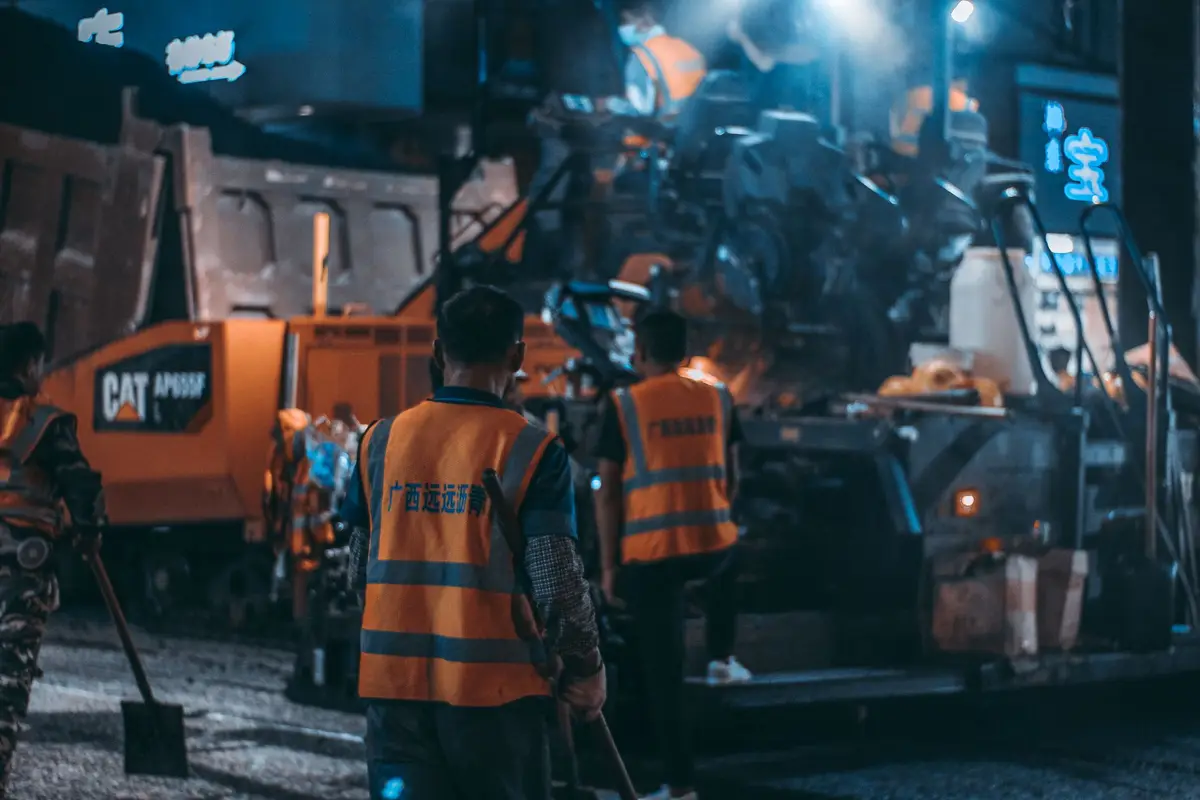
Yes — as long as the logo doesn't cover reflective tape and doesn't reduce the required fluorescent background material below the ANSI minimum for that class. Left chest and upper back are the standard safe placements. Print, heat transfer, or embroider around the striping, never across it.
That's the whole rule in one paragraph, and it's the thing that trips people up. High-visibility clothing is certified under ANSI/ISEA 107 based on how much fluorescent background material and retroreflective tape the garment carries. Print a big logo across the reflective stripe and you've reduced the retroreflective area the garment was certified with. Nobody will stop you at the shop — you'll find out during a site audit, which is a bad time to find out.
ANSI classes 1, 2, and 3 — which one you need
Class 1: low-risk, separated from traffic
The lightest class, for workers who are away from moving traffic or in controlled areas — parking lot attendants, warehouse yards, delivery drivers, some inventory work. If vehicles nearby are moving under about 25 mph and there's separation, Class 1 is usually the fit.
Class 2: the one most crews need
More fluorescent background material and more reflective tape. This is the everyday requirement for roadway, construction, utility, survey, and airport ground work — anywhere traffic is moving faster or the environment is busier. If somebody told you to "get vests" and didn't specify, they almost certainly meant Class 2.
Class 3: highway, night, and low visibility
The most conspicuous class — it has to outline the whole body, which means sleeves or a full-silhouette design, not just a vest panel. Required for high-speed highway work, night operations, emergency response, and any low-light environment. A plain vest by itself generally can't hit Class 3.
One thing worth saying plainly: your general contractor's site rules or your contract may require a specific class regardless of what the standard technically demands. Check the contract first, then buy. OSHA's PPE requirements put the responsibility for providing appropriate protective equipment on the employer, so the class isn't really the crew's decision to make.
Where the logo can go
Left chest is the safest and most common placement — a compact logo above or below the horizontal stripe, typically 3 to 4 inches wide. Upper back, above the shoulder striping, is where your company name goes if you want it readable from a distance, and it's the placement that does the most marketing work on a job site.
What to avoid: printing over any reflective tape, wrapping a design across a stripe, or covering a large area of the fluorescent panel with dark ink. If you want a big back design, we'll lay it into the open field above or between the striping and size it to fit — that's a layout decision, and it's on us to get it right before anything gets printed.
Also worth knowing: most vests have limited flat area to work with, especially Class 2 with pockets and zippers. Send us the exact vest model you're buying and we'll tell you what will actually fit on it before you order a hundred of them.
Screen print, heat transfer, or embroidery?
All three work on a vest, and the right one depends on the material and the run size.
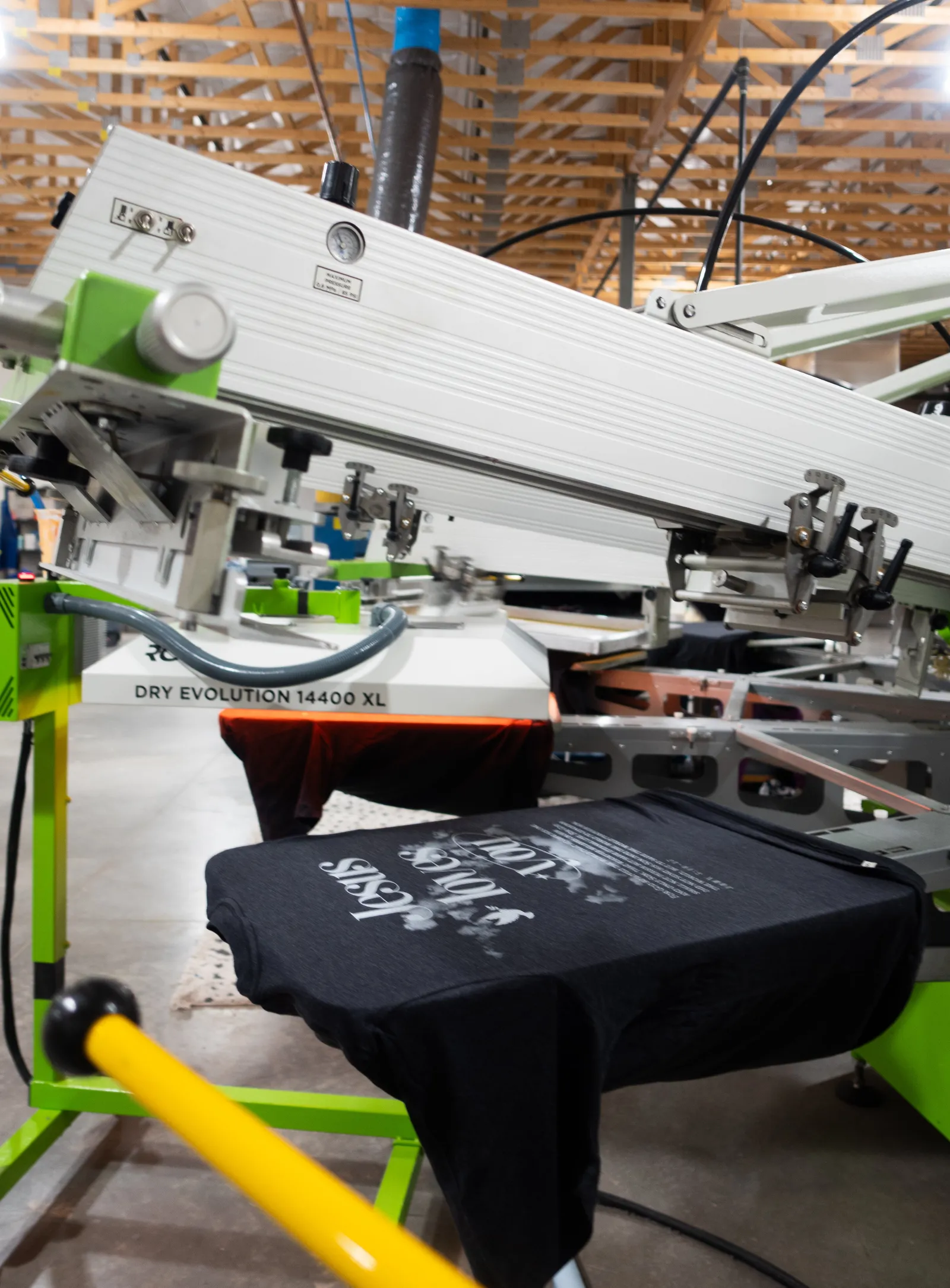
Screen printing is the most economical for a big run with a simple one- or two-color logo, and the ink holds up well outdoors. Heat transfer and DTF handle full-color logos and small batches — the better pick for most vest orders, honestly, since vest quantities are usually smaller than shirt quantities and the polyester mesh takes a transfer cleanly. Embroidery looks the most premium and lasts the longest, but it punctures the fabric, so it's best on the solid panel areas and not on mesh.
A nice option people don't know about: reflective print. A logo printed in reflective ink or transfer material lights up in headlights along with the tape, which looks sharp and adds visibility instead of subtracting from it.
Vest features worth paying for
Breakaway vests tear away at the shoulders and sides if they snag on equipment or a vehicle — required or strongly recommended for anyone working near moving machinery or rail. Pockets sound trivial until your crew is carrying radios, phones, and a tablet; a two-tone vest with a few pockets and a zipper front costs a little more and gets worn without complaining. Zipper vs. hook-and-loop matters more than people expect — hook-and-loop wears out and gets loaded with dust.
And go two-tone if you can. A vest with a contrasting lower panel hides dirt far better than an all-lime vest, which starts looking rough within a month on a real job site. Same trick as a dark work shirt, just applied to a garment that has to stay bright where it counts.
If your crew also needs shirts, the same rules apply to hi-vis tees and long sleeves — we go through that in the construction company shirts guide.
Custom safety vests from Heart & Hook
We decorate safety vests, hi-vis tees, and custom work shirts for construction and trade companies across Arizona and ship anywhere. Send us the vest model and class you need — or let us source it — and we'll lay out your logo so it reads well and stays compliant. Low minimums, and an online company store if you'd rather your crew order their own gear as you hire.
Send over your logo and how many vests you need, and we'll come back with a free mockup and a clear quote, including where the logo will sit on that specific vest. Just tell us what you're working on!
Frequently asked questions
- Can you put a logo on a safety vest?
- Yes, as long as the logo doesn't cover reflective tape and doesn't reduce the required fluorescent background material below the ANSI minimum for that class. Left chest and upper back, placed around the striping rather than across it, are the standard safe placements.
- Does printing on a safety vest void the ANSI rating?
- It can. ANSI/ISEA 107 certification depends on the amount of fluorescent background material and retroreflective tape, so printing across reflective striping or covering a large area of the fluorescent panel can put the garment out of compliance. Decorate around the tape instead.
- What is the difference between Class 1, 2, and 3 safety vests?
- Class 1 is for low-risk areas separated from traffic, like parking lots and warehouse yards. Class 2 has more fluorescent and reflective material and covers most roadway, construction, and utility work. Class 3 outlines the entire body and is required for highway, night, and low-visibility work.
- What class safety vest do I need for construction?
- Class 2 covers most construction work, and it's what people usually mean when they say to get vests. Highway, night, and low-light work needs Class 3. Always check your contract or the general contractor's site rules first, since those can require a higher class than the standard alone.
- What is the best way to print a logo on a safety vest?
- Heat transfer or DTF is usually the best fit — vest orders tend to be smaller, and the polyester mesh takes a transfer cleanly with full color. Screen printing is more economical for large runs with a simple logo, and embroidery lasts longest but should stay on solid panels rather than mesh.
- Where should the logo go on a safety vest?
- Left chest, sized around 3 to 4 inches wide, is the safest placement. Company names go on the upper back above the shoulder striping where they're readable from a distance. Never place artwork across reflective tape.
- What is a breakaway safety vest?
- A vest designed to tear away at the shoulders and sides if it snags on equipment or a vehicle, so the wearer isn't dragged or caught. It's required or strongly recommended for anyone working near moving machinery, rail, or traffic.
- How many custom safety vests do I have to order?
- For a one-time run, screen printing starts at 48 pieces and DTF at 12, which suits most vest orders. Through an online company store there's no minimum at all, so a new crew member can get a vest in their size on demand.
Need uniforms for your crew?
Tell us how many people need gear and what they wear on the job. We'll send a free logo mockup and a quote, and keep your logo on file so every reorder matches.
Get a free uniform quote