Construction company shirt ideas have to do two jobs: survive a job site and sell your business at the same time. Here's what to put on them, the fabrics that hold up, when hi-vis is actually required, and how to keep a crew stocked as you hire. From an Arizona shop that outfits trade crews.
A construction company shirt has two jobs, and most shops only talk about one. It has to survive a job site — heat, dust, sweat, and a wash cycle that would end a nice tee. It also has to sell your company every single day, because your crew is parked in a neighborhood or a commercial lot where everybody can read the back of that shirt.
So here's the practical version: what to actually put on a construction shirt, which fabrics hold up, when hi-vis is required instead of just a nice idea, and how to keep a crew in gear when you're hiring two guys a month. We outfit construction and trade crews all over Arizona, so this is what we tell customers on the phone.
What should a construction company put on its shirts?
Put your logo and company name on the left chest, and a large back print with your name, trade, and phone number. Pick a durable cotton-poly blend, and go hi-vis yellow or orange any time the crew works near traffic or heavy equipment. Add first names if your guys meet homeowners.
That's the whole formula, and it works because of how people actually see your crew. Nobody walks up and studies a chest logo. They see the back of a shirt from forty feet away — from a car, from across a lot, from the house next door where they're already thinking about their own remodel. A big, readable back print with a phone number is the cheapest advertising you will ever buy, and you're paying for the shirt anyway. (If you want the order side — garments, pricing, minimums — that's on our construction company shirts page.)
Adding first names is a small upgrade that pays off on residential work. When a homeowner can say *Marcus is here* instead of *the guys are here*, the whole job feels different. We add names through embroidery or a named DTF transfer, and it costs a lot less than most people expect.
The best fabric for construction work shirts
This is where a cheap shirt shows its price. A job-site shirt takes abrasion, sweat, sun, and a hot wash several times a week, and the fabric decides whether it lasts a season or a year.
Cotton-poly blends: the workhorse
A 50/50 or 60/40 cotton-poly blend is the sweet spot for most crews. You get cotton's comfort and print quality with polyester's strength and quick drying, and blends shrink and pill far less than 100% cotton after repeated hot washes. If you buy one shirt for the whole crew, buy this one.
100% cotton: comfortable, but it wears out
Cotton breathes and feels great, and a heavyweight cotton tee takes a screen print beautifully. The catch is that it soaks up sweat and stays heavy, and it wears thin faster under a tool belt. It's a fine choice for office staff, giveaways, and cooler-weather work — less so for a framer in July.
Performance polyester: for the heat
Moisture-wicking polyester pulls sweat off the skin and dries fast, which genuinely matters in Arizona summers. Two honest cautions: cheap poly holds odor, and traditional plastisol screen printing can dye-migrate on some polyester — colors bleed up into the ink weeks later. We use DTF or a blocker base on performance fabrics to keep that from happening.
Long sleeves are underrated
Guys resist them and then convert. A lightweight long-sleeve with a UPF rating keeps sun and abrasion off your arms and often feels cooler than baking bare-skinned all day. Keep a few in the rotation and let the crew choose.
When your crew actually needs hi-vis
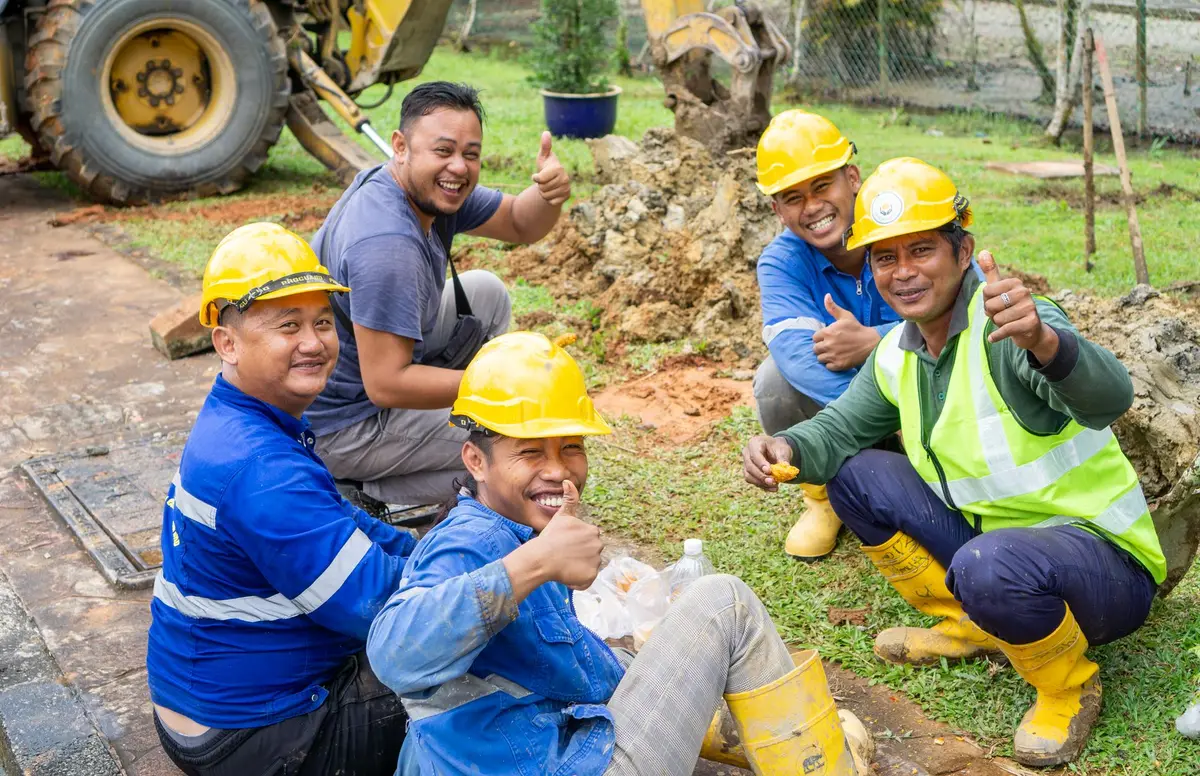
Short answer: any time they work around moving vehicles or equipment. High-visibility clothing is rated by the ANSI/ISEA 107 standard in classes — Class 2 covers most road-adjacent and heavy-equipment work, Class 3 covers highway work and low light, and Class 1 is for low-traffic areas. Road work under federal highway rules requires a compliant garment, and OSHA's PPE requirements put the responsibility on the employer.
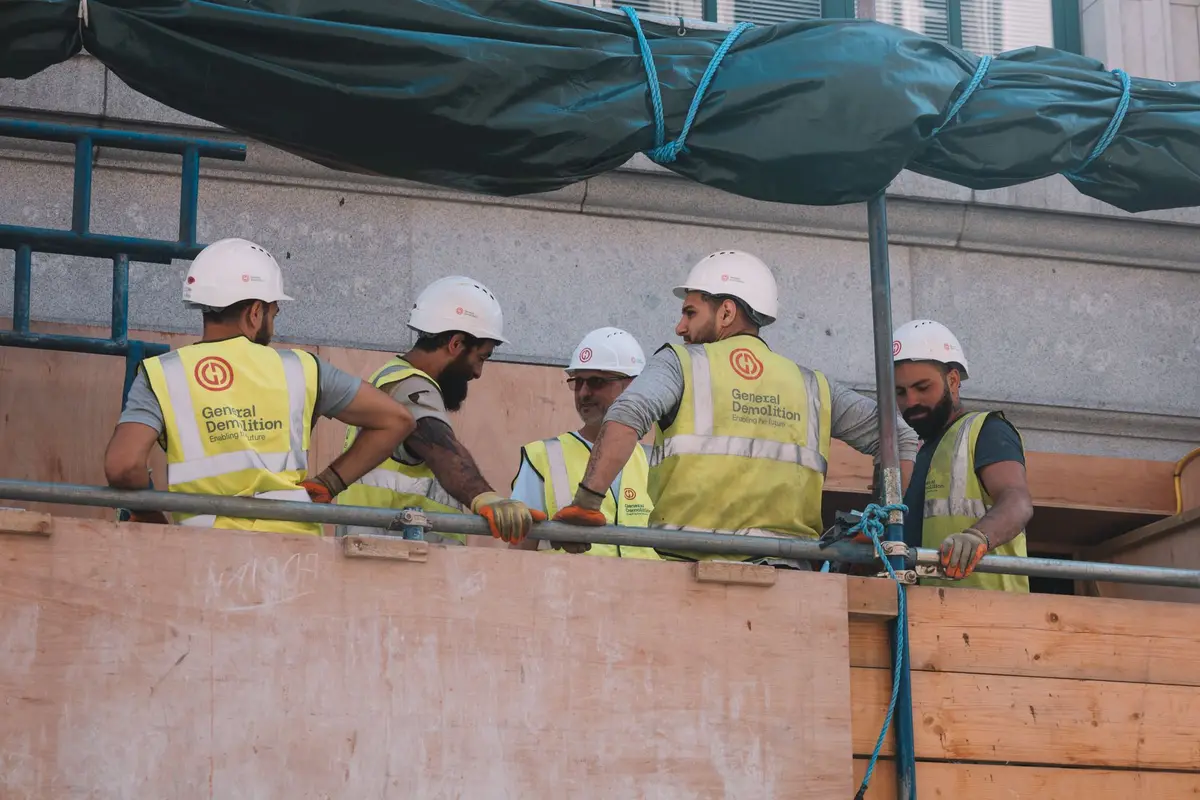
Here's the part worth knowing before you order: a plain safety-yellow t-shirt is not the same as an ANSI-rated garment. A bright shirt helps people see your crew, but the rating depends on the amount of fluorescent background material and reflective tape, and printing over the reflective striping can void it. If a general contractor wrote a class into your contract, buy the certified vest or shirt and decorate around the tape — we'll place the logo so the garment stays compliant.
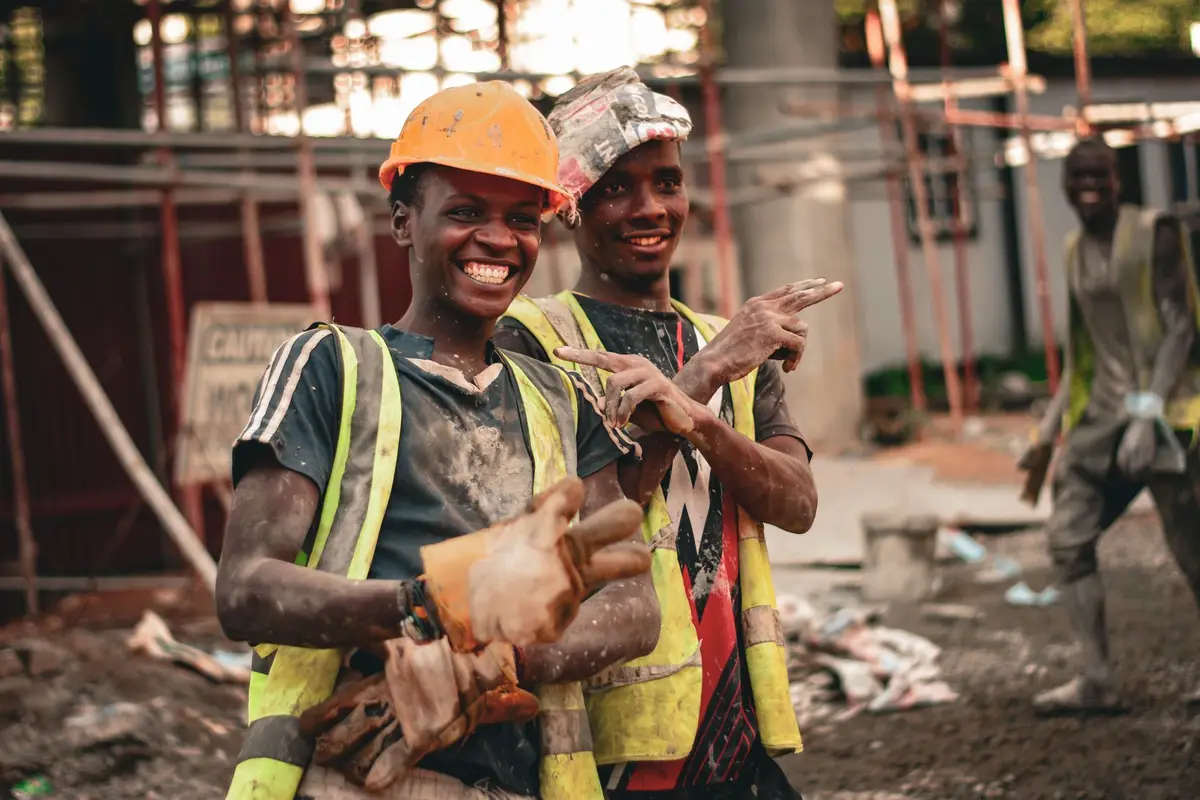
For crews that aren't under a hi-vis requirement, safety yellow, orange, and lime still look sharp and make a team easy to spot on a big site. Plenty of companies run hi-vis tees as their everyday shirt and keep certified vests in the truck for when they're needed.
Construction company shirt design ideas that get you calls
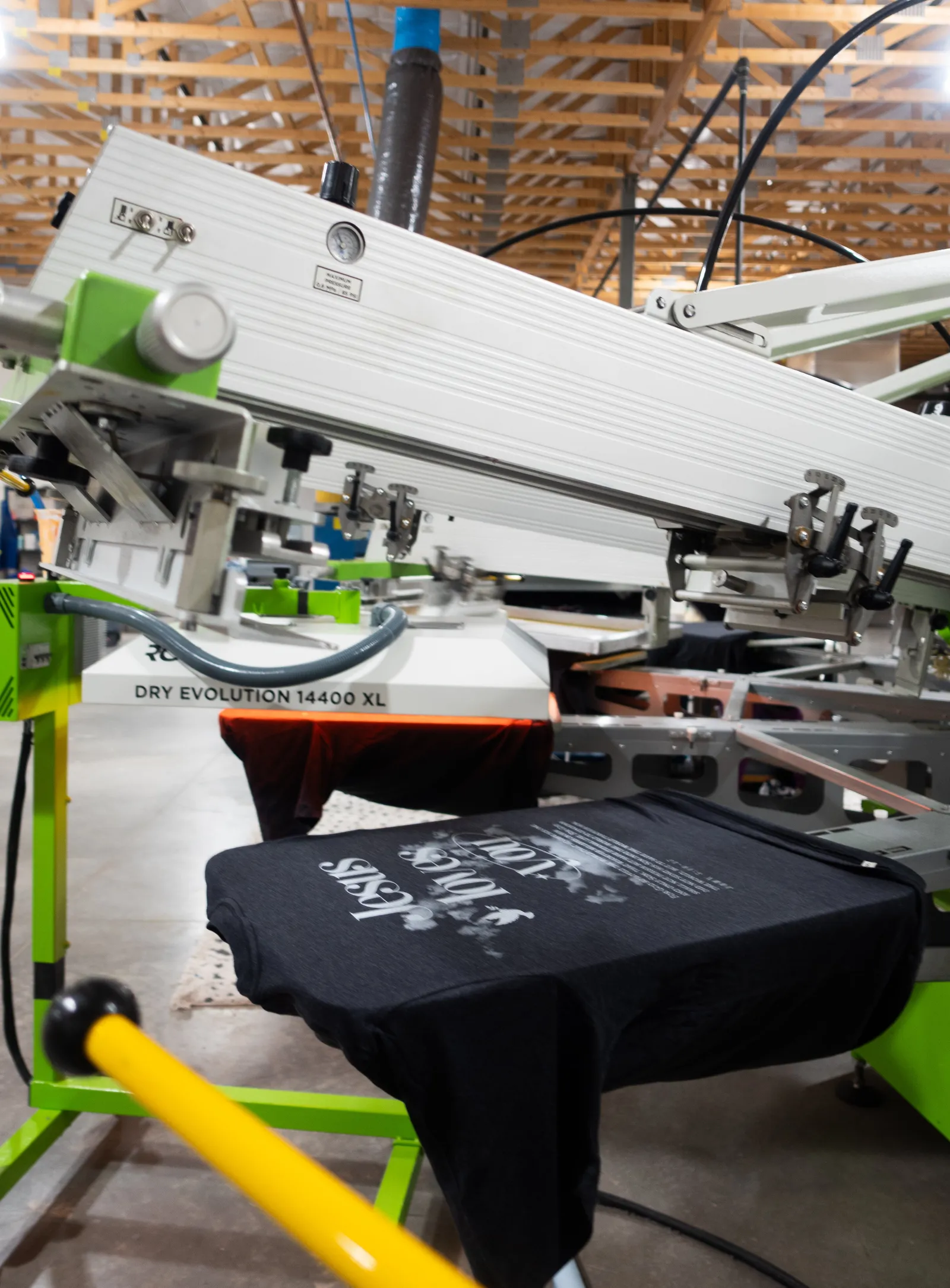
The design is where the marketing money is, and the good ones are simpler than people expect. Go big on the back with your company name, your trade, and your phone number in a bold, wide font — if it isn't readable from a passing car, it's decoration, not advertising. Keep the left chest small and clean at around 3.5 inches wide so it reads as a uniform rather than a billboard.
Limit the color count. One or two ink colors on a dark shirt looks sharper than a six-color gradient and costs meaningfully less per shirt. If your logo is complicated, we'll usually suggest a simplified one-color version for shirts and keep the full logo for trucks and paperwork.
A few more that work: put est. 2014 or your license number under the logo — licensed and bonded is a selling point in the trades; add a crew or project shirt for a big job the team is proud of, which does more for morale than another company polo; and give supervisors a different color so anyone on site can find a lead in five seconds. That last one is free and every superintendent loves it.
Embroidery, screen print, or DTF on construction shirts?
All three end up on a job site, and each is right for something different. Screen printing is the cheapest way to do a big run of tees and lays down thick ink that survives the wash — it's what most back prints should be. Embroidery is the most durable and the most professional-looking, so it's the pick for polos, jackets, beanies, and hats; stitched thread doesn't crack or fade. DTF printing handles full-color logos, small batches, and performance fabrics that don't take plastisol well.
Most construction companies land on a mix: screen-printed tees for the field crew, embroidered polos for estimators and supervisors, and embroidered caps for everybody. If one method is the smarter call for your logo and budget, we'll say so — even when it's the smaller sale. There's a full breakdown in our embroidery vs. screen printing guide.
Keeping a growing crew in shirts
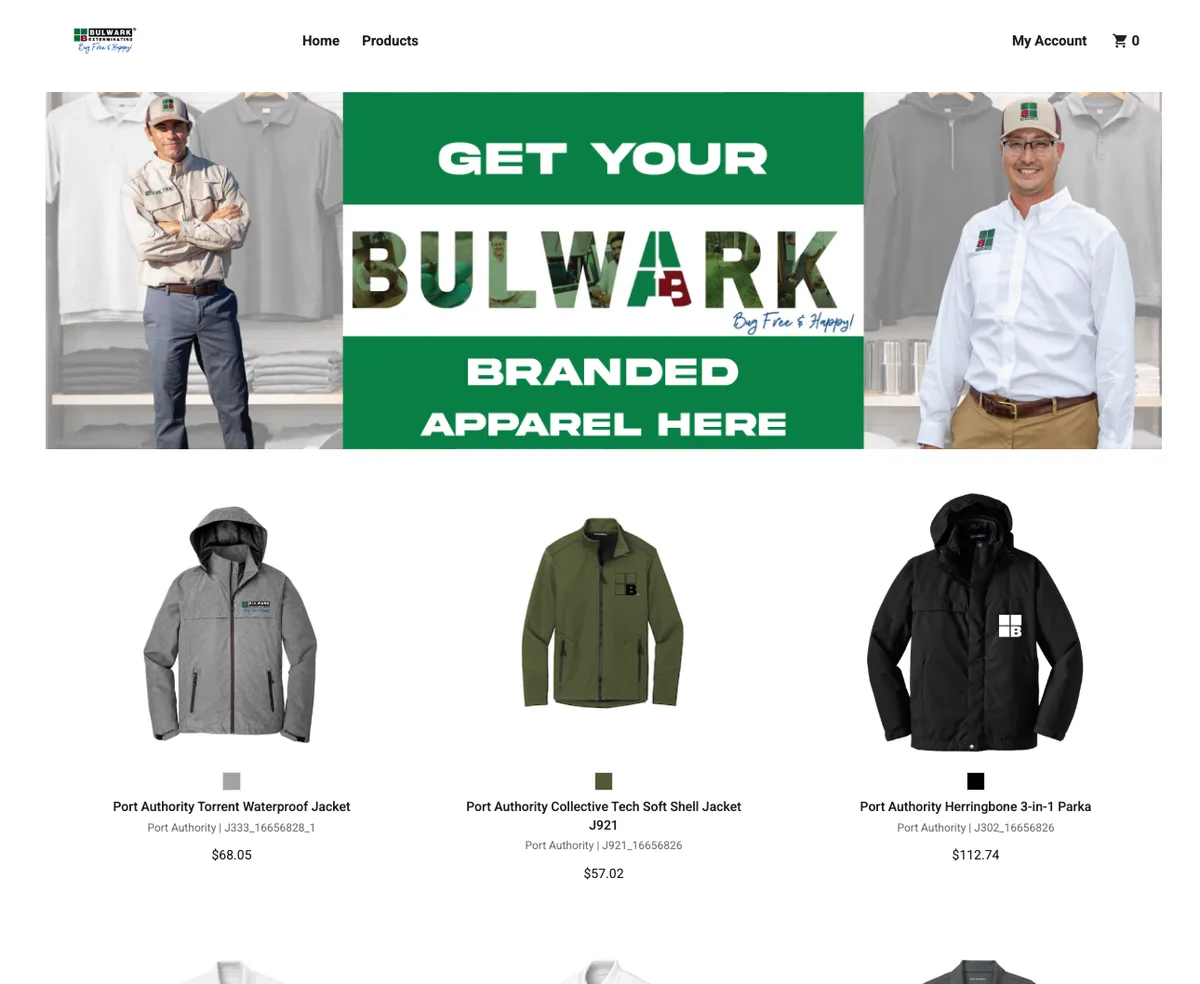
This is the part that actually frustrates contractors. You order 60 shirts, you hire four people in March, and now you're back to square one on a 12-piece reorder. The fix is an online company store: we load your approved artwork, garments, and sizes, and your crew orders from a link whenever they need gear. No minimum, no re-doing the setup, and you can put it on the company card or let guys buy their own extras.
For a one-time run, our minimums stay trade-friendly: screen printing starts at 48 pieces, embroidery at 12, and DTF at just 12. Through a store there's no minimum at all. If you'd rather run it as a formal program with an annual allowance, that's what our uniform programs are built for.
Custom construction company shirts from Heart & Hook
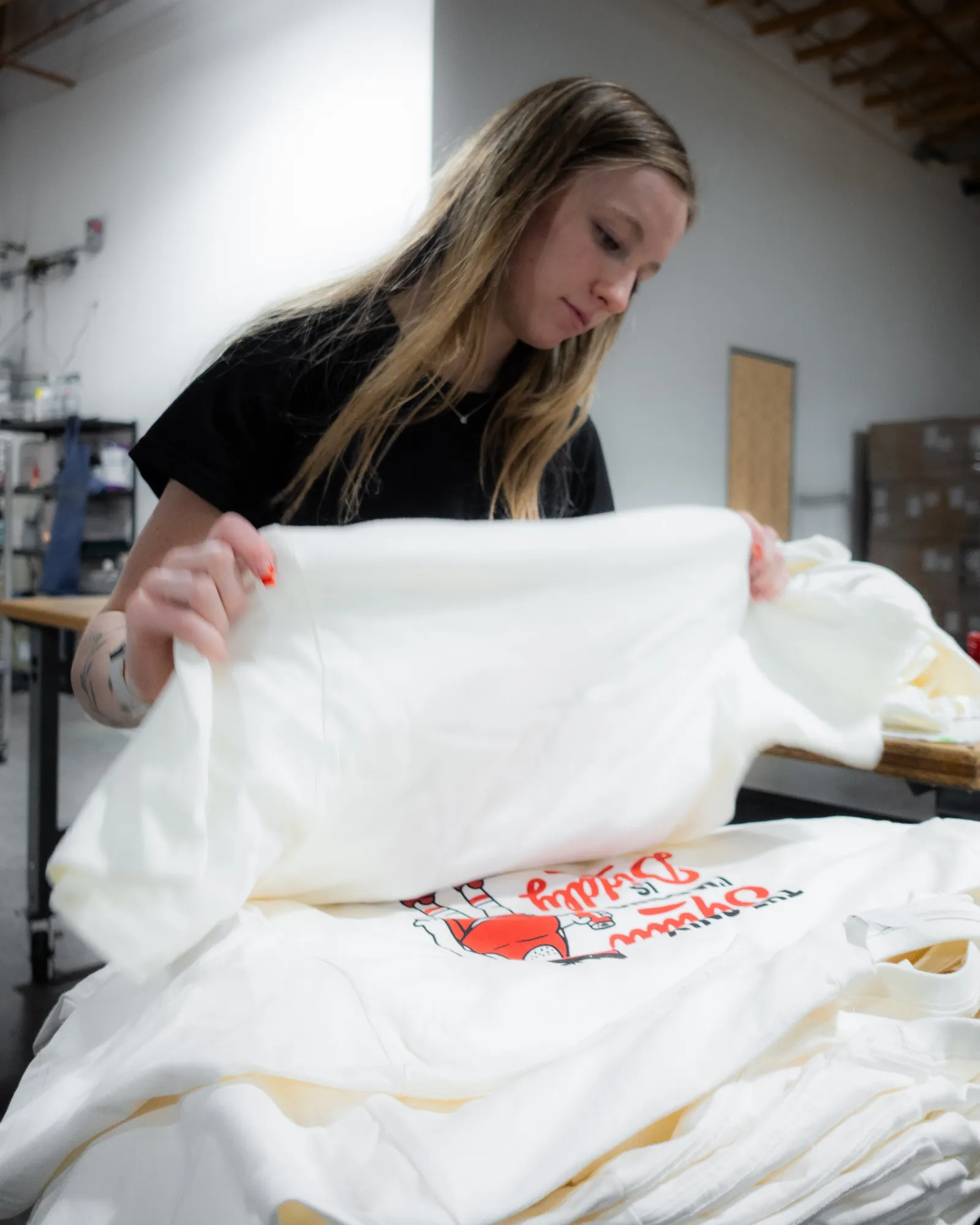
We print and stitch for construction and trade companies across Arizona and ship anywhere — custom work shirts, hi-vis tees, embroidered polos and hats, hoodies for the winter mornings. Everything runs through our own Mesa shop, so if a garment is backordered or a color is off, you hear it from us before it becomes your problem.
Send over your logo and a rough headcount and we'll come back with a free mockup and a straight quote — garment, colors, and the decoration method that fits the job. Just let us know what you've got in mind!
Frequently asked questions
- What should I put on a construction company shirt?
- Your logo and company name on the left chest, and a large back print with your company name, trade, and phone number so it's readable from a distance. Adding first names helps on residential work, and a license number is a nice trust signal in the trades.
- What is the best material for construction work shirts?
- A 50/50 or 60/40 cotton-poly blend is the best all-around pick — it's comfortable, dries faster than cotton, and resists shrinking and pilling through repeated hot washes. Moisture-wicking polyester is better in extreme heat, and 100% cotton is the most comfortable but wears out fastest.
- Do construction workers have to wear hi-vis shirts?
- It depends on the work. ANSI/ISEA 107 rated high-visibility apparel is required around roadways and is commonly written into general contractor site rules for anyone near moving vehicles or equipment. Class 2 covers most road-adjacent work and Class 3 covers highway and low-light work.
- Is a safety yellow t-shirt the same as an ANSI hi-vis shirt?
- No. A bright shirt is easier to see, but ANSI ratings depend on the amount of fluorescent background material and reflective tape. If a contract specifies a class, you need the certified garment — and the logo has to be placed so it doesn't cover the reflective striping.
- How much do custom construction company shirts cost?
- It depends on the garment, the quantity, and the number of print colors. A one-color screen-printed tee in a run of 48 or more is the lowest cost per shirt; embroidered polos cost more per piece but last longer. Send a headcount and a logo and we'll quote the real numbers.
- Should construction shirts be embroidered or screen printed?
- Screen printing is the most cost-effective for big tee runs and large back prints. Embroidery is more durable and more professional-looking, so it's the better pick for polos, jackets, and hats. Most construction companies use both — printed tees for the field crew, embroidered polos for supervisors.
- What is the minimum order for construction company shirts?
- For a one-time run, screen printing starts at 48 pieces, embroidery and DTF at 12. Through an online company store there's no minimum at all, so a new hire can order a single shirt in their size on their first day.
- How do I get shirts for new hires without reordering the whole run?
- Set up an online company store. Your artwork, garments, and sizes stay loaded, so anyone can order what they need from a link with no minimum and no setup work repeated. It's the cleanest fix for crews that grow through the season.
Need uniforms for your crew?
Tell us how many people need gear and what they wear on the job. We'll send a free logo mockup and a quote, and keep your logo on file so every reorder matches.
Get a free uniform quote