A security uniform has one legal rule — don't look like the police — and one practical job: be unmistakable at a glance. Here's how to outfit a guard company post by post, what to put on the uniform, and how to keep a high-turnover roster in gear.
A security uniform has a strange double job. It has to be unmistakable — someone across a parking lot at night should identify your guard in one glance — while being legally careful *not* to look like something it isn't. No other work uniform threads that needle, and it's why security companies think harder about apparel than almost any client we serve.
Here's the practical guide: the lookalike rules that actually constrain the design, how the right uniform changes post by post, what to put on the garments, and how to keep uniforms flowing in an industry famous for turnover.
What do security guards wear?
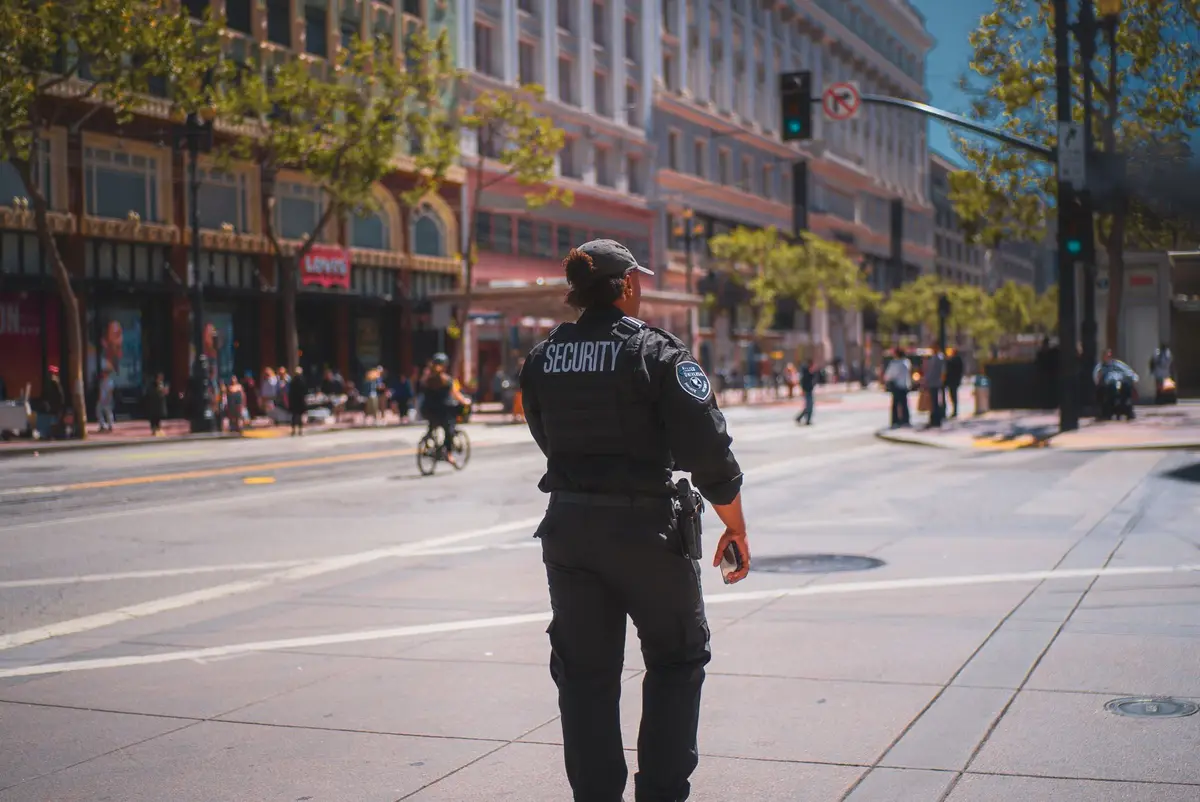
Most security guards wear a uniform shirt or polo with the company logo, SECURITY marked clearly on the front and back, dark duty pants, and closed-toe footwear — with a badge or license visible where the state requires it. The formality shifts with the post, from hi-vis outerwear on a construction site to a blazer in a corporate lobby.
The word itself is the uniform's core feature. Big block letters — SECURITY across the back, a smaller marker on the chest — are what turn a person into a visible deterrent. Most of a guard's value is delivered before anything happens, purely by being seen, so treat back-of-shirt readability as a safety spec, not a design flourish: high contrast, plain type, readable from across a lot. For night posts, reflective lettering does the deterrent job in headlights, the same way reflective tape works on a safety vest.
The one hard rule: don't look like police
Nearly every state regulates private security through a licensing board, and nearly all of them draw the same line: a private security guard must not be mistakable for a police officer. Depending on the state, that can restrict metallic seven-point badges, certain uniform colors and stripe patterns, and words like *police*, *officer*, or *agent* on the garment. Impersonating law enforcement is a crime everywhere; a uniform that invites the confusion is a liability even where it's technically legal.
Practical translation for the order form: use SECURITY or the company name, never POLICE-adjacent wording; prefer embroidered or printed badge emblems over metal star badges; and check your state licensing board's uniform rules before finalizing colors — a couple of states are specific about what private security can and can't wear. This is also a reason to lean into your own brand colors rather than copying the navy-and-silver police palette: distinctive is both safer and better marketing.
Match the uniform to the post
High-visibility posts: patrol, events, construction
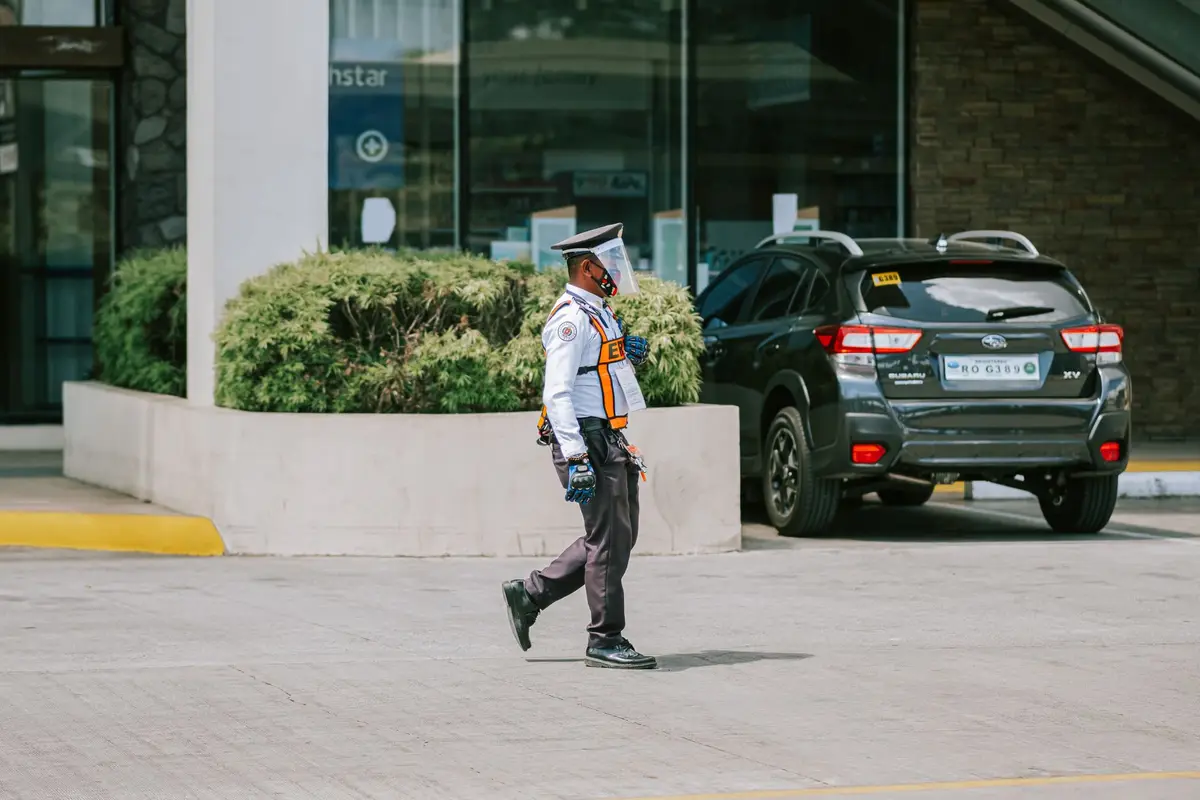
Anywhere the job is *be seen* — parking patrol, event crowds, construction site gates — go bright and bold. A hi-vis vest or shirt with SECURITY across the back is the standard, and if the post is near traffic or equipment it isn't optional: ANSI-rated gear applies to guards the same as to crews, and our custom safety vest guide covers the class rules and how to add a logo without voiding the rating.
Professional posts: lobbies, retail, healthcare
A corporate lobby or hospital wants presence without menace: an embroidered polo or button-up in company colors, dark pants, maybe a blazer at the high end. The SECURITY marker gets subtler here — an embroidered chest emblem and a back print — because the audience is ten feet away, not across a lot.
Outdoor and overnight posts
Layering is the whole game: a uniform system where the polo, the quarter-zip, and the duty jacket all carry the same branding, so a guard at hour ten of a cold overnight still looks like your company and not like someone who grabbed a hoodie from the car. Order outerwear with the logo at the start — retrofitting jackets six months in is how uniforms drift.
What goes on the uniform
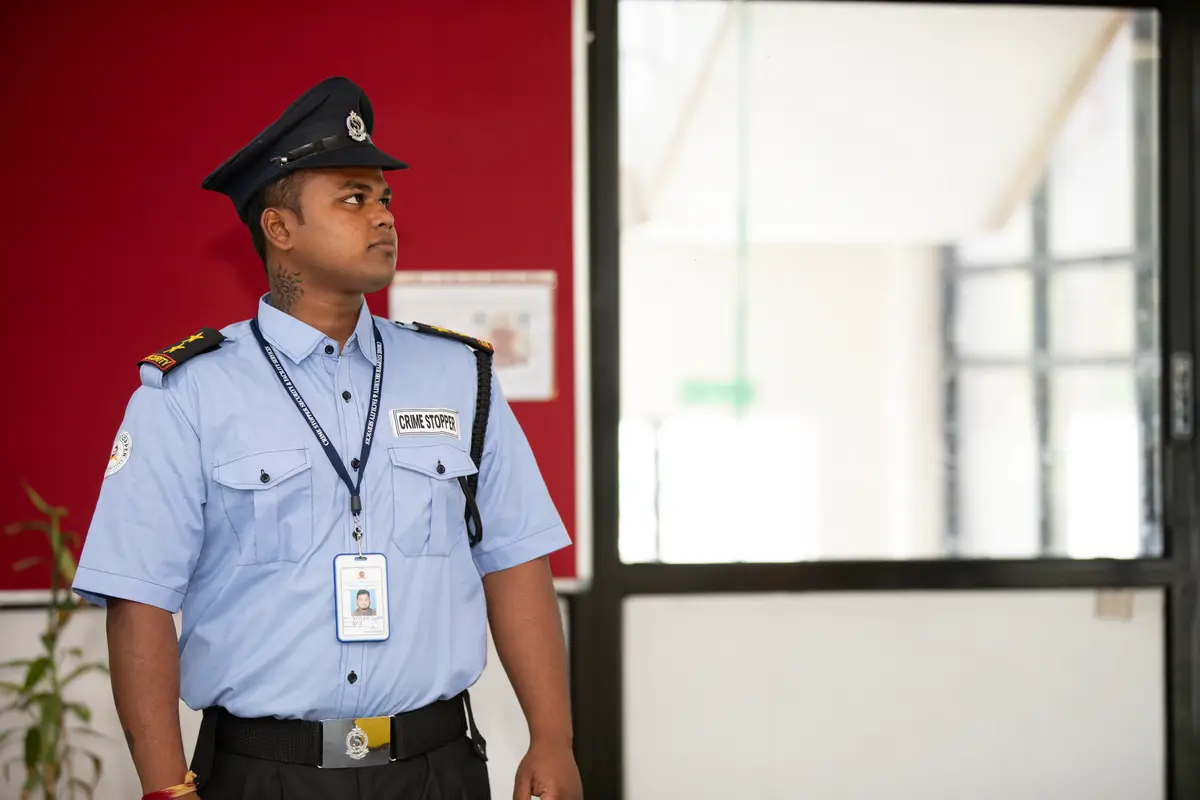
Company logo on the left chest (embroidered — it reads as authority in a way a print doesn't), SECURITY big on the back, and where your state requires it, the guard's name or license number displayed. Epaulet-style shoulder detail and an embroidered emblem patch give the classic guard look without any police-lookalike risk. For gear-heavy posts, make sure the shirt plays well with a duty belt and radio — snag-resistant fabric, no flapping pocket the mic clip fights with.
Decoration-wise it's the usual split, with one twist: embroidery for logos and emblems on polos, button-ups, and jackets; screen printing for the big SECURITY back print, where a bold one-color print is exactly right; and reflective transfer lettering for night posts. Most guard-company orders mix all three on the same garment.
Fabric for a twelve-hour shift
Guards stand, walk, and sit in the same shirt for a long shift, indoors and out. Moisture-wicking poly or poly-cotton polos carry most posts; ripstop or twill button-ups suit the formal ones; and everything should survive frequent washing without fading, because a faded uniform reads as a faded company. In Arizona summers we steer patrol posts toward lightweight wicking fabrics in dark colors — dark hides the shift, wicking survives it.
Keeping a guard roster in uniform
Security has famously high turnover — it's a huge occupation (over a million guards nationally, per the Bureau of Labor Statistics) with constant onboarding, and every new guard needs a full kit on day one. Buying 200 shirts twice a year doesn't match that reality, and neither does making an office manager re-collect sizes every month.
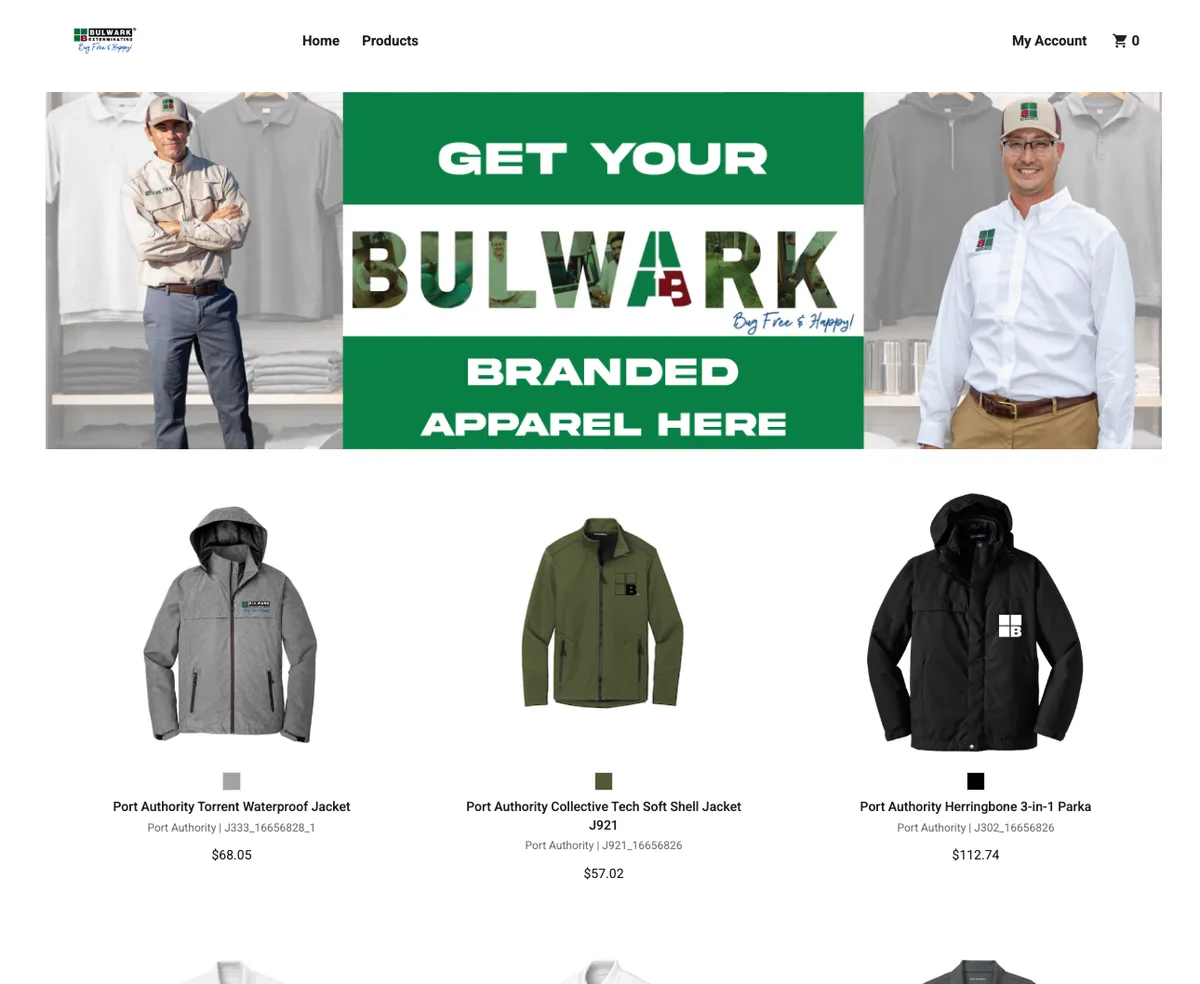
The structure that works is a uniform program backed by an online company store: approved garments, logo, and per-role kits loaded once; each new guard orders their sizes from a link; billing runs centrally or against a per-guard allotment; and replacements for worn or lost pieces happen without anyone starting a project. No minimums through the store, so onboarding one guard costs one kit. For one-time runs our minimums are screen printing at 48, embroidery at 24, and DTF at 12 — and our employee uniform program guide walks through setting the policy side up.
Security guard uniforms from Heart & Hook
We outfit security companies and in-house teams — embroidered polos and button-ups, printed and reflective SECURITY backs, emblem patches, hi-vis, jackets, and caps, decorated in our own Mesa shop and shipped anywhere. We'll flag anything on your design that drifts toward the police-lookalike line before it gets made, and set up the store so your roster churn stops being an apparel problem.
Send your logo, your post types, and a rough headcount, and we'll come back with a free mockup and a clear quote — per-role kits included if you want them. Just tell us what your posts look like!
Frequently asked questions
- What do security guards wear?
- A uniform shirt or polo with the company logo, SECURITY marked clearly on the front and back, dark duty pants, and closed-toe footwear, with a badge or license visible where the state requires it. Formality ranges from hi-vis gear on patrol and construction posts to polos or blazers in corporate lobbies.
- Can a security guard uniform look like a police uniform?
- No. State private-security licensing rules almost universally prohibit uniforms that could be mistaken for law enforcement, which can restrict badge styles, certain colors and stripes, and words like police or officer. Use SECURITY or the company name and prefer embroidered emblems over metal star badges.
- What should be printed on a security guard shirt?
- SECURITY in large, high-contrast block letters across the back, a smaller SECURITY marker or embroidered emblem on the chest, and the company logo on the left chest. For night posts, reflective lettering makes the deterrent visible in headlights.
- Should security uniforms be embroidered or printed?
- Both, usually on the same garment: embroidery for the company logo and emblem patches because it reads as authority and survives washing, and screen printing for the big SECURITY back print. Reflective transfer lettering covers night visibility.
- What is the best shirt fabric for security guards?
- Moisture-wicking polyester or poly-cotton polos for most posts, and ripstop or twill button-ups for formal ones. Guards wear the same shirt for very long shifts indoors and out, so wicking, snag resistance, and colorfastness through frequent washing matter most.
- Do security guards need hi-vis vests?
- On posts near traffic, parking, loading docks, or heavy equipment, yes — the same ANSI class rules that apply to construction crews apply to guards. A vest with SECURITY on the back covers both the safety requirement and the deterrence job.
- How do security companies handle uniforms with high turnover?
- With a uniform program built on an online store: approved garments and logos stay loaded, each new guard orders their own sizes from a link with no minimum, and billing runs centrally or against a per-guard allotment. It turns constant onboarding from a project into a link.
- What is the minimum order for custom security uniforms?
- For a one-time run, screen printing starts at 48 pieces, embroidery at 24, and DTF at 12. Through an online company store there's no minimum, so a single new guard can be outfitted on day one.
Need uniforms for your crew?
Tell us how many people need gear and what they wear on the job. We'll send a free logo mockup and a quote, and keep your logo on file so every reorder matches.
Get a free uniform quote