The right cleaning uniform makes your crew instantly recognizable at a customer's door — and survives bleach, hot washes, and long shifts. Here are the styles, colors, and fabrics that work for residential, commercial, and housekeeping teams, plus how to keep a growing crew stocked.
Cleaning is a trust business. You're asking somebody to hand over a key to their house or an after-hours badge to their office, and the uniform is the first proof that you're a real company. When a matching, logoed crew steps out of the van, half the reassurance is already done.
The catch is that a cleaning uniform lives a hard life — bleach, disinfectant, constant bending and lifting, and a wash cycle that runs hot and often. Here's what actually holds up: the styles worth issuing, the colors that hide a day's work, the fabrics that survive it, and how to keep a crew that turns over stocked without reordering the whole run.
What should a cleaning company uniform include?
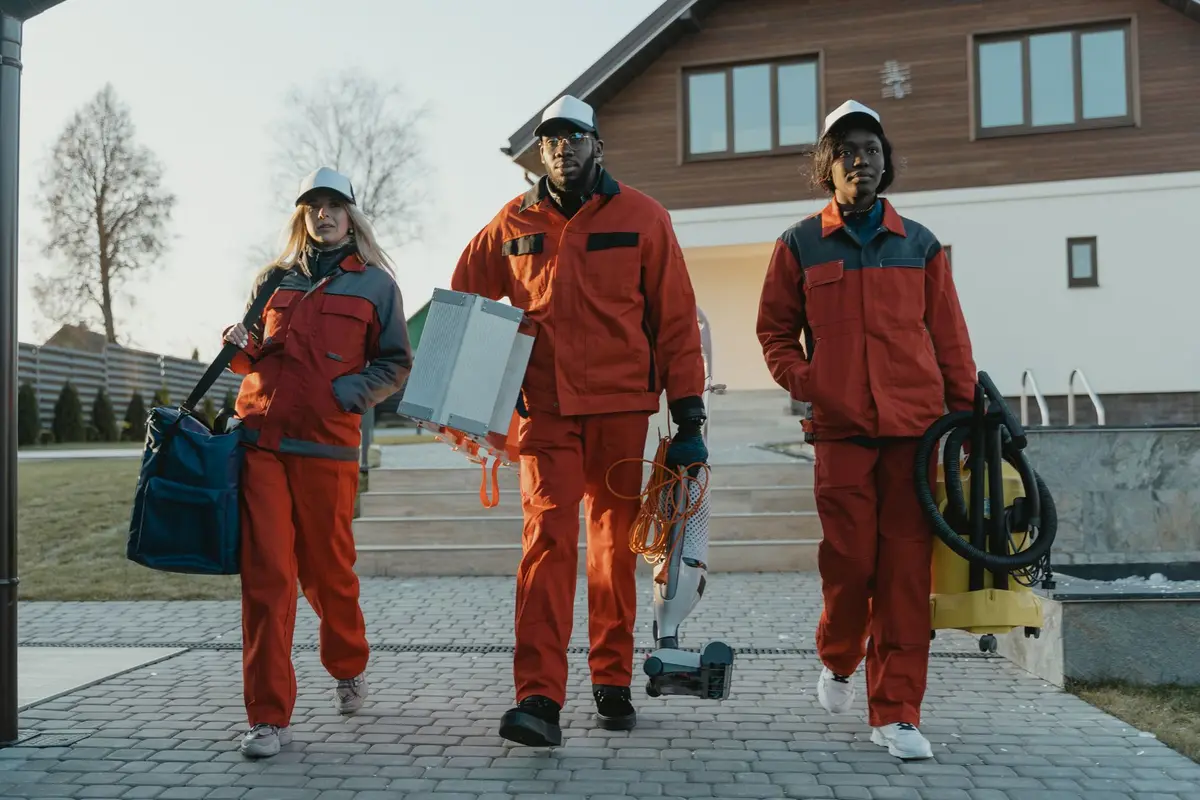
A branded polo or performance tee, a matching apron or utility vest, and a cap — in a mid-to-dark color that hides stains. Add an embroidered logo on the left chest, first names for residential crews, and a back print with your company name and phone number so every job advertises the next one.
That's the core kit. Beyond it, most companies add a long-sleeve option for chemical protection, a light jacket for early commercial shifts, and a second shirt color to separate leads from crew. You don't need to buy all of it on day one — start with the shirt and the apron, and grow the kit as the team grows.
Cleaning uniform ideas that work
Branded polos: the professional default
A collared polo is the safest choice for residential and office-facing work — it reads as professional without looking corporate, and it takes an embroidered logo beautifully. Pick a performance pique with stretch; your crew is bending, reaching, and kneeling all day, and a rigid cotton polo fights every one of those.
Performance tees: comfortable and affordable
For high-energy residential teams and deep-clean crews, a moisture-wicking tee is cooler, cheaper, and easier to replace. It's the workhorse most companies buy in volume — and the one to put your biggest back print on.
Aprons: the most underrated piece
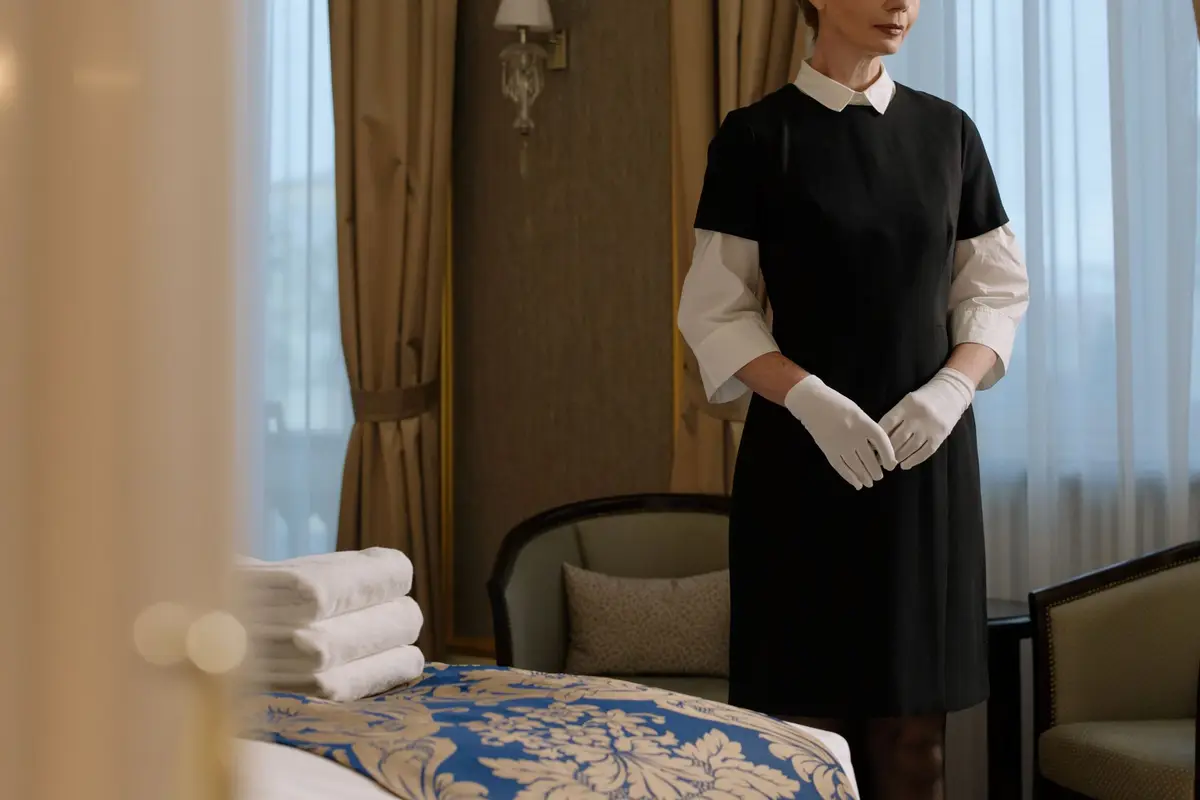
A branded apron does three things at once: it protects the shirt, it carries cloths, sprays, and a phone, and it makes a plain shirt look like a uniform. It's also the cheapest way to refresh a look without rebuying every shirt. For housekeeping and hospitality teams, an apron or tunic over a plain shirt is the standard for exactly this reason. We stitch and print custom aprons in bib, waist, and cross-back cuts.
Long sleeves and gloves for chemical work
Crews using disinfectants, degreasers, or restroom chemicals should have a long-sleeve option. Skin contact with cleaning products is a real hazard, and OSHA's PPE requirements put the responsibility for protective gear on the employer, so treat covered arms as safety equipment rather than a style choice.
Hats, jackets, and the extras
An embroidered cap keeps hair back and adds another branded surface at almost no cost. A light zip jacket matters more than people expect for commercial crews starting at 5 a.m. And a hi-vis vest is worth having for anyone working a parking structure or loading dock.
The best colors for cleaning uniforms
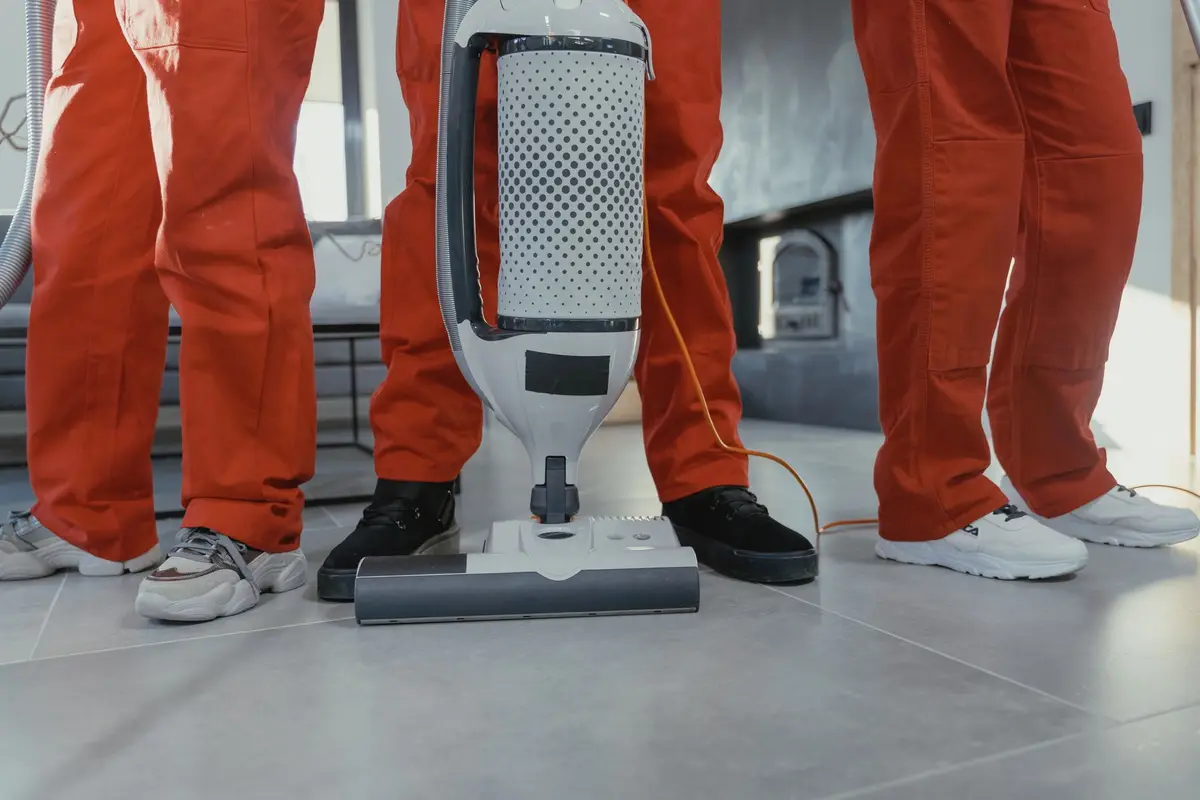
Color is the decision people regret most, and it comes down to one trade-off: light colors say clean, dark colors stay clean. White and pale blue signal hygiene — great for housekeeping and healthcare-adjacent work — but they show every splash and fade under bleach. Navy, charcoal, black, and deep brand colors hide a full day of work but can read as heavy in a bright home.
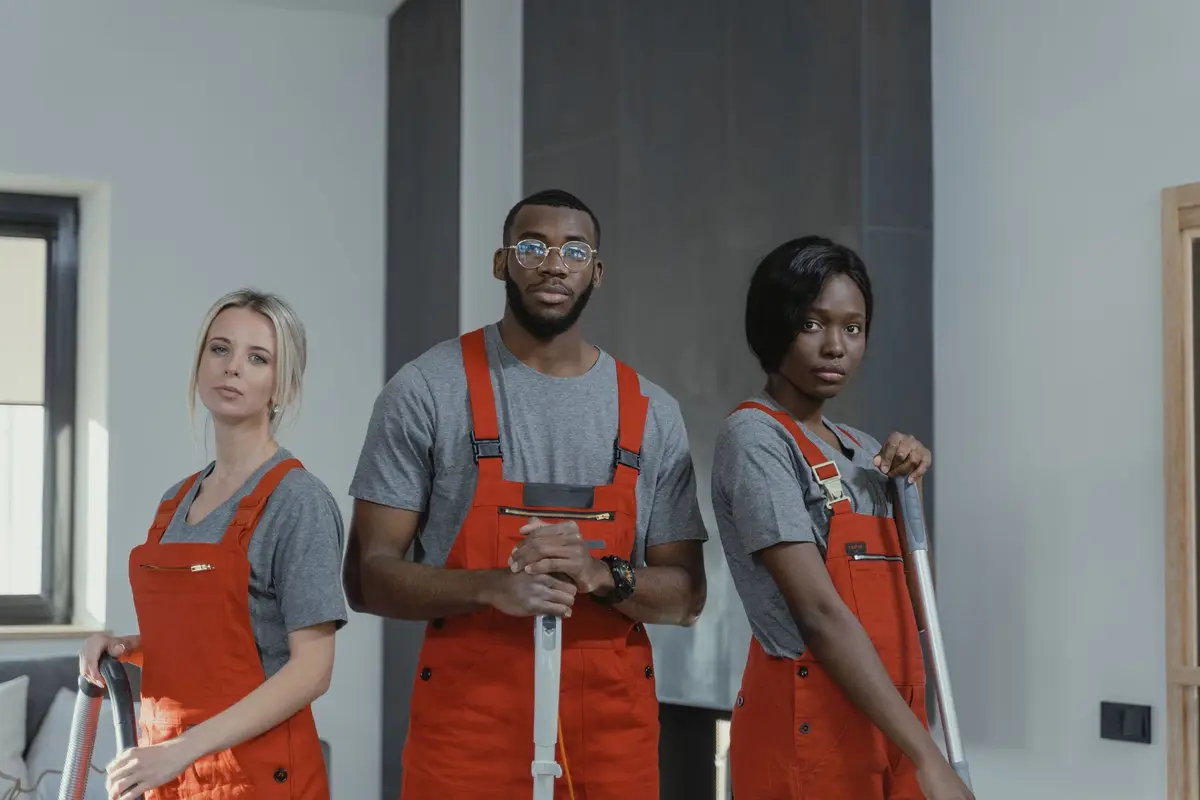
The compromise most companies land on is a mid-tone or dark shirt in a brand color with a bright, contrasting logo, plus an apron that takes the abuse. If your brand is built on a light color, put it in the logo and the apron trim rather than the whole garment.
Two more color notes. Bleach-resistant or bleach-proof fabrics exist and are worth it for crews that handle it daily — regular dyed cotton will go orange in patches within weeks. And color-coding roles (one shirt color for leads, another for crew, a third for specialty or deep-clean techs) makes a large team easy to manage on a commercial site and lets a client see who to ask for.
Fabric: what survives hot washes and bleach
Cleaning uniforms get washed more than almost any other work garment, so fabric choice is really a cost-per-wear decision.
Poly-cotton blends and performance knits are the sweet spot — they dry fast, resist wrinkles between houses, hold color longer, and shrink less through repeated hot washes. Look for four-way stretch if your crew does a lot of bending and lifting, and stain-release or soil-release finishes, which genuinely help with the grease and product spots that ordinary fabric holds onto. Pure cotton is soft and breathable but soaks up moisture, wrinkles hard, and thins out faster.
Whatever you choose, buy one of everything and wash it ten times before you commit to a hundred. That's the cheapest test in this whole article, and it has saved a few of our customers from a very expensive shrinking surprise.
Logo placement, names, and what to print
Keep the chest logo around 3.5 inches wide on the left chest — that's the size that reads as a uniform. Put your company name and phone number across the back in a bold, wide font; a neighbor watching your crew work is your cheapest lead source, and a van plus a readable shirt is the whole ad.
Add first names on residential crews. When a homeowner can greet Ana by name at the door instead of *the cleaners*, it changes the relationship — and it's the number one thing our cleaning customers say they'd add sooner if they were starting over. Names go on with embroidery or a named DTF transfer, and neither is expensive.
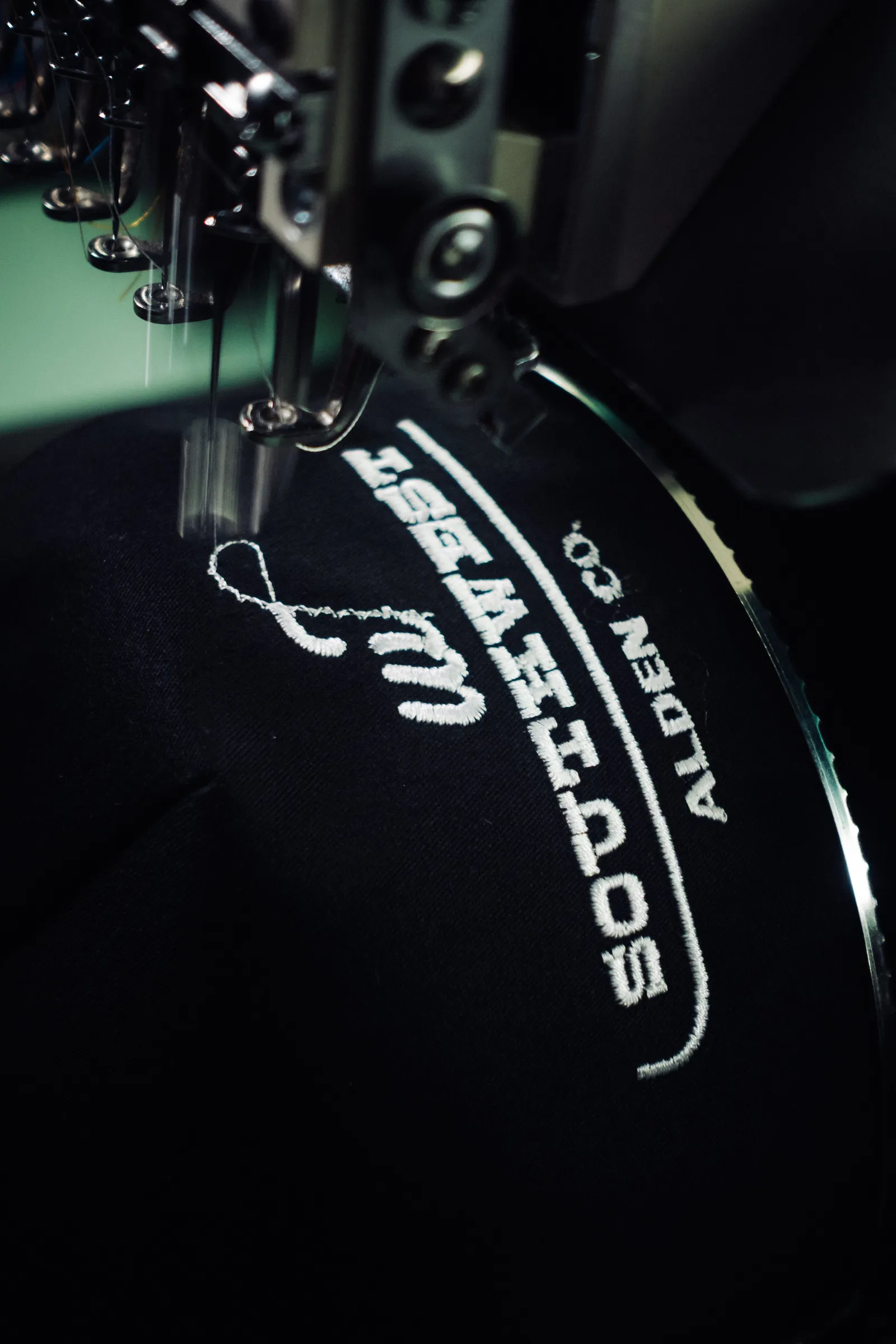
As for method: embroidery is the most durable and the most professional-looking, so it's the right call for polos, aprons, and caps you want to last through hundreds of washes. Screen printing is the cost-effective way to put a big back print on a run of tees. DTF covers full-color logos, names, and small batches. Plenty of cleaning companies run embroidered polos for leads and printed tees for the rest of the crew.
Keeping a crew stocked when turnover is normal
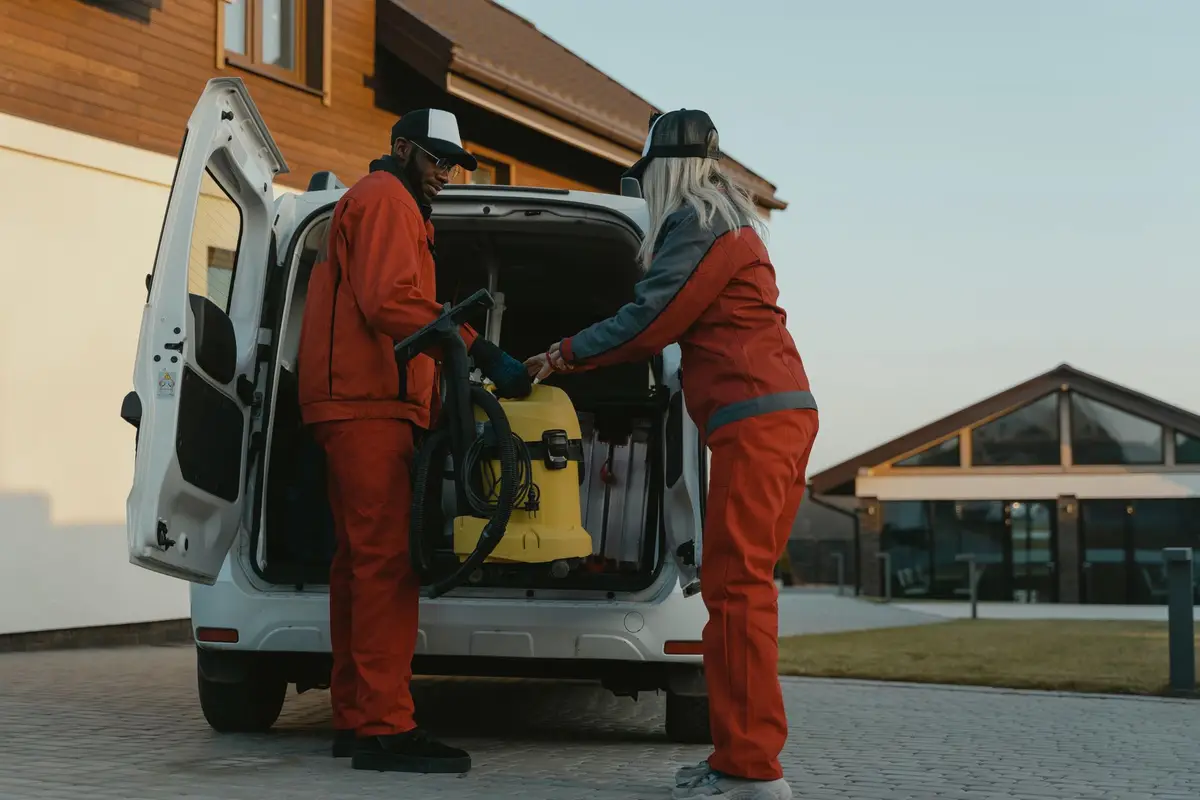
Cleaning has some of the highest turnover of any service business — janitorial and building cleaning is one of the largest occupations in the country, and most owners are onboarding somebody every month. Ordering 40 shirts twice a year does not match that reality.
An online company store does. We load your approved artwork, garments, and sizes, and new hires order their kit from a link — no minimum, no artwork redo, no hunting for the file from two years ago. You can pay for it centrally, set an allowance per employee, or let people buy extra pieces themselves.
For a one-time run, our minimums stay reasonable: screen printing starts at 48 pieces, embroidery and DTF at 12 — and through a store there's no minimum at all. If you want to run it as a real program with allowances and per-role kits, that's what our uniform programs are for, and the employee uniform program guide walks through the setup.
Custom cleaning uniforms from Heart & Hook
We outfit cleaning, janitorial, and housekeeping teams across Arizona and ship anywhere — embroidered polos, custom work shirts, aprons, caps, and jackets, all decorated in our own Mesa shop. Low minimums, an online store so new hires get their gear on day one, and an honest recommendation on what'll survive your wash routine.
Send over your logo and a headcount and we'll come back with a free mockup and a straight quote — garment, color, and decoration method. Just let us know what your crew needs!
Frequently asked questions
- What should a cleaning company uniform include?
- A branded polo or performance tee, a matching apron or utility vest, and a cap, in a mid-to-dark color that hides stains. Add an embroidered logo on the left chest, first names for residential crews, and a back print with your company name and phone number.
- What color should cleaning uniforms be?
- Mid-tone or dark colors like navy, charcoal, or a deep brand color hide a full day of work, while white and pale blue signal hygiene but show every splash. Most companies pick a darker shirt with a bright contrasting logo and let a branded apron take the abuse.
- What is the best fabric for cleaning uniforms?
- Poly-cotton blends and performance knits. They dry fast, resist wrinkles between jobs, hold color through hot washes, and shrink less than cotton. Four-way stretch helps with bending and lifting, and a stain-release finish makes a real difference with grease and product spots.
- Do cleaning uniforms hold up to bleach?
- Ordinary dyed cotton does not — it goes orange in patches within weeks. If your crew handles bleach daily, buy bleach-resistant fabric, and always wash-test one garment ten times before committing to a full order.
- Should cleaners wear polos or t-shirts?
- Polos for residential and office-facing work, where a collar reads as professional. Performance tees for deep-clean and high-energy crews, where comfort and cost matter more. Many companies issue both and add a branded apron over either one.
- Why do cleaning companies use aprons?
- An apron protects the shirt, carries cloths, sprays, and a phone, and turns a plain shirt into a recognizable uniform. It's also the cheapest way to refresh your look without rebuying every garment, which is why housekeeping and hospitality teams rely on them.
- Should cleaning uniforms have employee names on them?
- For residential crews, yes. A first name on the chest lets a homeowner greet your cleaner by name, which builds trust fast when you're asking for access to someone's home. Names can be embroidered or applied as a DTF transfer inexpensively.
- How do I get uniforms for new cleaners with high turnover?
- Use an online company store. Your artwork, garments, and sizes stay loaded, so a new hire orders their kit from a link with no minimum and no setup repeated — which matters in an industry where you're onboarding somebody most months.
- What is the minimum order for custom cleaning uniforms?
- For a one-time run, screen printing starts at 48 pieces, embroidery and DTF at 12. Through an online company store there's no minimum at all, so you can order a single polo and apron for one new hire.
Need uniforms for your crew?
Tell us how many people need gear and what they wear on the job. We'll send a free logo mockup and a quote, and keep your logo on file so every reorder matches.
Get a free uniform quote