A coffee shop uniform has to look like your brand and survive steamed milk, espresso, and a dozen washes a month. Here's how to build one — apron first, then the shirt — the four café looks that work, the fabrics that hold up behind the bar, and how to keep a part-time crew in matching gear.
Coffee shops are one of the few businesses where the uniform is part of the product. Nobody expects a plumber's shirt to match the van's vibe, but a café is a whole aesthetic — the cups, the counter, the playlist — and the people behind the bar are the most-photographed part of it. A uniform that fights the room is a small thing customers notice without knowing why.
It also has to survive steamed milk, espresso, syrup, and a dozen washes a month on a part-time crew that turns over every semester. Here's how to build a coffee shop uniform that does both: start with the apron, pick one of four café looks, choose fabric that shrugs off the bar, and set up reorders so the new hire isn't the one in a random black tee.
What is a good coffee shop uniform?
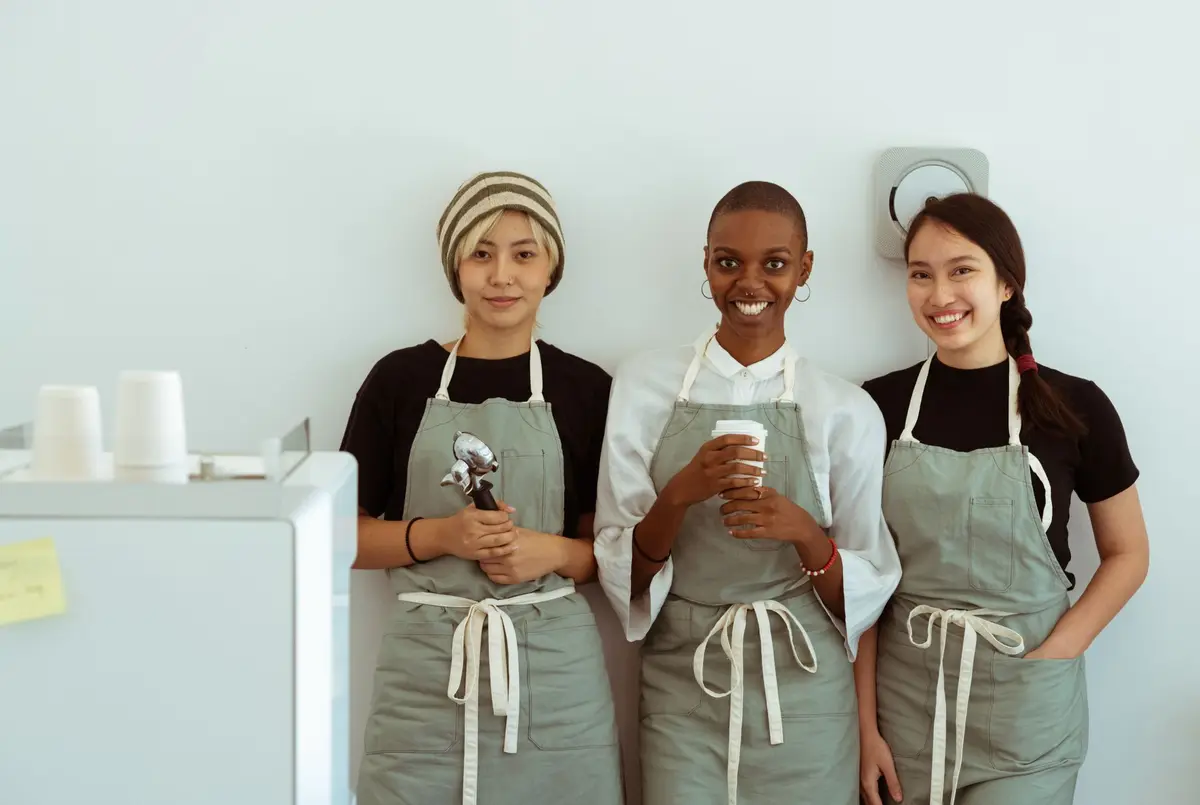
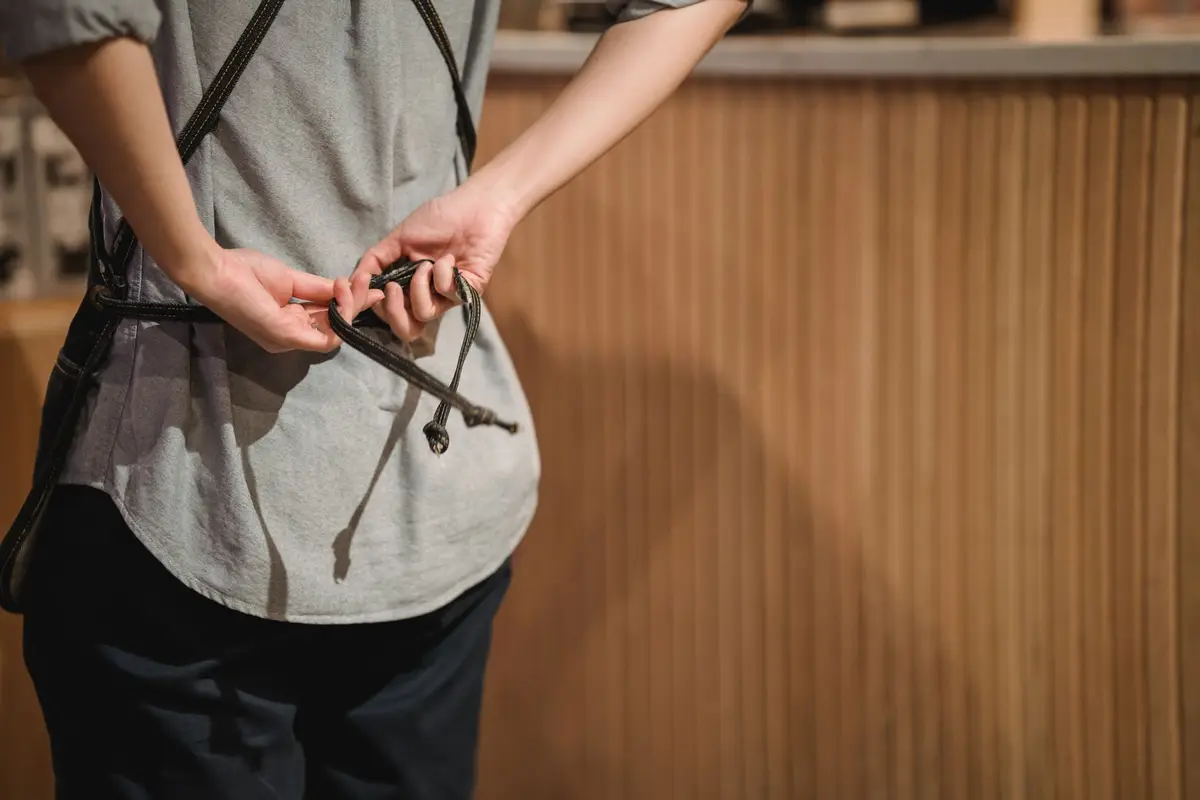
A good coffee shop uniform is a branded apron over a simple shirt in an approved color — a tee, chambray, or polo — with dark pants and non-slip shoes. The apron carries the logo and takes the spills; the shirt sets the mood. Pick one café look, give staff a couple of approved options within it, and let the apron do the matching.
That apron-first structure is the whole trick. It lets you run a loose, expressive dress code that baristas actually like — their own tees, their own style — while every person behind the bar still reads as one shop from the door. It's also the cheapest way to stay on brand, because the apron is the only piece you have to decorate.
Start with the apron
For most cafés the apron is a cross-back canvas — heavier cotton or waxed canvas with no neck strap, the look that reads *third-wave coffee* rather than *restaurant supply*. Bib aprons in twill give more coverage for a shop that does real food; waist aprons suit a fast counter where mobility matters more than splash protection. Whichever cut, the logo goes center chest at about 3.5 inches, embroidered, so it looks right at the two feet between a barista and a customer.
Color is where cafés get to have fun: olive, rust, tan, and charcoal all photograph beautifully and hide espresso. Natural canvas looks great on day one and shows every shot by day thirty — save it for shops where the aprons live short lives. We go deeper on cuts, fabrics, and placement on our custom aprons page.
Four café looks that work
The modern shop
Short-sleeve chambray or a clean tee, waxed-canvas apron, chinos. Earth tones — black, olive, tan, white. Minimal, intentional, and the easiest to keep consistent across a crew.
The cozy neighborhood café
Soft ringspun tees or a flannel over a tee, a canvas apron in a warm color, jeans. This is the look where a branded tee with a nice front design earns its keep, because it's the kind of shirt people wear off the clock.
The polished café or hotel coffee bar
A branded polo or button-up in one color, a bib apron, dark trousers. Cleaner, more hospitality — right for a shop inside a hotel, a bookstore, or an office building, where the guest expects a little more formality.
The trendy shop
Oversized graphic tees, bold or pastel colors, a statement apron. Works for shops built around a strong visual brand and a younger crowd; just keep the apron consistent so the individuality still reads as *one shop*.
The rule under all four: match the uniform to the interior, not to what other cafés wear. If your room is warm wood and cream, an all-black uniform fights it. If your room is white tile and steel, warm flannel does the same.
Fabric that survives the bar
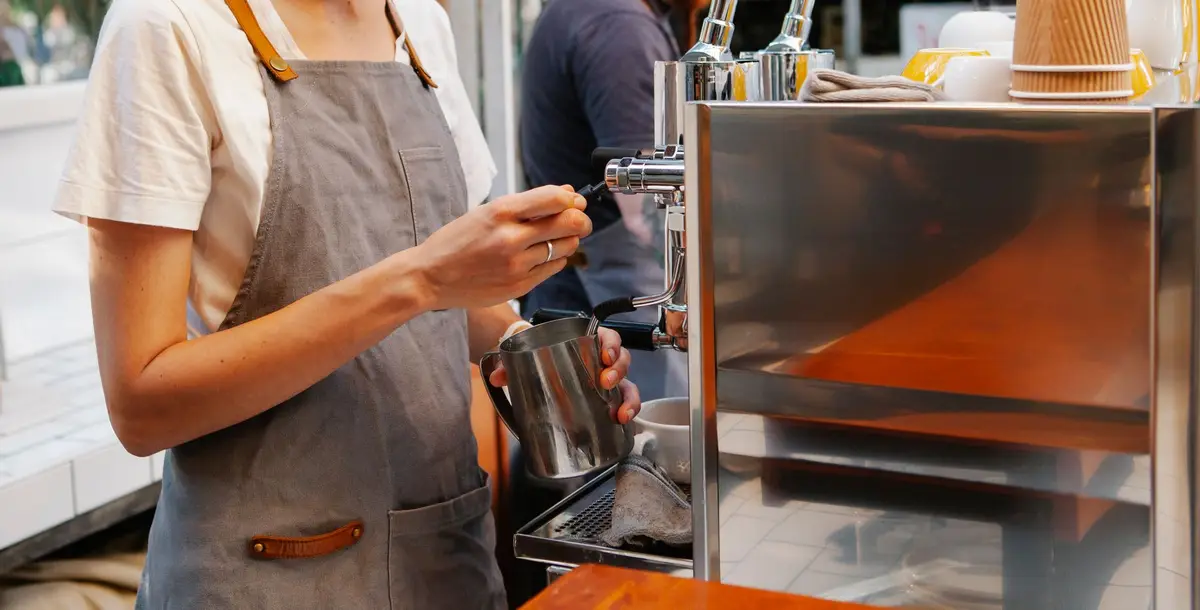
Behind an espresso machine it's warm, wet, and sticky, and the shirt gets washed constantly. Ringspun cotton or a soft cotton-poly blend is the sweet spot for tees — comfortable, prints and embroiders well, and cheap enough that a stained one gets replaced rather than mourned. Performance blends make sense for shops that run hot or do drive-through in summer. For polos, a light pique with some stretch.
Colors: dark and mid-tone shirts hide milk and espresso; white shows everything by the second latte. If your look calls for light shirts, the apron has to be doing serious coverage. And plan on shirts as consumables — a barista's tee is not a two-year garment, and a uniform program should assume that.
Logo placement, decoration, and names
The logo lives on the apron; the shirt can carry a small left-chest mark or a front design people would wear anywhere, which is also how a lot of cafés end up selling the same shirt over the counter. Embroidery is the right call for aprons and polos — it survives the wash routine and looks premium up close. Screen printing is the economical choice for a run of tees with a real design; DTF covers full-color art and small batches, which suits a shop that only has six baristas.
Names on the apron are a nice touch for regulars-driven shops — *Sam* on the chest is friendlier than a name tag and doesn't fall off into the milk pitcher.
Keeping a part-time crew in matching gear
Café staffing is part-time, seasonal, and young, and every new hire needs an apron this week. That's exactly what an online company store is for: your approved aprons, shirts, and logo sit at a private link, each person orders their own size, and there's no minimum — one apron for one new barista is fine. Sell the same tee to customers from the same store and the uniform starts paying for itself.
For a one-time run, minimums are screen printing at 48, embroidery and DTF at 12. If you're building the rest of the look — front of house, kitchen, a small food menu — the restaurant uniform ideas guide covers it by role. And baristas are a proud trade; a uniform they'd choose to wear is a retention tool as much as a branding one.
Custom coffee shop uniforms from Heart & Hook
We outfit cafés, coffee bars, and hospitality teams across Arizona and ship anywhere — embroidered aprons, printed tees, polos, caps, and beanies, decorated in our own Mesa shop. Low minimums, an online store so new hires get their apron on day one, and merch that matches the uniform if you want to sell it.
Send us your logo and a photo of your space, and we'll come back with a free mockup and a clear quote — apron, shirt, and the look that fits the room. Just tell us about your shop!
Frequently asked questions
- What is a good coffee shop uniform?
- A branded apron over a simple shirt in an approved color — a tee, chambray, or polo — with dark pants and non-slip shoes. The apron carries the logo and takes the spills, the shirt sets the mood, and picking one café look keeps the crew reading as one shop.
- What kind of apron do baristas wear?
- Most cafés use a cross-back canvas apron — heavier cotton or waxed canvas with no neck strap — because it reads as a coffee shop rather than restaurant supply. Bib aprons suit shops that serve real food; waist aprons suit fast counters. The logo goes center chest, embroidered.
- What color should coffee shop uniforms be?
- Match the room, not other cafés. Dark and mid-tone shirts hide milk and espresso; olive, rust, tan, and charcoal aprons photograph well and hide shots. White shows everything by the second latte, so if the look calls for light shirts the apron has to do the coverage.
- Can baristas wear their own shirts?
- Yes, and it's a common setup: a consistent branded apron over staff's own shirts within an approved color range. The apron does the matching, so the shop reads as one brand while baristas keep some individuality.
- Should coffee shop uniforms be embroidered or printed?
- Embroidered for aprons and polos, since stitched thread survives constant hot washes and looks premium across a counter. Screen printing is the economical choice for a run of tees with a real design, and DTF covers full-color art and small batches.
- How do I keep a part-time café crew in matching uniforms?
- Use an online company store: approved aprons, shirts, and logo sit at a private link, each new hire orders their own size, and there's no minimum. You can sell the same shirt to customers from the same store.
- What is the minimum order for coffee shop uniforms?
- For a one-time run, screen printing starts at 48 pieces, embroidery and DTF at 12. Through an online company store there's no minimum, so a single apron for one new barista is fine.
Need uniforms for your crew?
Tell us how many people need gear and what they wear on the job. We'll send a free logo mockup and a quote, and keep your logo on file so every reorder matches.
Get a free uniform quote