DTF vs screen printing, from a shop that runs both. Where the cost flips, which lasts longer, how each feels — and the honest answer for your order.
DTF vs screen printing: which should you choose?
Screen printing wins on bulk orders with simple designs. DTF wins on small orders and complex artwork. In our shop the crossover sits at 48 shirts — below that we quote DTF, above it screen printing costs less per shirt and feels softer.
That's the short version, and for most orders it's all you need. But the real answer depends on your artwork, your quantity, and what the shirts are for — so here's how we actually decide when an order comes in. We run both methods in our Mesa shop, so we genuinely don't have a horse in this race.
What is DTF printing?
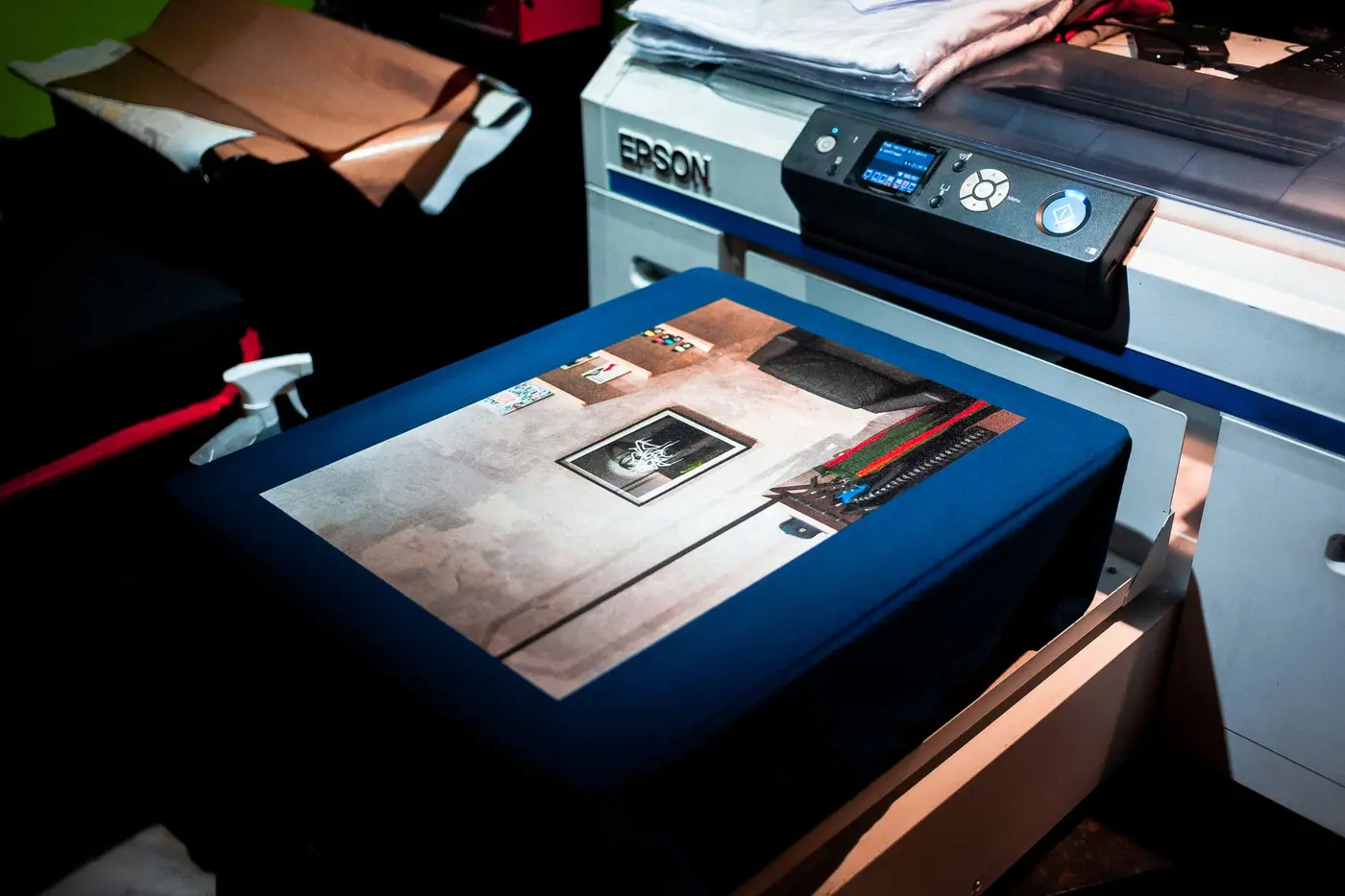
DTF stands for direct-to-film. Your design gets printed onto a sheet of clear film, dusted with a powdered adhesive, cured, and then heat-pressed onto the garment. The print sits on top of the fabric as a thin, flexible layer.
The thing that makes DTF useful is what it doesn't need: no screens, no color separations, no setup per color. A one-color design and a twelve-color photograph cost the same to produce. That's why it changed the math on small orders so completely.
It also sticks to nearly anything — cotton, polyester, blends, nylon, performance fabric. If you've got a team ordering moisture-wicking jerseys, DTF handles that without the headaches you'd hit trying to screen print polyester.
What is screen printing?
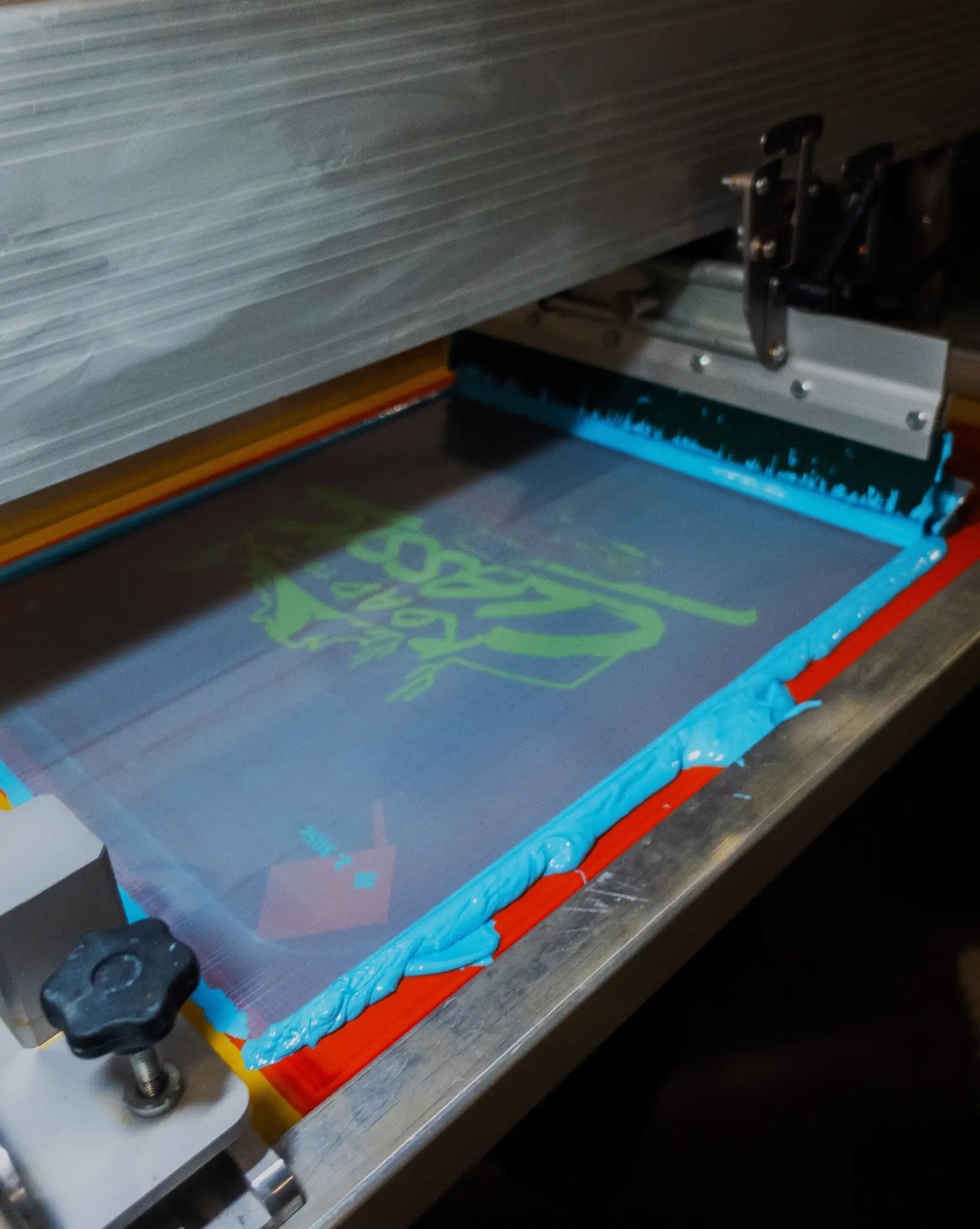
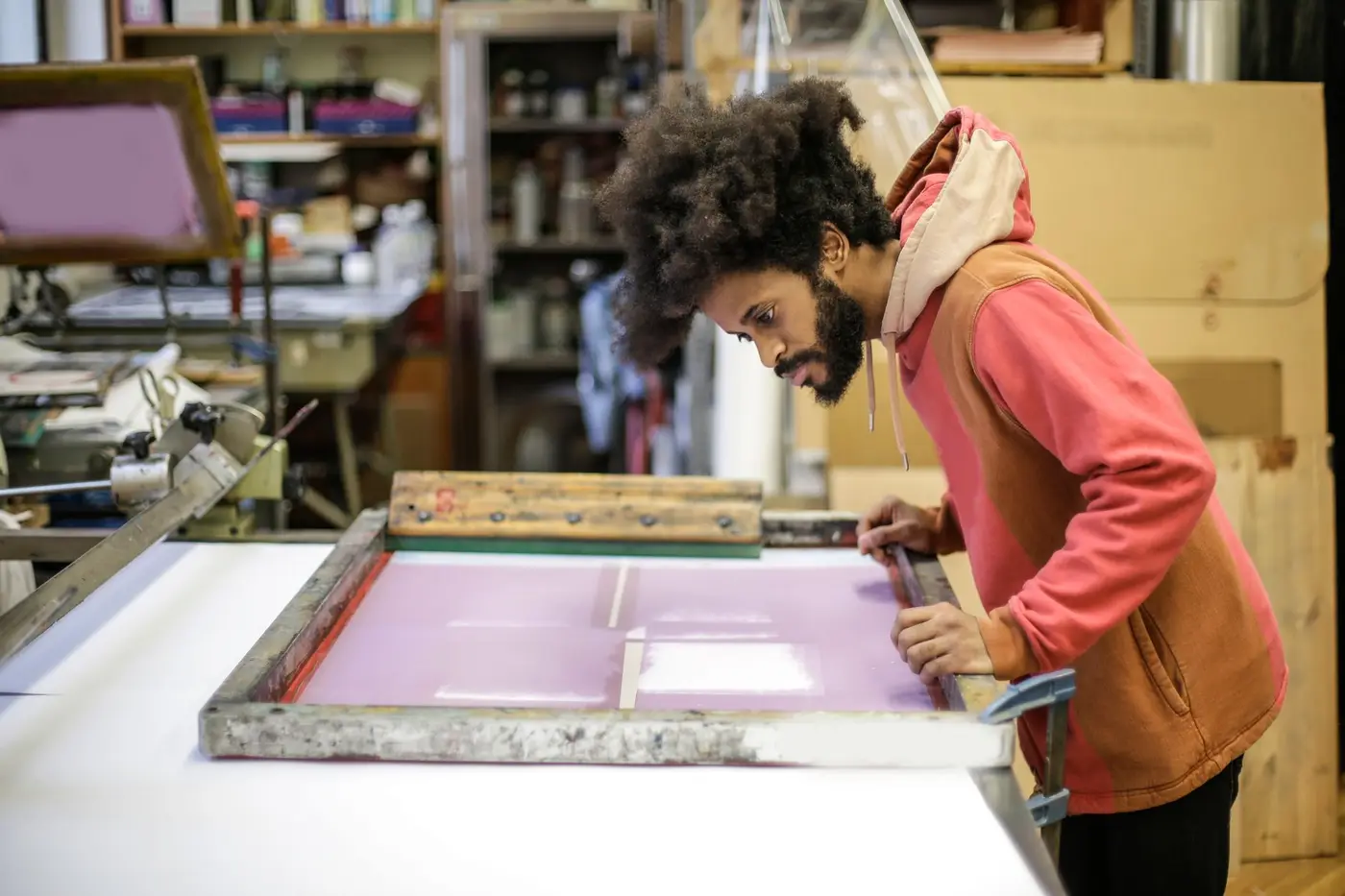
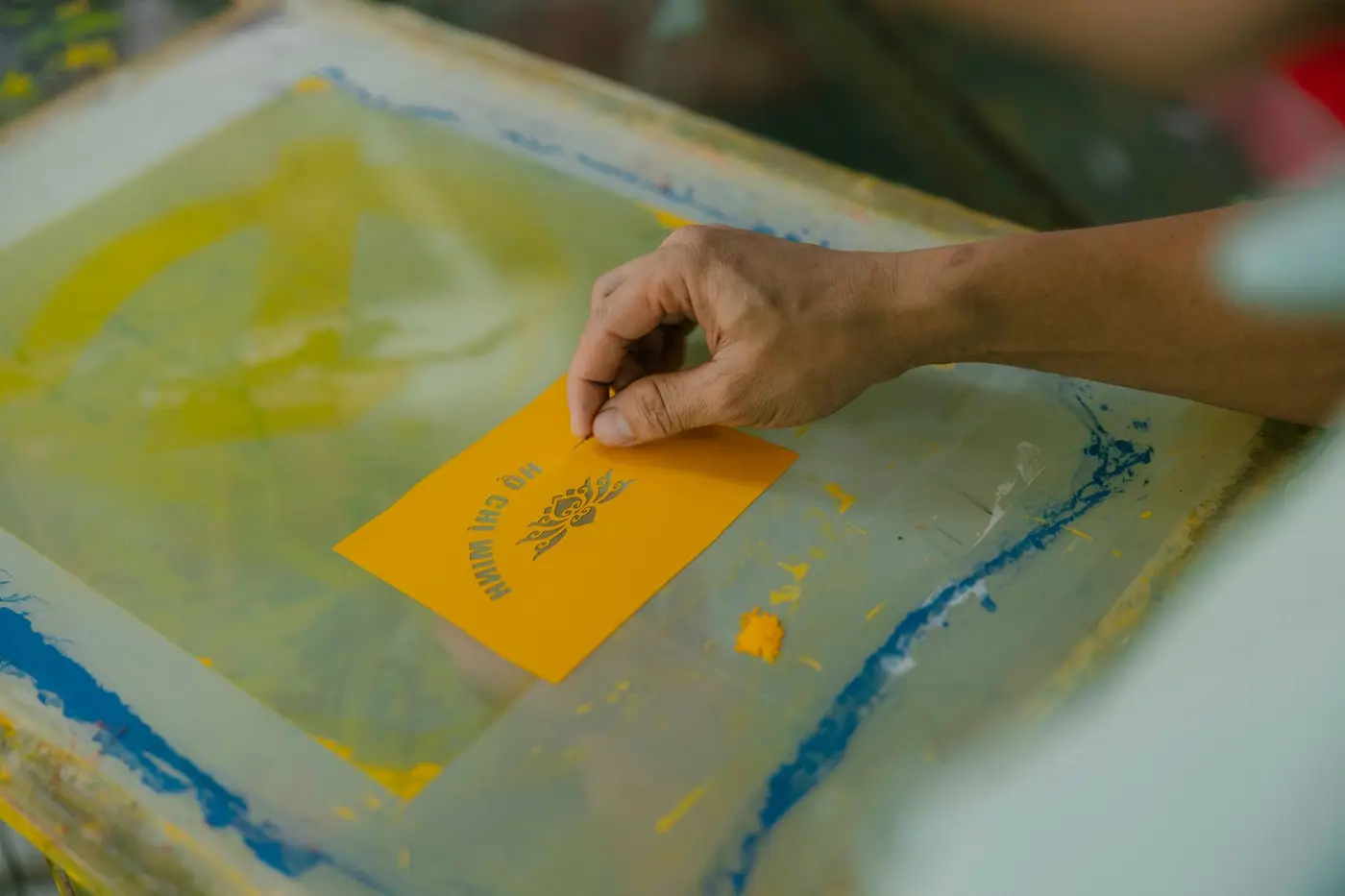
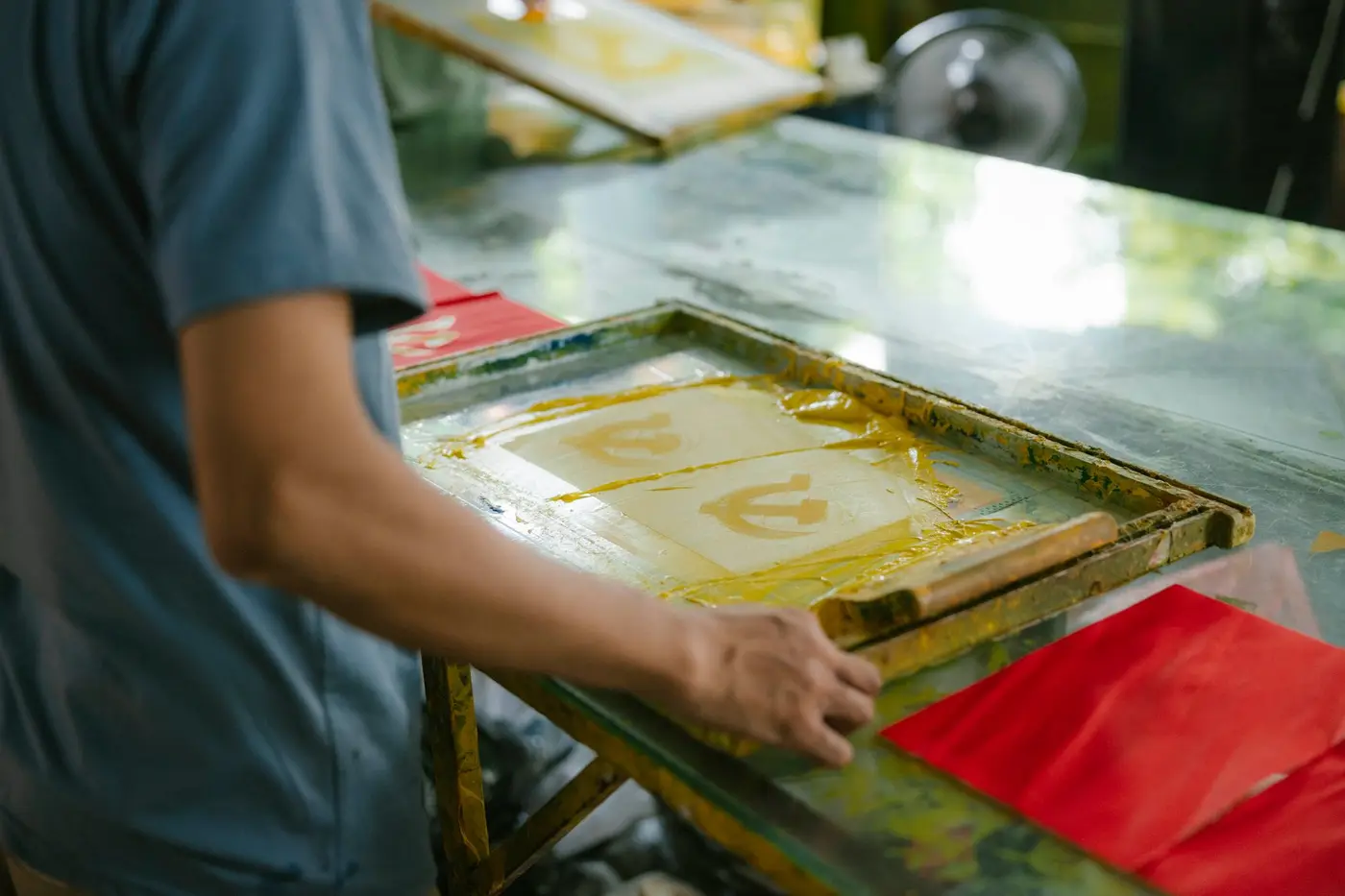
Screen printing is the old reliable. A stencil is burned into a fine mesh screen, and ink gets pushed through it onto the shirt with a squeegee. Each color needs its own screen, lined up so the colors register together. The process has been around since the early 1900s and there's a reason it hasn't gone anywhere — see the history of screen printing if you want the full story.
That per-screen setup is the whole economic story. Burning screens and mixing ink takes real time whether you're printing 20 shirts or 500. Spread across 500, it's pennies a shirt. Spread across 20, it's the biggest line on the invoice.
What you get for that setup is the best-feeling, longest-lasting print in the business. The ink cures into the cotton rather than sitting on top of it, so a well-cured screen print stays soft and outlives the shirt.
DTF vs screen printing, head to head
| DTF printing | Screen printing | |
|---|---|---|
| Best for | Small runs, full-color art, mixed designs | 48+ of the same design, 1–3 solid colors |
| Cost per shirt | Flat — same at 10 or 100 | Drops as quantity goes up |
| Setup | None | One screen per color |
| Colors and detail | Unlimited, photos and gradients included | Bold spot colors; gradients need halftones |
| Hand feel | Thin, flexible film on top | Softest — ink sinks into the fabric |
| Durability | Excellent, best on polyester | Excellent, best on cotton |
| Fabrics | Almost anything, including poly and nylon | Cotton and blends; poly needs special ink |
| Minimum (our shop) | 12 pieces | 48 pieces |
| Turnaround | Faster on small jobs | Faster on big jobs |
Colors and detail
DTF wins, easily. Gradients, photographs, fine linework, unlimited colors — all fine, all the same price. Screen printing handles bold spot colors beautifully but struggles with gradients and gets expensive fast past three or four colors. If your design has a photo in it, this decision is already made.
Hand feel
Screen printing wins. A properly cured screen print sinks into the fabric and softens with every wash until you can barely feel it. DTF sits on the surface as a thin film — modern DTF is far more flexible than the heat-transfer vinyl people remember, but you can still feel the edge of the print if you run a hand over it. On a big full-front design, that difference is noticeable.
Durability
Roughly a tie, with an edge to screen printing on cotton. Both survive plenty of washing when they're done right. Screen printing on cotton is the gold standard and will typically outlast the garment. DTF holds up very well — often better than screen print on polyester and performance fabric, where plastisol ink can struggle. Wash cold, inside out, and skip the dryer's high heat and either one will last for years.
Fabric compatibility
DTF wins. It bonds to cotton, poly, blends, nylon, and stretchy performance fabric without fuss. Screen printing on 100% polyester needs special low-cure inks and a blocker to stop dye migration — that's the effect where a red poly shirt bleeds up into a white print and turns it pink a week later. We can do it, but DTF sidesteps the problem entirely.
Turnaround
DTF wins on small jobs, screen printing wins on big ones. DTF skips the screen-making step, so a rush order of 20 shirts can move quickly. But once the screens are burned, a screen print press runs *fast* — hundreds of shirts an hour. On a 500-piece order, screen printing finishes first by a wide margin.
Minimums
DTF wins. Our DTF minimum is just 12 pieces, and there's no setup to spread out, so a dozen shirts costs about the same per piece as a hundred. Need shirts for a small group? DTF, no question. Screen printing technically has no minimum either, but the setup cost per shirt gets silly below a couple dozen — our own floor for a screen print run is 48, and we'll tell you so.
The cost crossover — where it flips
This is the part worth understanding, because it's the only part that changes your invoice.
DTF pricing is basically flat. Roughly the same per shirt whether you order 10 or 100, and the color count doesn't matter. Predictable, no surprises.
Screen printing pricing is a curve. There's an upfront setup per color, then a low per-shirt cost. At 12 shirts that setup dominates. At 50 it's fading. At 200 it's basically gone and you're paying for ink and labor.
So the crossover lands at 48 shirts for a one- or two-color design — that's the line we actually quote off. Add colors and it moves up, because a five-color design is five screens to set up before anything prints.
A quick gut check: *few shirts or many colors → DTF. Many shirts and few colors → screen printing.* When an order sits right on the line, we'll quote it both ways and show you the difference. Sometimes DTF is the smaller sale and it's still the right call — we'd rather tell you that than pad an invoice.
When DTF is the right call
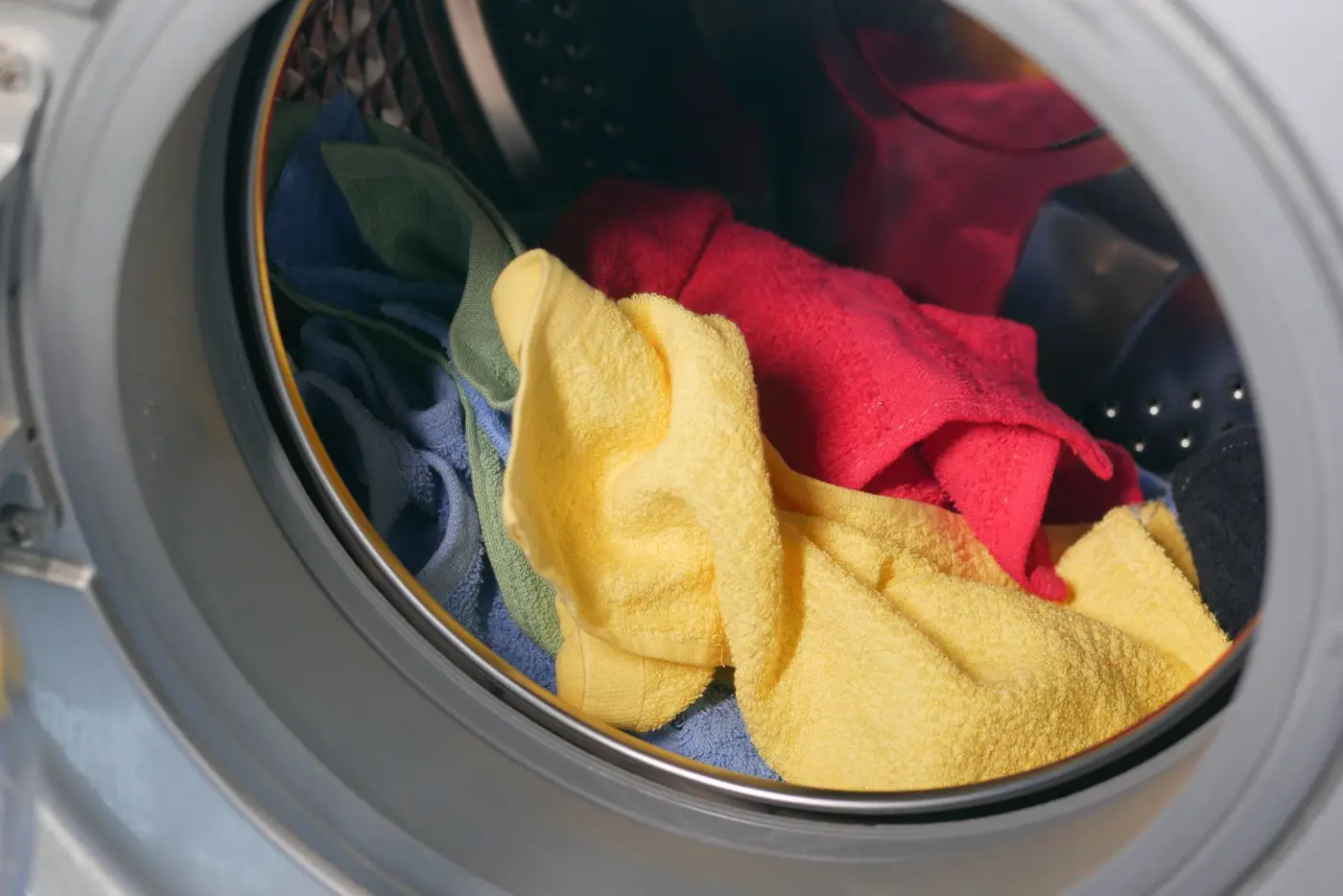
Reach for DTF when you're ordering under 48 pieces, when the artwork has photos, gradients, or lots of colors, when you're printing on polyester or performance fabric, or when you need different designs across a small run — names and numbers, individual departments, one-off samples.
It's also the honest answer for anything unpredictable. Mission trips, small volunteer teams, a last-minute rush for a trade show. No setup means no penalty for ordering small.
And it's what makes an online company store work. When people order one shirt at a time all year, there's no bulk run to spread setup across — so producing on demand with DTF is the only thing that makes the numbers work.
When screen printing wins
Go screen printing when you're ordering 48 or more of the same design, when the artwork is one to three solid colors, when you're printing on cotton or cotton-heavy blends, and when hand feel matters — retail merch you're asking people to pay for, or staff shirts someone wears every shift.
It's the right answer for most company t-shirt runs, church event tees, school spirit wear, and anything where you're printing the same logo on a hundred-plus shirts. The per-shirt price is simply better, and so is the finished shirt.
Specialty inks are a screen printing thing too — puff, metallic, glow, water-based prints that sink right into the fabric. If you want a specific finish, screens are how you get it.
What about DTG, vinyl, and embroidery?
A few other methods come up, so here's the quick version.
DTG (direct-to-garment) prints ink straight into the shirt with no film layer, so the feel is excellent. But it really only works well on 100% cotton, and it needs a pretreat step on dark garments. DTF has largely overtaken it for small-run work because it handles any fabric.
Heat transfer vinyl (HTV) is cut from colored sheets and pressed on. Great for names and numbers on jerseys, but it's one solid color per layer, so it can't do detailed artwork. DTF has replaced it for most jobs.
Screen print transfers are the hybrid you'll see sold online: a screen-printed design laid on transfer paper, then heat-pressed like DTF. They make sense for a decorator who needs hundreds of the same one-color logo pressed later. For a finished-shirt order from us, it's an extra step you don't need — we either print the shirt directly or press DTF.
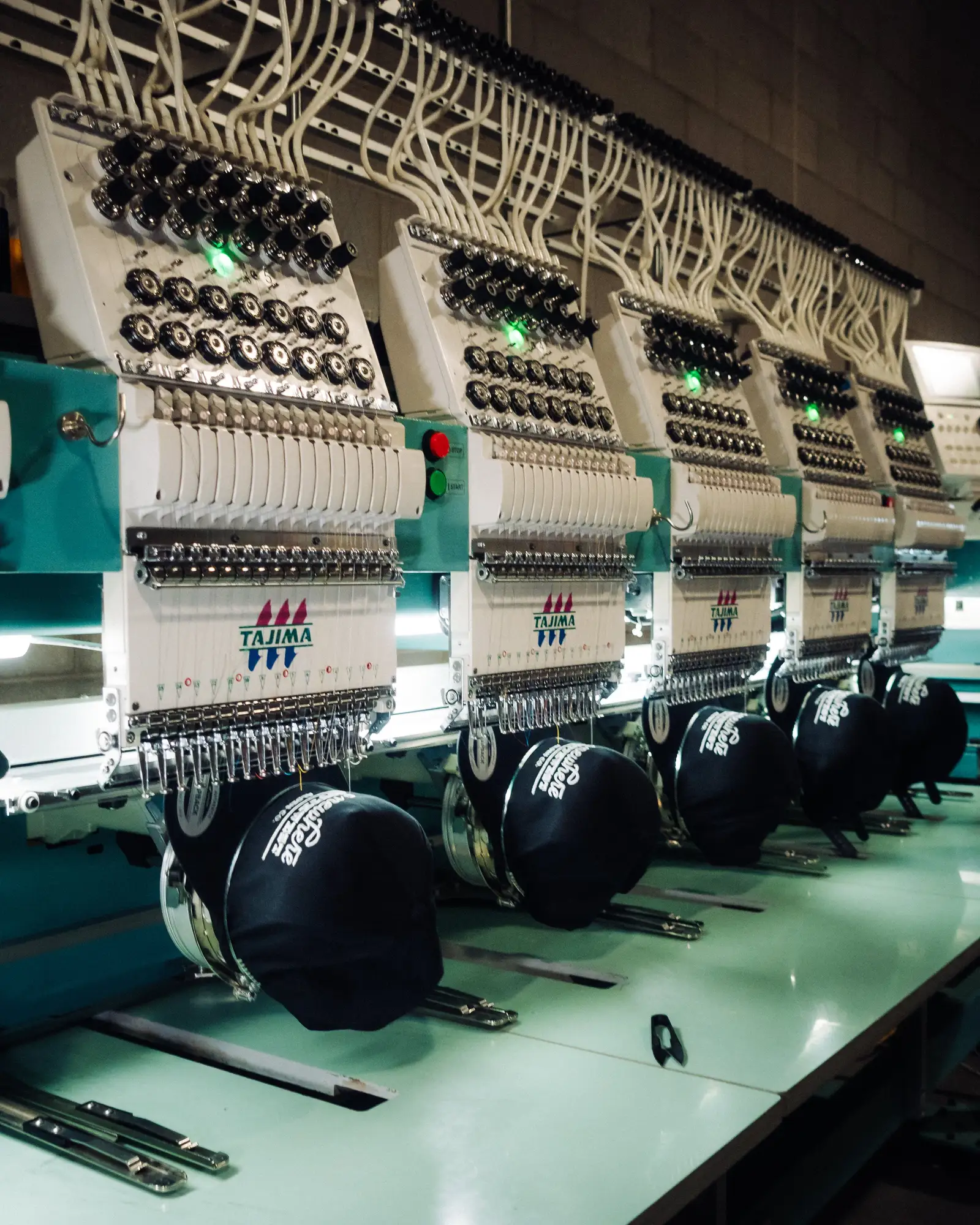
Embroidery isn't really competing here — it's stitched thread, not ink. It's the right call for hats, polos, and jackets where you want a premium look that never cracks or fades. We compared it directly in embroidery vs. screen printing if you're weighing those two.
What each method needs from your artwork
The two methods want different things from your file, and sending the wrong kind is the most common reason an order stalls before it ever reaches the press.
Screen printing wants vector art in spot colors. Every color has to be separated onto its own screen, so the cleanest path is an AI, EPS, or vector PDF where each color is a defined shape. Gradients and soft shadows have to be faked with halftone dots, which works but changes the look. If you want an exact brand color, send the Pantone number and we will match it.
DTF just wants resolution. Colors do not need separating, so a high-quality raster file is completely fine — but it has to be 300 DPI at full print size with a transparent background. A logo pulled off a website at 600 pixels wide will look soft and pixelated once it is blown up to 11 inches. That is the single most common DTF problem we see.
One more thing worth knowing: DTF has a visible cut edge around the design. On artwork with hard outer edges you will never notice. On something with wispy, feathered edges — smoke, watercolor, a soft glow — the transparent film can catch the light slightly. It is subtle, but if your design is built on soft edges, screen printing or a redraw is the better route.
Making either print last
Same advice for both, honestly. Wash cold, turn the garment inside out, skip the fabric softener, and tumble dry low or hang dry. Heat is what kills prints — high dryer heat is far harder on a design than the washing itself. Do that and a screen print or a DTF print will both outlive most people's interest in the shirt.
Not sure which one you need?
Send us your artwork and your quantity and we'll tell you straight. We run screen printing, DTF, and embroidery under one roof in Mesa, so whichever way it lands, it's made by the same team.
You'll get a free mockup, a quote, and an honest recommendation — including when the cheaper method is the better one. Get in touch whenever you're ready!
Frequently asked questions
- Is DTF better than screen printing?
- Neither is better overall — they win in different situations. DTF is better for small orders, complex or full-color artwork, and synthetic fabrics. Screen printing is better for larger runs of simple designs on cotton, where it costs less per shirt and feels softer. For us the crossover is 48 shirts.
- What does DTF mean in printing?
- DTF stands for direct-to-film. Your design is printed onto a clear film sheet, coated with a powdered adhesive, cured, and then heat-pressed onto the garment. Because there are no screens to make, there is no setup cost per color.
- How long does DTF printing last?
- A well-applied DTF print holds up through 50-plus washes without meaningful cracking or fading. Wash cold, turn the garment inside out, and avoid high dryer heat and it will last for years. On polyester and performance fabric it often outlasts screen printing.
- Can you feel a DTF print on a shirt?
- Yes, slightly. DTF sits on top of the fabric as a thin flexible layer, so you can feel the edge of the design if you run your hand across it. It is far softer than old-school vinyl, but a cured screen print still feels softer, especially on large full-front designs.
- Which is cheaper, DTF or screen printing?
- DTF is cheaper for small orders because there is no setup cost. Screen printing is cheaper for larger orders because the setup spreads across more shirts. For a one- or two-color design the flip happens at 48 pieces for us, and it moves higher as you add colors.
- What is the difference between DTG and DTF printing?
- DTG prints ink directly into the garment, so it feels softer, but it works best on 100% cotton and needs pretreatment on dark shirts. DTF prints onto film first and then presses it on, which lets it bond to cotton, polyester, blends, and performance fabric equally well.
- Does DTF work on dark shirts?
- Yes. DTF lays down a white underbase automatically as part of the print, so colors stay bright on black and dark garments with no extra step or cost. This is one of the areas where it is genuinely simpler than screen printing.
- Can you screen print on polyester?
- Yes, but it takes low-cure inks and a dye blocker to prevent dye migration, where the shirt color bleeds into the print and discolors it. It is very doable, but for performance fabrics DTF avoids the issue entirely and is usually the easier call.
Got a project in mind?
Send us your idea and quantities — we'll come back with a free mockup and quote.
Get a free quote