Screen printing pushes ink through a mesh stencil onto a garment, one color at a time, then heat-cures it so it lasts. Here's the whole process from artwork to finished shirt, what it's genuinely good at, where it falls down, and how it stacks up against DTF and embroidery.
If you've ever gotten a quote back that said "screen printed" and nodded along without really knowing what that meant, this one's for you. Screen printing is the oldest way to put ink on a shirt and still the most durable, and it's what runs through our presses most days of the week.
Here's the plain-English version — what it is, how the process actually works from artwork to finished garment, what it's excellent at, where it genuinely isn't the right tool, and why the pricing works the way it does. No jargon you don't need.
What is screen printing?
Screen printing is a process that pushes ink through a fine mesh screen onto a garment. A stencil blocks the mesh everywhere the design isn't, so ink only passes through the open areas. Each color in the design gets its own screen, and the ink is then heat-cured so it becomes permanent.
You'll also hear it called silk screening or serigraphy. The "silk" part is a holdover — screen printing really did use silk mesh historically, but every shop today uses polyester mesh, which is tougher and far more consistent. The underlying idea hasn't changed in a thousand years: block part of a screen, push pigment through the rest.
The reason it's still the industry standard for apparel is simple. It lays down a genuinely thick layer of ink and bonds it to the fabric, so a properly cured screen print outlives most of the shirts it's printed on.
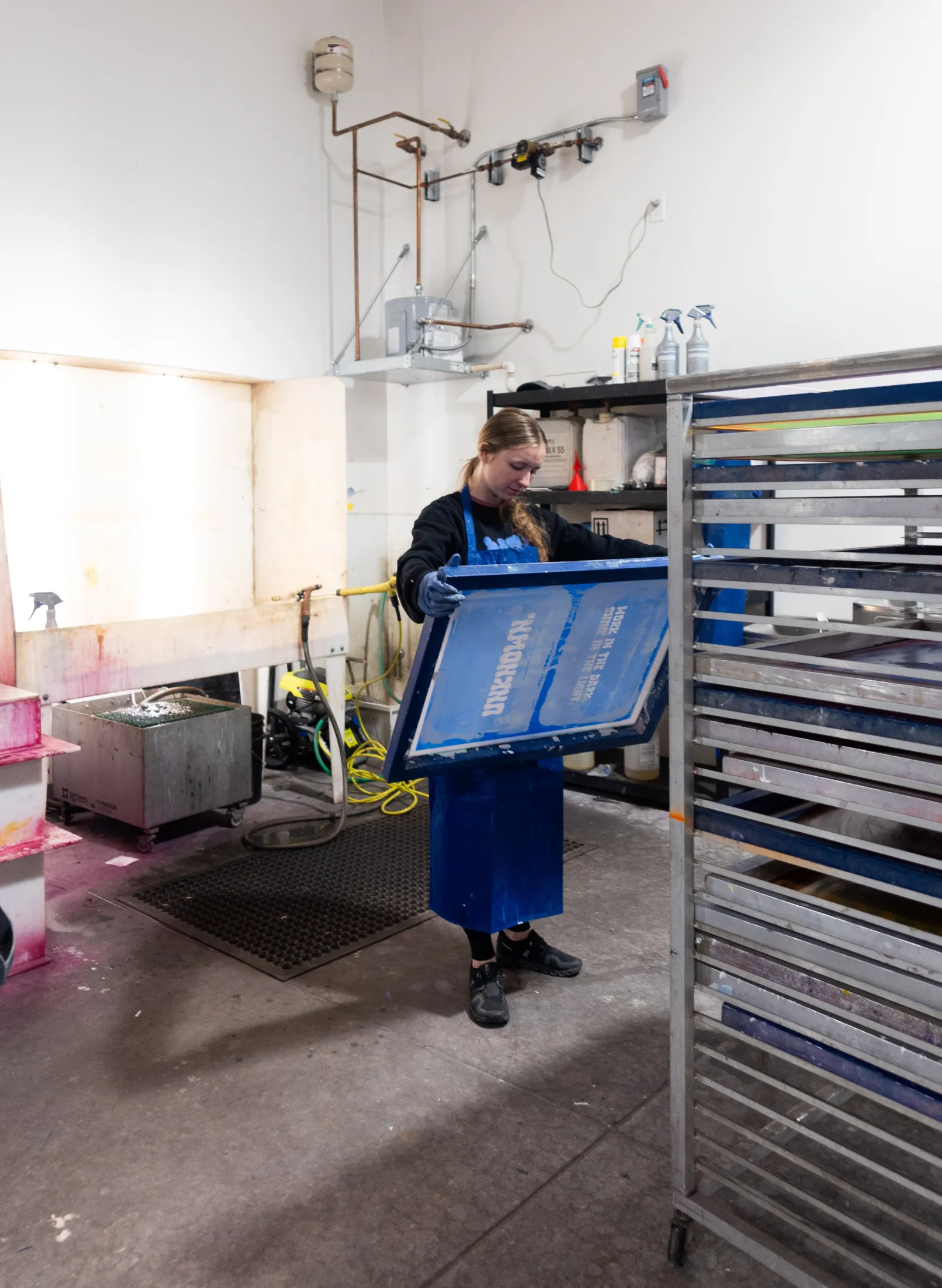
How screen printing works, step by step
Six steps take a file on your computer to a folded shirt in a box. Most of the work happens before a single shirt gets printed — which is the key to understanding everything else about this process, including the pricing.
1. The artwork gets separated into colors
Your design gets pulled apart into one layer per ink color. A two-color logo becomes two separate pieces of film; a six-color illustration becomes six. Each film is printed as a solid black positive — black where ink should land, clear everywhere else. This is the step that decides your price, because every color is another screen, another setup, and another pass on press.
2. We burn the screen
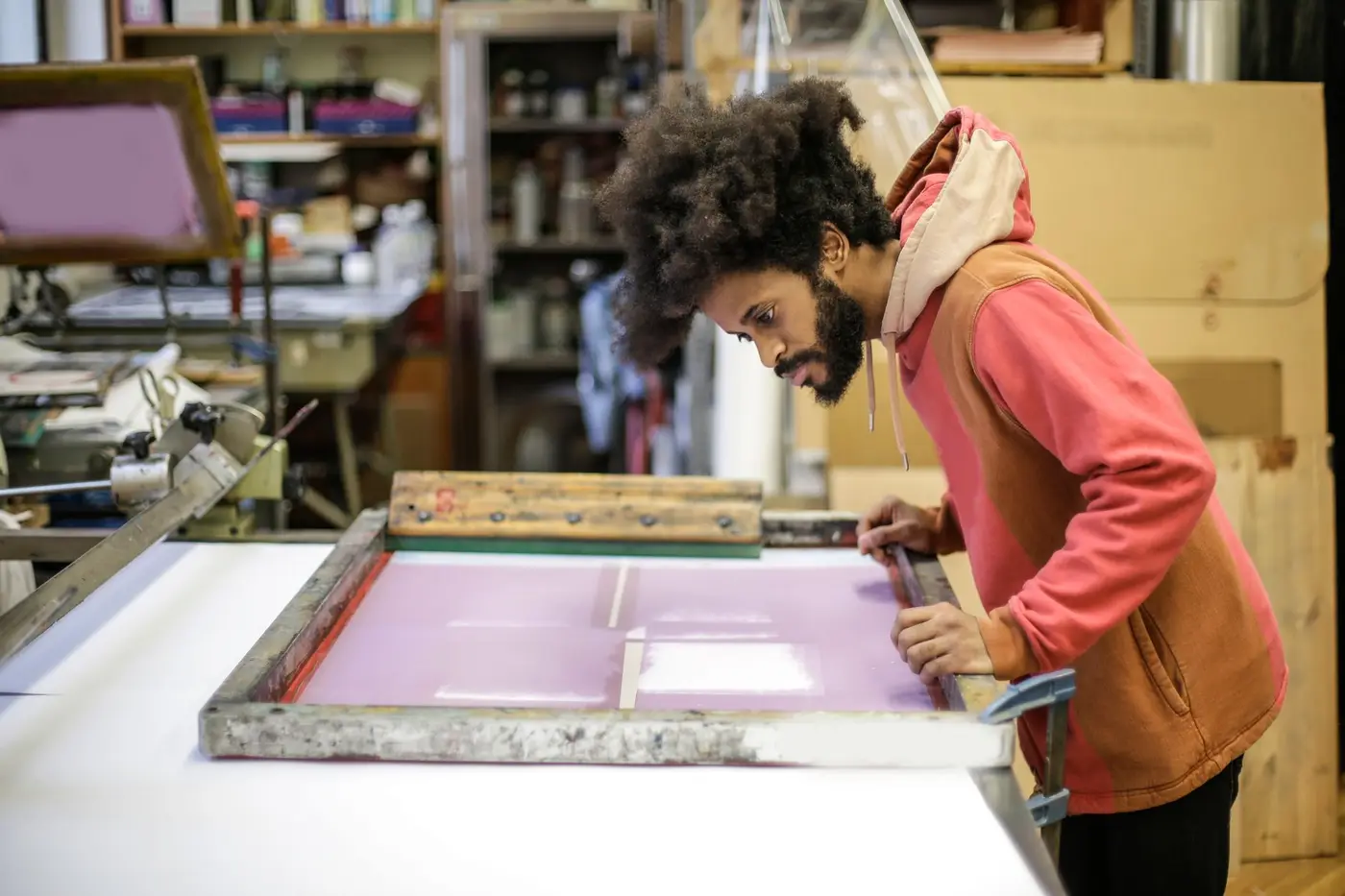
A screen is an aluminum frame with mesh stretched tight across it. We coat it with a light-sensitive emulsion in a dark room, let it dry, then lay the film positive on top and expose it to bright UV light. The light hardens the emulsion everywhere it hits. Where the black film blocked it, the emulsion stays soft.
Then the screen goes to the washout booth and gets sprayed down. The soft, unexposed emulsion rinses away and leaves open mesh in the exact shape of your artwork. That's your stencil. This is genuinely the most satisfying part of the job to watch.
3. The press gets set up and registered
Screens get clamped onto the arms of the press, and each one has to line up perfectly with the others — that's registration. On a multi-color design, if the screens are off by a hair, you get a white gap or an overlap where two colors meet. A printer will run test prints on scrap and nudge the screens until it's right.
The garment gets loaded onto a platen (the flat board that holds it square), and we double-check placement with a ruler. A print that's an inch too high on every shirt is the kind of mistake you only make once.
4. Ink goes down
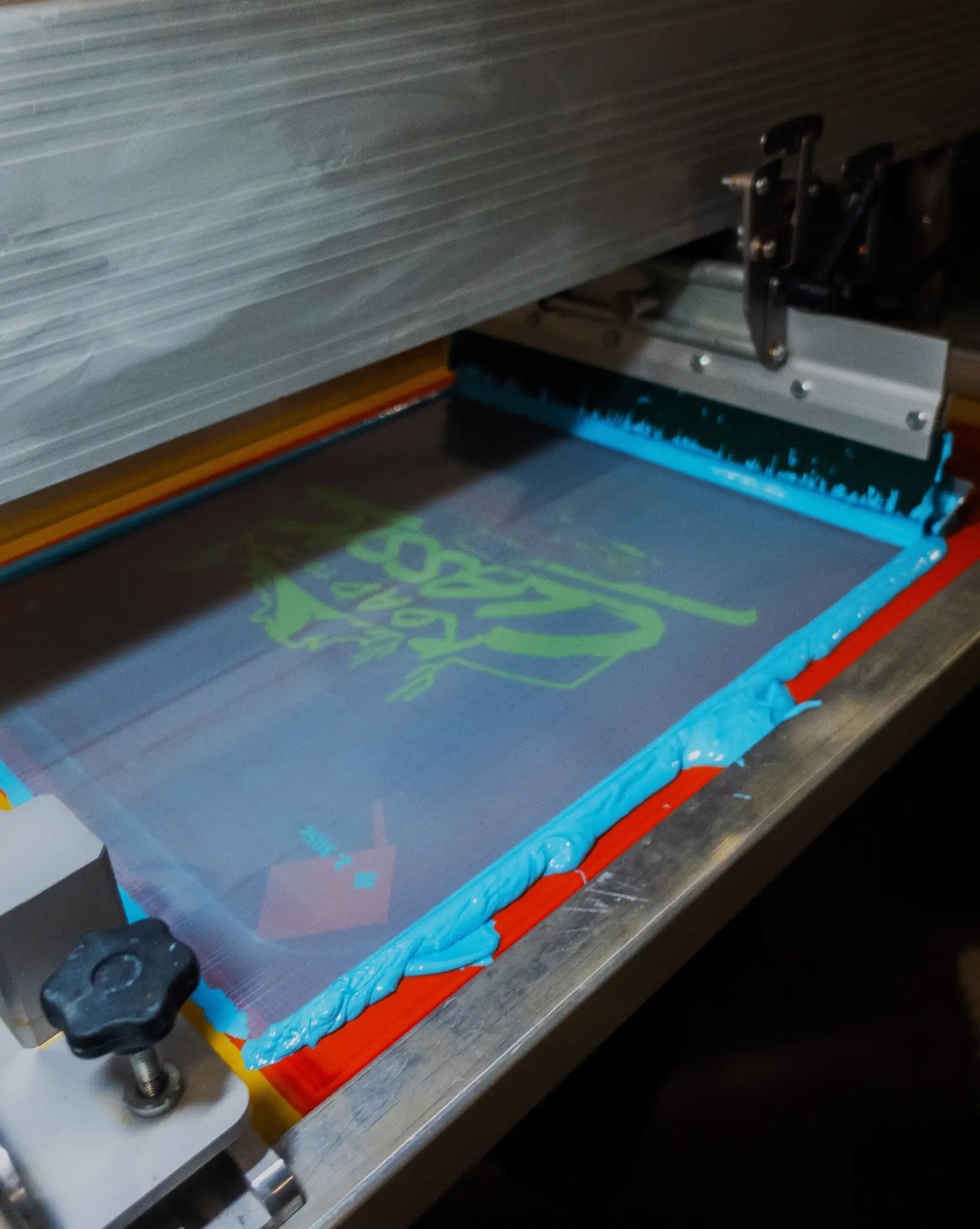
Ink gets flooded across the screen, and a squeegee pulls it across under pressure, forcing it through the open mesh and onto the fabric. On dark garments this usually happens twice: an underbase of white goes down first and gets flash-dried, then the colors print on top of it. Without that white underbase, colored ink on a black shirt just looks muddy — the fabric shows straight through.
Then the platen rotates to the next screen and the next color goes down. On an automatic press this happens in seconds per shirt, which is why screen printing gets so cheap at volume.
5. The print gets cured
The shirt travels through a conveyor dryer that brings the ink up to roughly 320°F. This isn't just drying — the ink actually has to reach full temperature all the way through to fuse properly. Undercured ink is the single most common reason a print cracks or washes out, and it's invisible when the shirt leaves the shop. It shows up three washes later at the customer's house.
This is the step that separates a good shop from a cheap one, and it costs nothing extra to do right. It just requires paying attention.
6. The screens get reclaimed
After the run, screens go back to the washout booth, the emulsion gets chemically stripped, and the mesh goes back into rotation for the next job. A screen might get used hundreds of times over its life. This is also why a reorder of the same design costs less than the first run — the art and separations already exist, even if the screens have been reclaimed.
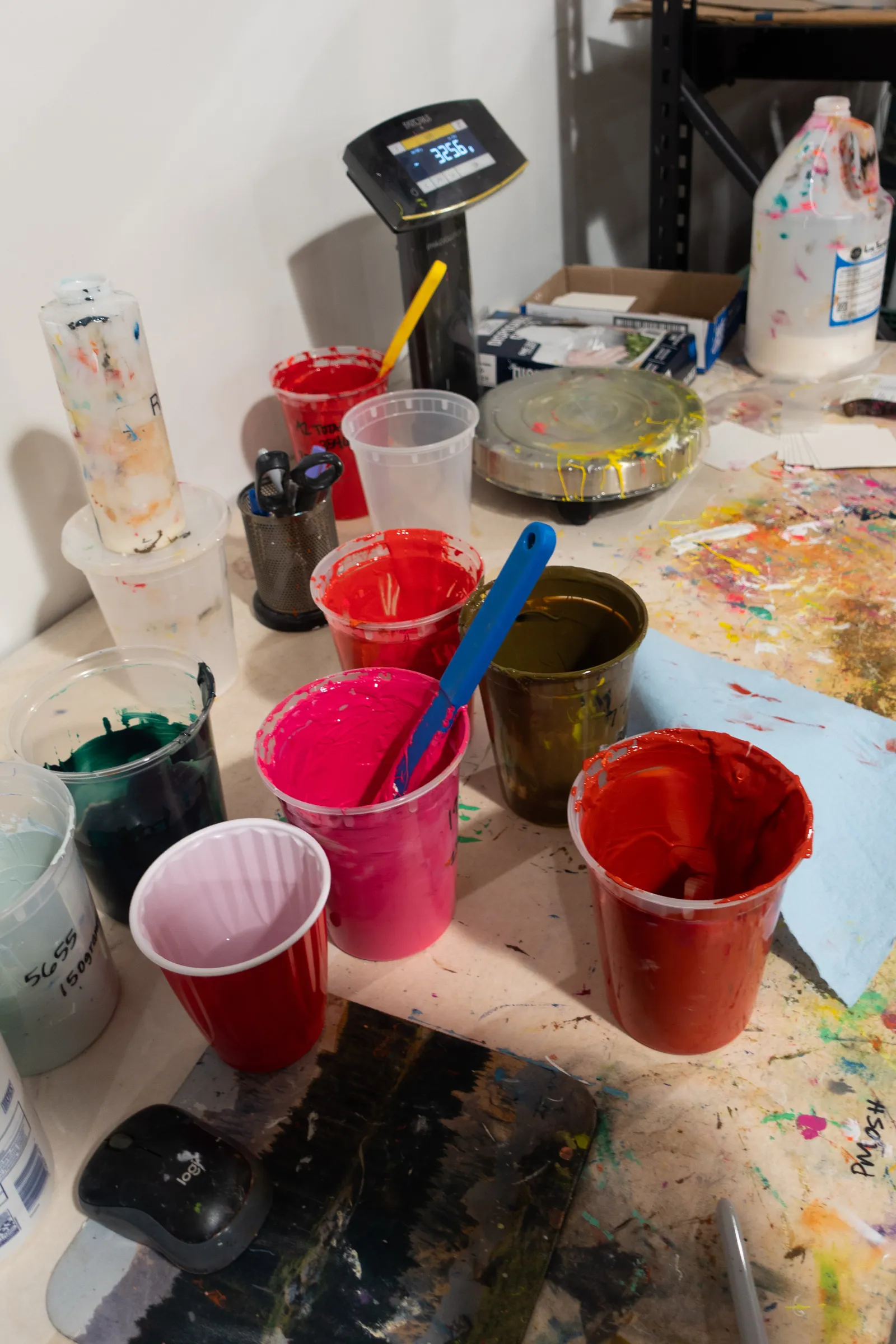
Plastisol vs water-based ink
Two families of ink cover nearly everything, and they behave very differently.
Plastisol
The workhorse, and what most shops use for most jobs. Plastisol sits on top of the fabric rather than soaking in, which gives you bright, opaque color on any garment color, excellent durability, and reliable results on blends and polyester. You can feel it with a fingertip — that slight raised texture on a printed shirt is plastisol. It never dries in the screen, so it's forgiving to work with too.
Water-based and discharge
Water-based ink soaks into the fibers instead of sitting on them, so the print feels like nothing at all — you can't tell by touch where the ink is. Discharge is a variant that removes the garment's dye and replaces it with pigment, which is how you get a soft, vintage-looking print on a dark shirt.
It's beautiful on 100% cotton and it's what we'd suggest for a retail-feeling tee. The honest tradeoffs: it's less predictable on blends and poly, the final color can shift slightly as it dries, and it costs more. For a crew of work shirts, plastisol is the sensible answer. For merch you're selling, water-based is worth the conversation.
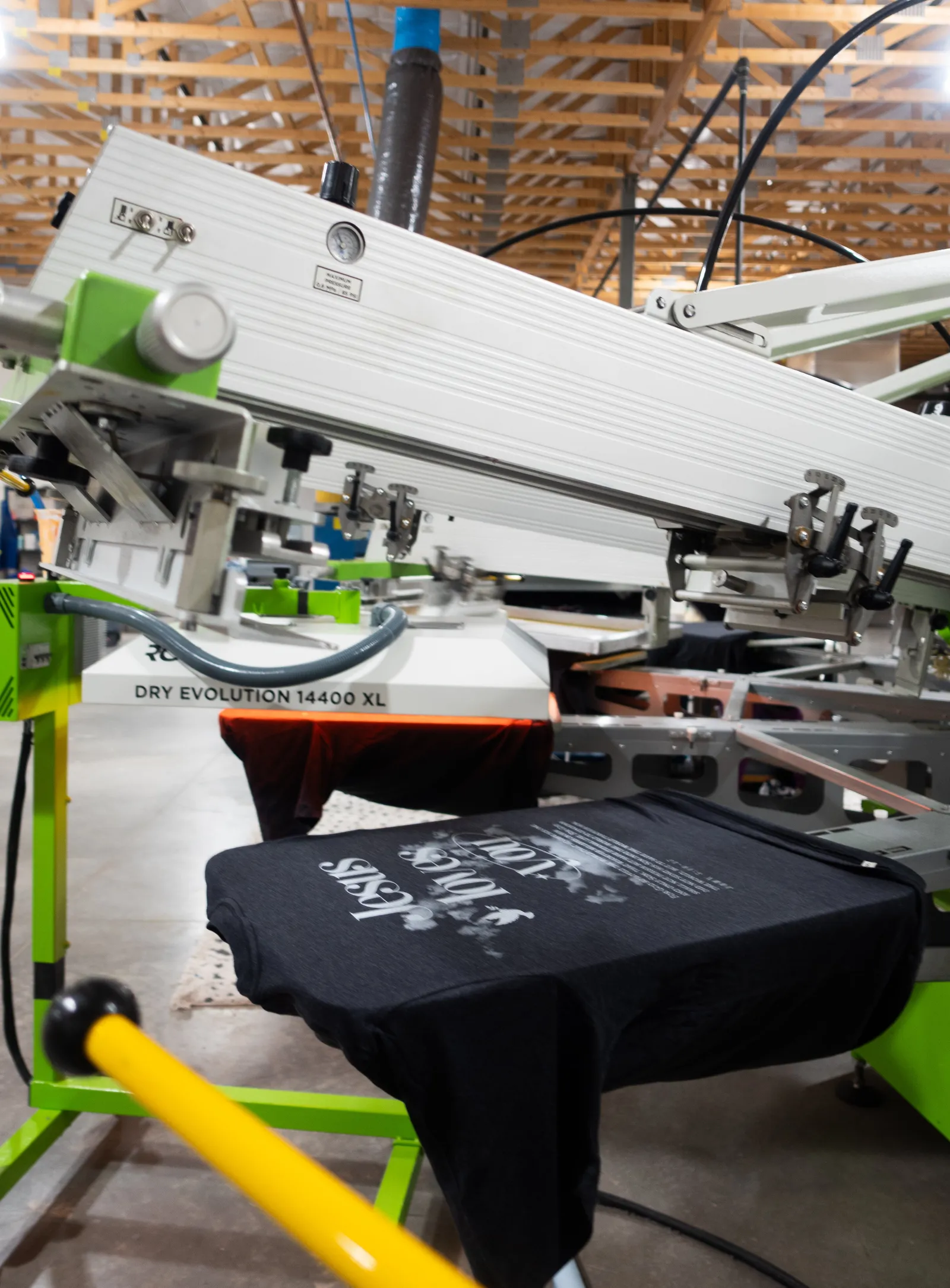
What screen printing is great at — and where it struggles
It's excellent at: bulk runs of simple designs, bold solid colors, prints that need to survive years of industrial washing, big graphics across a full back, and specialty inks like metallic, puff, glow, and high-density. Nothing else touches it for durability per dollar at volume.
It struggles with: small quantities, photographs and complex gradients, and designs with lots of colors. Twelve shirts with an eight-color photo print is technically possible and financially ridiculous — all the setup cost lands on twelve pieces. It's also not the tool for personalization: every shirt off a given screen is identical, so individual names or numbers need a different method.
There's a middle ground worth knowing about: halftones. By breaking an image into tiny dots of varying size, a printer can fake gradients and shading with a small number of inks — the same trick a newspaper photo uses. Simulated process printing takes this further and reproduces surprisingly photographic artwork in six or seven colors. It's skilled work, and it's not cheap, but it's how those detailed band tees get made.
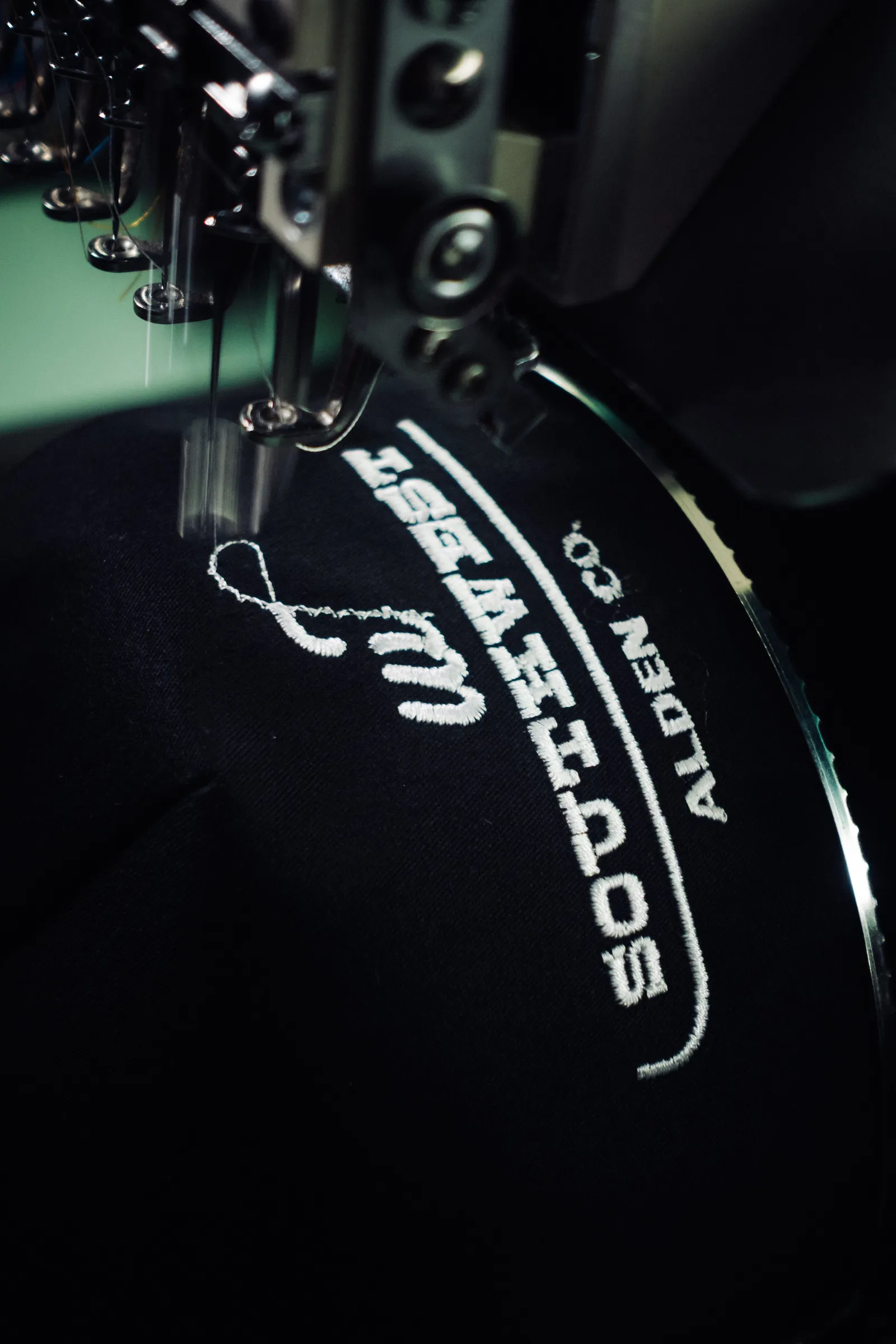
Screen printing vs DTF vs embroidery
The three methods we run cover different ground, and picking correctly saves real money.
Screen printing wins on quantity and durability with a limited color count — 48 shirts and up with a one- to three-color design is squarely its territory. DTF prints full-color artwork onto a transfer film that gets heat-pressed onto the garment, with no per-color setup and a 12-piece minimum, which makes it the right answer for small runs, photographs, and shirts that need to be individually different. We compared them head to head in DTF vs screen printing.
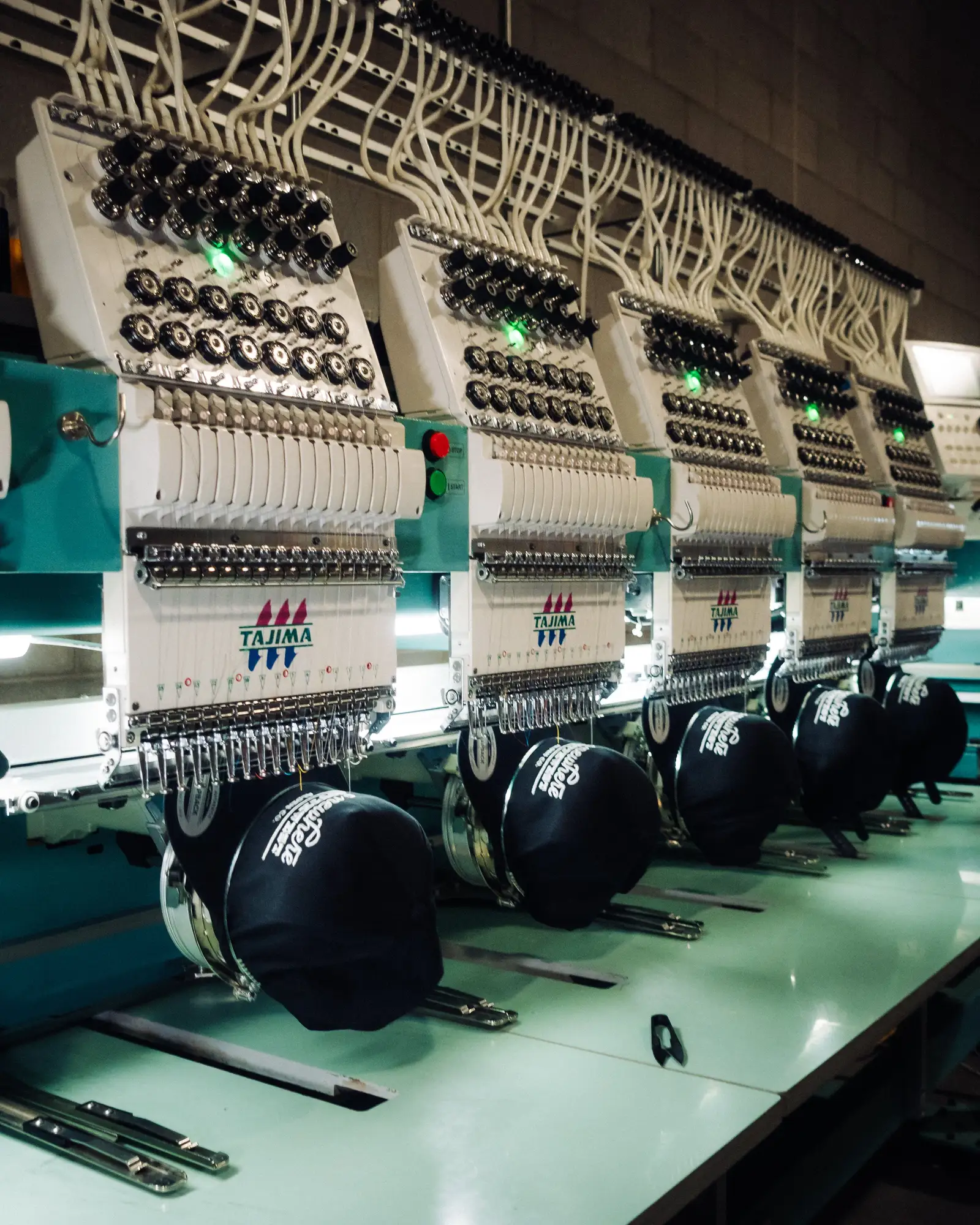
Embroidery is a different category entirely — stitched thread instead of ink. It's the premium look for polos, hats, jackets, and bags, it survives essentially forever, and it's the wrong tool for large or highly detailed artwork. Our embroidery vs screen printing guide covers where the line falls.
What screen printing costs, and why setup matters
Screen printing pricing confuses people until you know where the money goes, and then it makes complete sense: most of the cost is in the setup, and the setup is the same whether you print 24 shirts or 500. Separating the art, burning a screen per color, and registering the press takes the same labor either way. Printing the actual shirts is fast and cheap by comparison.
So two levers control your price. Quantity spreads that fixed setup across more pieces — which is why 200 shirts cost dramatically less each than 24. Color count multiplies the setup, because every color is another screen and another pass. Dropping a design from four colors to two is often the single biggest saving available to you, and a good printer will offer that before you ask. Our screen printing cost guide goes through the full breakdown with real numbers.
Our own minimum for a one-time screen printed run is 48 pieces. Below that, DTF at 12 pieces is usually the better buy, and through an online store there's no minimum at all.
Screen printing at Heart & Hook
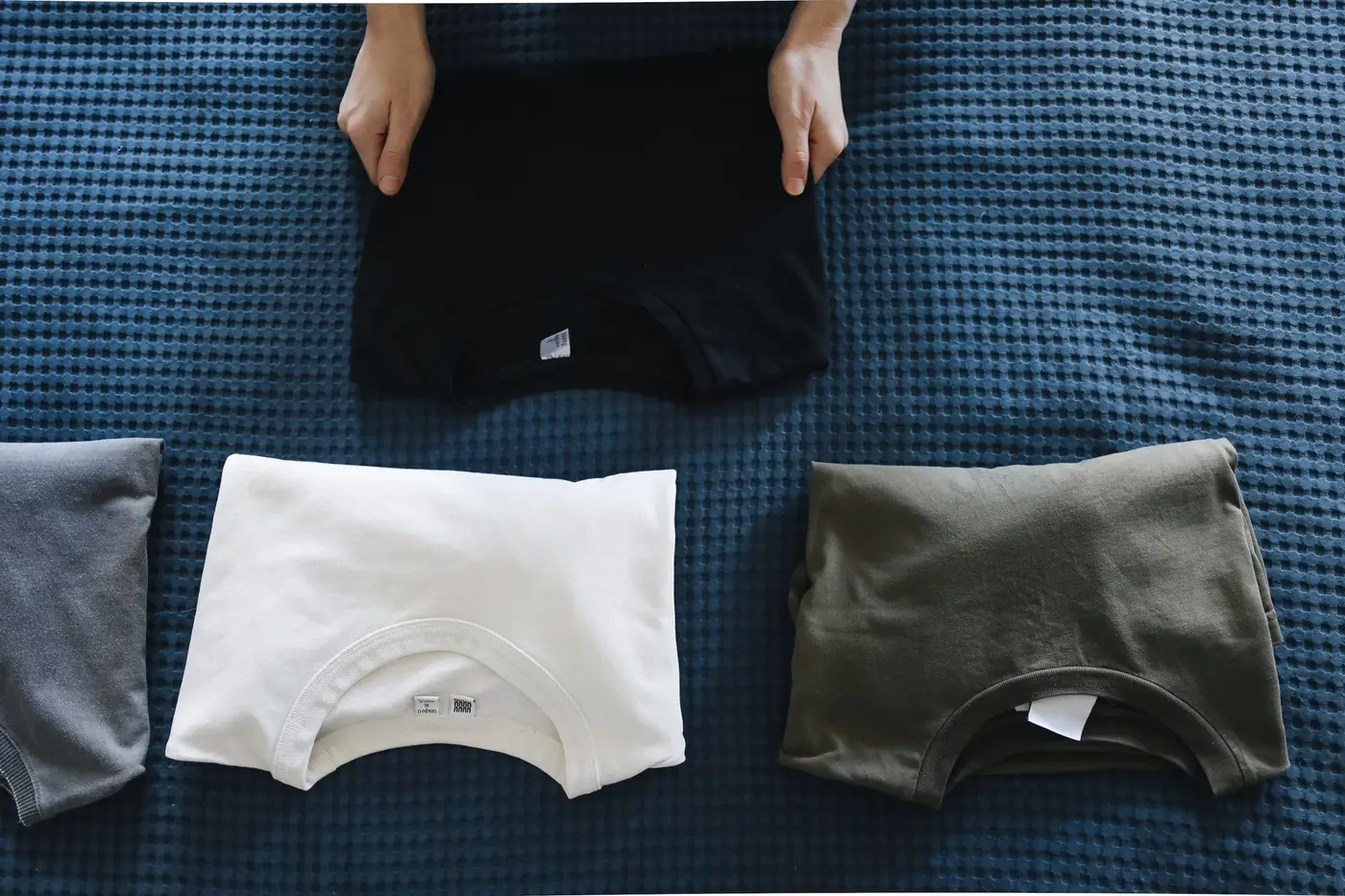
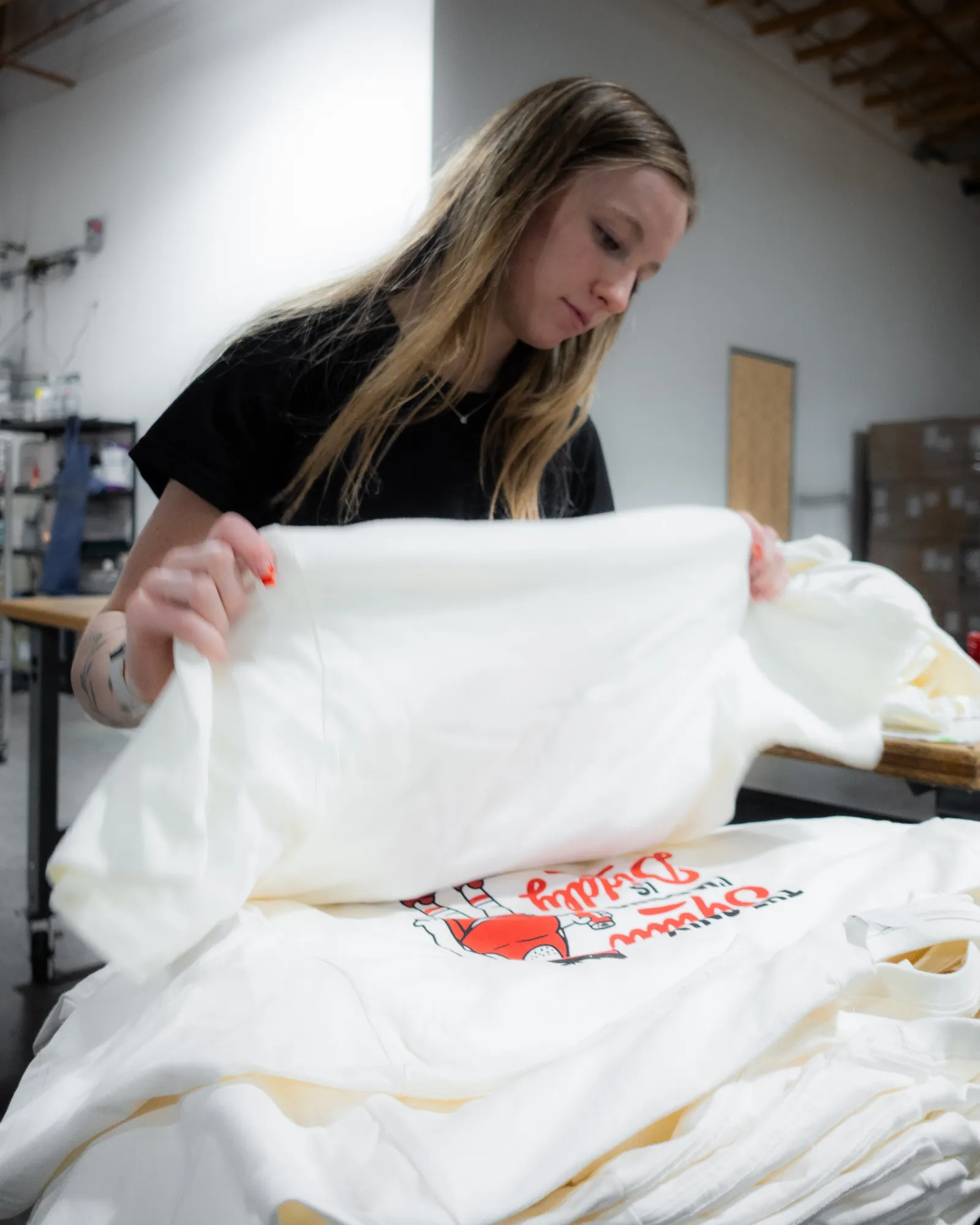
We screen print for businesses, churches, schools, teams, and events out of our shop in Mesa, and we ship anywhere. Everything above is our actual process, not a stock explainer — those are our screens, our ink counter, and our press in the photos on this page.
If you're not sure whether your project is a screen printing job at all, that's a genuinely useful question and we're happy to answer it honestly — sometimes the answer is DTF, and sometimes it's embroidery. Send us your artwork and a rough quantity and we'll come back with a free mockup, a straight quote, and a real recommendation. Just let us know what you have in mind!
Frequently asked questions
- What is screen printing?
- Screen printing pushes ink through a fine mesh screen onto a garment. A stencil blocks the mesh everywhere the design isn't, so ink only passes through the open areas. Each color needs its own screen, and the ink is heat-cured afterward to make it permanent.
- How does screen printing work step by step?
- The artwork is separated into one film per color, each film is used to burn a stencil onto a mesh screen, the screens are registered on the press, ink is squeegeed through onto the shirt one color at a time, the print is cured at around 320°F, and the screens are reclaimed for the next job.
- Is screen printing the same as silk screening?
- Yes — silk screening, silk screen printing, and serigraphy all describe the same process. The name comes from the silk mesh used historically. Every shop today uses polyester mesh instead, because it's tougher and more consistent, but the technique is identical.
- How long does a screen print last?
- A properly cured screen print typically outlasts the shirt it's on. The failure point is almost never the ink itself but undercuring — if the ink never reached full temperature all the way through, it cracks or washes out after a few laundry cycles, and that defect is invisible when the shirt leaves the shop.
- Why does screen printing have a minimum order?
- Because nearly all the cost is in the setup, and the setup is identical whether you print 24 shirts or 500. Separating art, burning a screen per color, and registering the press takes the same labor either way, so small runs carry an unreasonable cost per shirt. Ours starts at 48 pieces.
- Can you screen print photographs?
- Sort of. Halftones break an image into tiny dots of varying size to fake gradients, and simulated process printing can reproduce surprisingly photographic artwork in six or seven colors. It's skilled, expensive work. For a true full-color photo in a small quantity, DTF is the better and cheaper method.
- What is the difference between plastisol and water-based ink?
- Plastisol sits on top of the fabric, giving bright opaque color on any garment, excellent durability, and a slight raised texture you can feel. Water-based ink soaks into the fibers so the print feels like nothing at all, looks softer and more vintage, but costs more and behaves less predictably on blends and polyester.
- Why do dark shirts need a white underbase?
- Colored ink is somewhat translucent, so printed straight onto a black or navy shirt it looks muddy and dull because the fabric shows through. Printing a white layer first, flash-drying it, then printing the colors on top gives them something opaque to sit on so they read as intended.
Got a project in mind?
Send us your idea and quantities — we'll come back with a free mockup and quote.
Get a free quote