Embroidered scrubs are how a practice starts looking like a team — logo on the chest, name and credentials stitched to last. Here's where everything goes, why stretchy modern scrub fabric changes the embroidery job, and how to run a group order without collecting sizes twice.
Walk into two dental offices. In one, the front desk is in street clothes and the clinical team is in whatever scrubs they bought online. In the other, everyone's in the practice's colors with a stitched logo and their first name on the chest. Same dentists, same skill — but one of them reads as a *practice* and the other reads as a group of people who work in the same building.
That's the whole case for embroidered scrubs, and it's why they've become the standard for dental offices, med spas, urgent cares, vet clinics, and private practices. Here's how to get them right: what to embroider and where, why the new stretchy scrub fabrics change the job, and how to run a group order for a whole practice without chasing sizes for two weeks.

Why embroidery is the standard for scrubs
Scrubs get embroidered rather than printed because stitched thread survives the wash routine medical garments actually get — frequent, hot, and harsh. Embroidery doesn't crack, peel, or fade like a printed transfer, it looks more professional at conversation distance, and it handles the poly-blend fabrics scrubs are made of.
Scrubs live a harder laundry life than almost any other work garment. Healthcare attire gets washed after nearly every shift, often hot, often with strong detergent or a sanitizing cycle. A screen print or vinyl transfer starts cracking under that routine within months; embroidery is thread all the way through, so wash number two hundred looks like wash number two. For a garment your team wears daily in front of patients, that durability difference is the entire decision.
There's a softer reason too: at the distance you talk to a patient, embroidery reads as quality in a way flat print doesn't. It's the same reason polos get stitched, not printed — texture signals that someone spent real money on the uniform, which quietly says the practice sweats details.
What to embroider, and where it goes
The logo: left chest, about 3.5 inches
The practice logo goes on the left chest, roughly 3 to 4 inches wide — big enough to read across a reception desk, small enough to look like a uniform instead of a billboard. On scrub tops with a chest pocket, it sits just above the pocket. Simplify a detailed logo for stitching: fine gradients and tiny text don't survive at 3.5 inches, and a clean one- or two-color version almost always looks better in thread anyway. We handle that simplification as part of digitizing the logo, which is a one-time setup — every reorder after the first skips it.
Name and credentials: the upgrade that matters most
First name plus credentials — *Sarah, RN* or *Dr. Patel, DDS* — on the right chest is the single best dollar you'll spend on a scrub top. Patients meet a lot of people in a visit, and a stitched name turns *the hygienist* into *Marisa*. It also does quiet compliance work: several states expect clinical staff to be identifiable by name and license type, and a stitched name never falls off in the laundry the way a badge clip walks away.
Department color-coding
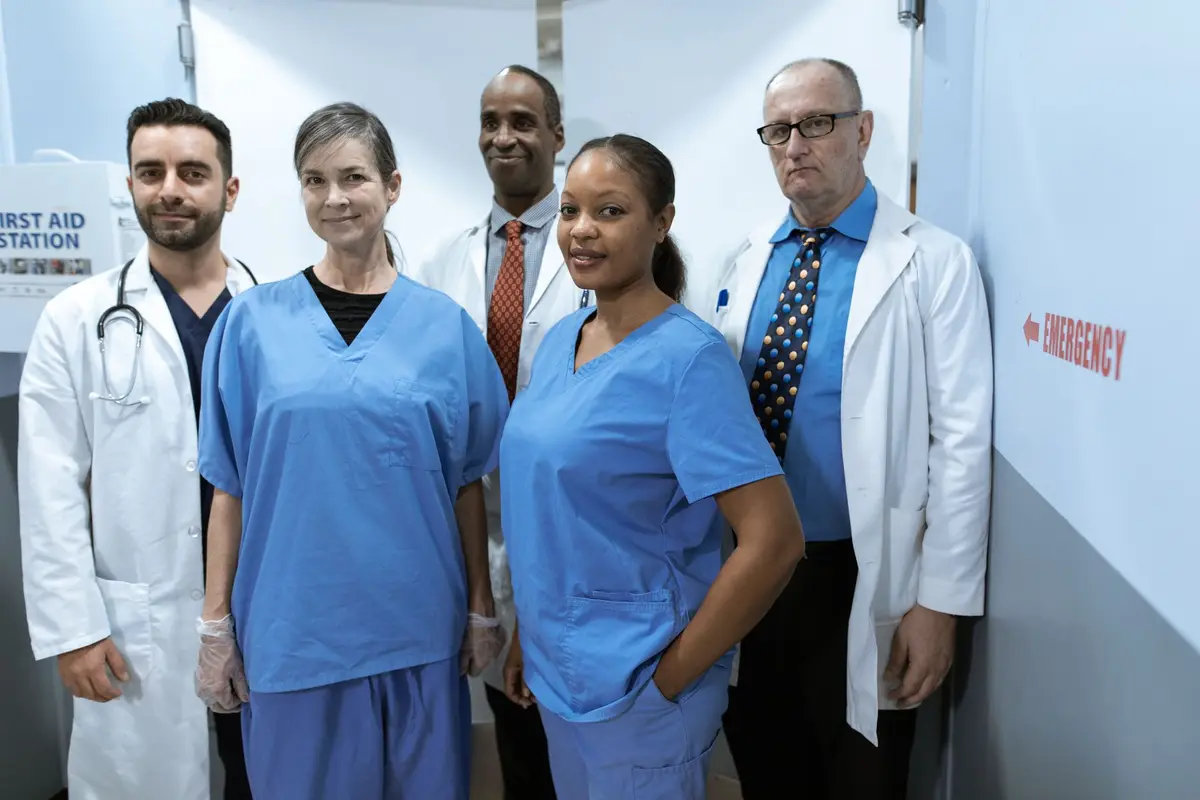
Bigger practices borrow the hospital trick: one scrub color per role — clinical in navy, hygiene in caribbean blue, front office in charcoal. Patients learn the code faster than you'd think, and it makes a busy office instantly readable. If you'd rather stay one color, a different thread color or a small role line under the name does the same job more subtly.
Scrub jackets and caps
Don't stop at tops. Embroidered scrub jackets are the most-requested add-on we see — every office has a cold wing, and the jacket is what shows in the team photo. Embroidered scrub caps have gotten popular in surgical and dental settings for the same reason. Both take a left-chest (or front-panel) logo beautifully.

The stretchy-scrub problem nobody warns you about
Here's the part most embroidery articles skip. The scrubs everyone actually wants now — the FIGS-style poly-rayon-spandex sets with four-way stretch — are much trickier to embroider than the boxy cotton-poly scrubs of ten years ago. Stretch fabric moves while it's being stitched. Done carelessly, the design puckers the moment the fabric relaxes, and a puckered logo on a $40 scrub top is a bad day for everyone.
The fix is technique, not luck: the right stabilizer backing, a lighter-density stitch file, and hooping that doesn't stretch the fabric before the needle ever drops. This is exactly the kind of thing to ask any embroiderer about before you hand over two dozen premium scrub sets — *how do you handle four-way stretch?* is the question. We run performance fabrics daily, so we digitize for the fabric, not just the logo.
One more caution from experience: embroidered garments are final-sale almost everywhere, including with us — you can't restock a top with someone's name on it. Confirm sizes before stitching. It's the strongest argument for the try-on-first, order-through-a-store approach below.
Choosing the scrubs themselves
You've got two paths, and we support both. We source the scrubs — brands like WonderWink, Cherokee, or Dickies medical lines in matched colorways — decorate them, and deliver a finished uniform, sizes bagged by employee. Or your team supplies their own preferred scrubs and we embroider what shows up; plenty of practices set a color rule ("any brand, navy") and let people keep the fit they love, which is honestly the highest-morale option.
If you're standardizing, weigh three things: a fabric with soil release (clinic life includes things you want to wash out), real size range — petite, tall, and plus, not just S through XL, because a uniform only unifies if it fits everyone — and color consistency across genders and cuts, which is where sticking to one brand's color name pays off. Navy and caribbean hide the workday; white shows it — same logic as every uniform, just with higher stakes.
Running a group order for a whole practice
The order itself is easy; the size collection is what buries office managers. The clipboard method takes two weeks, someone guesses wrong, and the final-sale rule means the guess is expensive. Here's the sequence that works:
Pick the garments and colors first, then get a sample size run in the office for try-ons — an afternoon with a rack of samples beats a month of size emails. Set the embroidery rules once: logo placement, name format (*first name + credentials* is the standard), thread colors per role. Then collect sizes through an online store instead of a spreadsheet: each person picks their own size and cut against a real size chart, the order rolls up automatically, and nobody transcribes anything.
The store earns its keep after the first order, too. New hire starts Monday? They order their set from the link with the logo and name format already loaded — no minimum, no new setup, billed to the practice or to an allowance you set per employee. Worn-out top in March? Same link. That's the difference between *a uniform order* and *a uniform program* — one is a project every time, the other runs itself. We set these up as uniform programs for medical and dental offices constantly, and it's the structure practices ask us for by name: initial allotment per employee, annual refresh, sizes on file, centralized billing.
Healthcare is also simply a lot of people — healthcare occupations are among the fastest-growing job groups in the country per the Bureau of Labor Statistics — and practices compete for the same hygienists and techs. A crisp uniform with your name stitched on it on day one is a small thing that makes a job feel like a place.
What embroidered scrubs cost
Three drivers: the garment (if we're sourcing it), the stitch count of your logo (a clean left-chest logo is modest; a huge detailed crest costs more per piece), and quantity. Digitizing is a one-time fee per logo — after that it's on file forever. Names are a small flat add per garment. Our embroidery minimum for a one-time run is 24 pieces, and through an online store there's no minimum at all — which matters for a six-person office or a solo new hire.
If you're weighing embroidery against printing for any part of the uniform — say, screen-printed event tees next to embroidered clinical wear — the honest comparison is in our embroidery vs. screen printing guide. For scrubs specifically, embroidery wins on durability and looks; it's not close.
Embroidered scrubs from Heart & Hook
We embroider scrubs, scrub jackets, and clinic polos for dental offices, med spas, urgent cares, vet clinics, and private practices — sourced by us or supplied by your team, stitched in our own Mesa shop, shipped anywhere. Logo digitized once and kept on file, names and credentials done right, and a straight answer on which scrub fabrics will and won't embroider cleanly. There's more on how the logo side works in our logo embroidery guide.
Send your logo, your headcount, and the scrub brand you're considering (or ask us to recommend one), and we'll come back with a free mockup and a clear quote — including the online store option if you'd rather never collect a size by hand again. Just tell us about your practice!
Frequently asked questions
- Why are scrubs embroidered instead of printed?
- Embroidered thread survives the frequent, hot, harsh washing that medical garments get, while printed transfers crack and fade under that routine. Embroidery also looks more professional at patient-conversation distance and handles poly-blend scrub fabrics well.
- Where should the logo go on embroidered scrubs?
- Left chest, about 3 to 4 inches wide — just above the pocket on tops that have one. Names and credentials go on the right chest. Detailed logos should be simplified for stitching; fine gradients and tiny text don't hold up at that size in thread.
- Can you embroider stretchy scrubs like FIGS?
- Yes, but four-way stretch fabric needs the right stabilizer, a lighter-density stitch file, and careful hooping, or the design puckers when the fabric relaxes. Ask any embroiderer how they handle stretch fabric before committing a large order of premium scrubs.
- Should scrubs have employee names embroidered on them?
- Yes — first name plus credentials, like 'Sarah, RN,' on the right chest. It helps patients know who they're talking to, supports staff-identification expectations that several states have, and never falls off in the laundry the way a badge clip does.
- Can employees supply their own scrubs for embroidery?
- Yes. Many practices set a color rule — any brand, navy, for example — and let staff keep the brand and fit they love while the practice embroiders the logo. The alternative is having the shop source matched scrubs, decorate them, and deliver them bagged by employee.
- How much do embroidered scrubs cost?
- It depends on the garment, the logo's stitch count, and quantity. Digitizing the logo is a one-time setup fee, names are a small flat add per piece, and reorders skip setup entirely. A one-time run starts at 24 pieces; through an online store there's no minimum.
- Are embroidered scrubs returnable?
- Generally no — once a logo or a name is stitched on, the garment can't be restocked, so embroidered pieces are final sale nearly everywhere. Confirm sizes with a sample try-on or let each person pick their own size through an online store before anything gets stitched.
- What color scrubs should a practice choose?
- Navy, caribbean blue, and charcoal are the most popular because they hide the workday and flatter most skin tones; many practices color-code by role, like navy for clinical and charcoal for front office. Stick to one brand's color name so cuts and genders actually match.
- How do I collect scrub sizes from my whole team?
- Skip the clipboard. Get a sample size run for an afternoon of try-ons, then have each person order their own size through an online store where the logo and name format are preloaded. The order rolls up automatically and new hires use the same link later.
Got a project in mind?
Send us your idea and quantities — we'll come back with a free mockup and quote.
Get a free quote