A swag store is a private online shop stocked with your approved branded gear — produced on demand, so there's no inventory and no minimums. Here's how to set one up, what to stock, what it costs, and why multi-location brands and franchises get the most out of them.
What is a swag store?
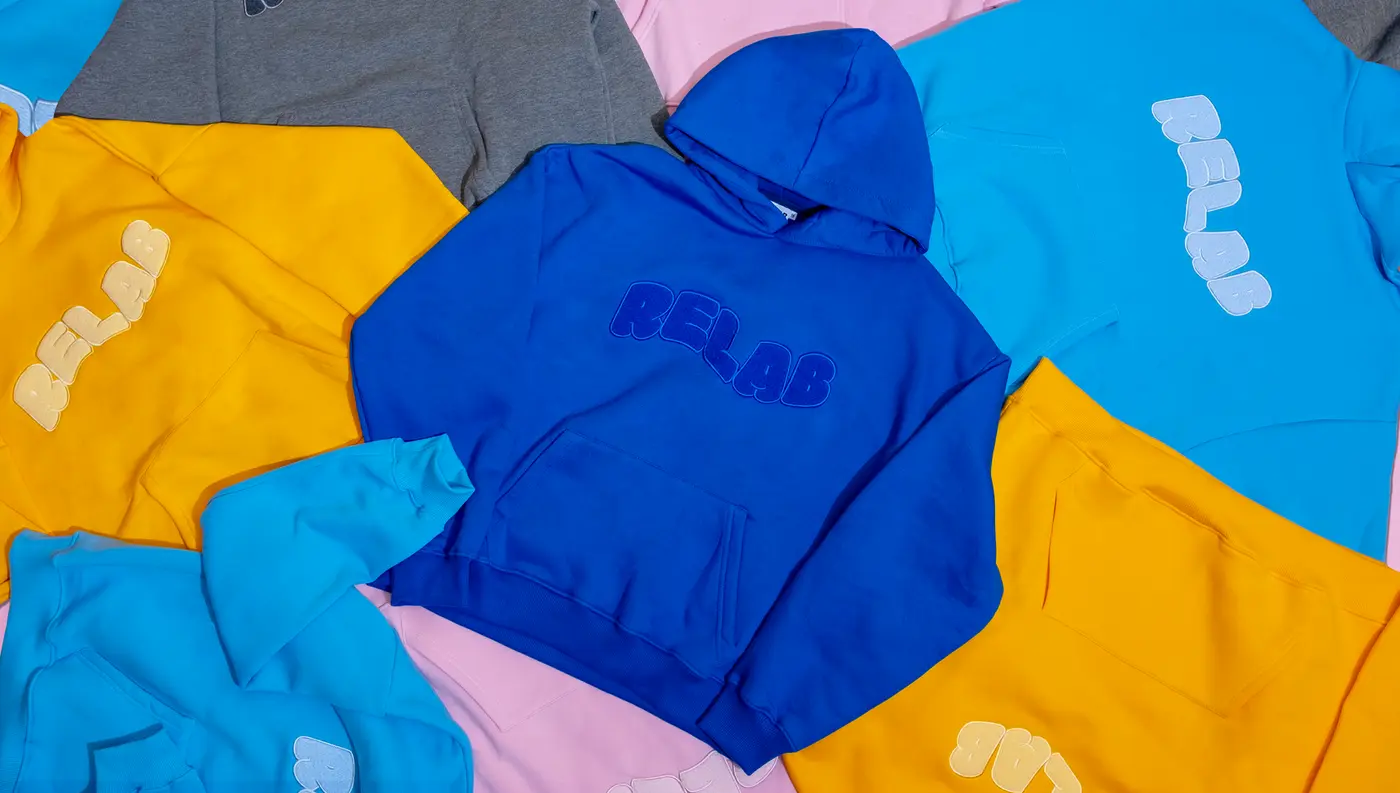
A swag store is a private online shop stocked only with your brand's approved merch — shirts, hats, hoodies, and gear — where employees, franchisees, or customers order for themselves. Items are produced on demand and shipped, so there's no inventory to buy up front and no minimum order.
That last part is what makes the whole thing work. Nothing is printed or embroidered until someone actually orders it, which means no guessing quantities, no leftover size-smalls in a closet, and no re-buying everything when your logo gets a refresh. One hat for one new hire is a completely normal order.
We build and run these stores here at Heart & Hook, decoration and all. This guide is the same walkthrough we give a company that calls us — what to stock, how the money works, and how to set one up without creating a part-time job for anyone.

How a swag store actually works
You approve a catalog once: which garments, which colors, where the logo goes, which decoration method. That catalog goes behind a private link (or a public one — more on that below). From then on, people order what they want in their size, production runs from the same saved art files every time, and orders ship either to each person or batched to a location.
The three ways companies run them
Open store: people pay for their own gear. This is the classic swag store for employees — and for fans and customers too, if you make it public. Funded store: the company gives each person an allowance or a welcome-kit bundle; great for onboarding. Budget-coded: departments or locations order against their own budgets — the mode most multi-location businesses land on.
Most stores end up a mix. New hires get a funded kit, everyone can buy extras out of pocket, and each location orders its event gear on its own budget code. The store doesn't care — it's the same catalog underneath.

Why franchises get the most out of a swag store
Any company with steady hiring benefits from a swag store. But the businesses where it goes from nice-to-have to obvious are franchises and multi-location brands — coffee chains, home-service brands, pest control, fitness studios. Here's why.
Brand control without brand policing
The franchise problem with merch isn't that franchisees don't care — it's that every location sourcing its own gear from its own local shop produces eleven slightly different greens. A swag store fixes this structurally: corporate approves the garments, colors, and logo files once, and every location orders from that catalog. Nobody has to police anything, because there's nothing off-catalog to order. The FTC's franchise guidance is a good reminder of how much of franchising is really brand-standards management — merch should be the easy part.
Franchisees pay their own way
Each location orders against its own card or budget code. Corporate isn't fronting inventory, invoicing locations, or chasing anyone. The franchisee gets gear at the program price, and the brand fee conversation never has to include t-shirts.
New locations launch outfitted
A grand opening needs crew uniforms, giveaway tees, and hats for the owner's family photo — all matching, all on a deadline. With a store, that's one link sent to the new franchisee during onboarding. It's the same playbook we walk through in our employee uniform program guide, just multiplied across territories.
Customers can buy too
Service brands underestimate this one! Pest control and plumbing companies have superfans — real ones — and coffee chains obviously do. A public section of the store turns 'can I buy one of those hats?' from an awkward no into a small revenue line, with zero inventory risk because everything is made to order.
What to stock (and the quality bar)
The biggest swag store mistake isn't product choice — it's stocking twenty mediocre items instead of eight good ones. Promotional merchandise only works when people actually use it, so the bar for every item is simple: would someone wear this on a Saturday?
The core eight
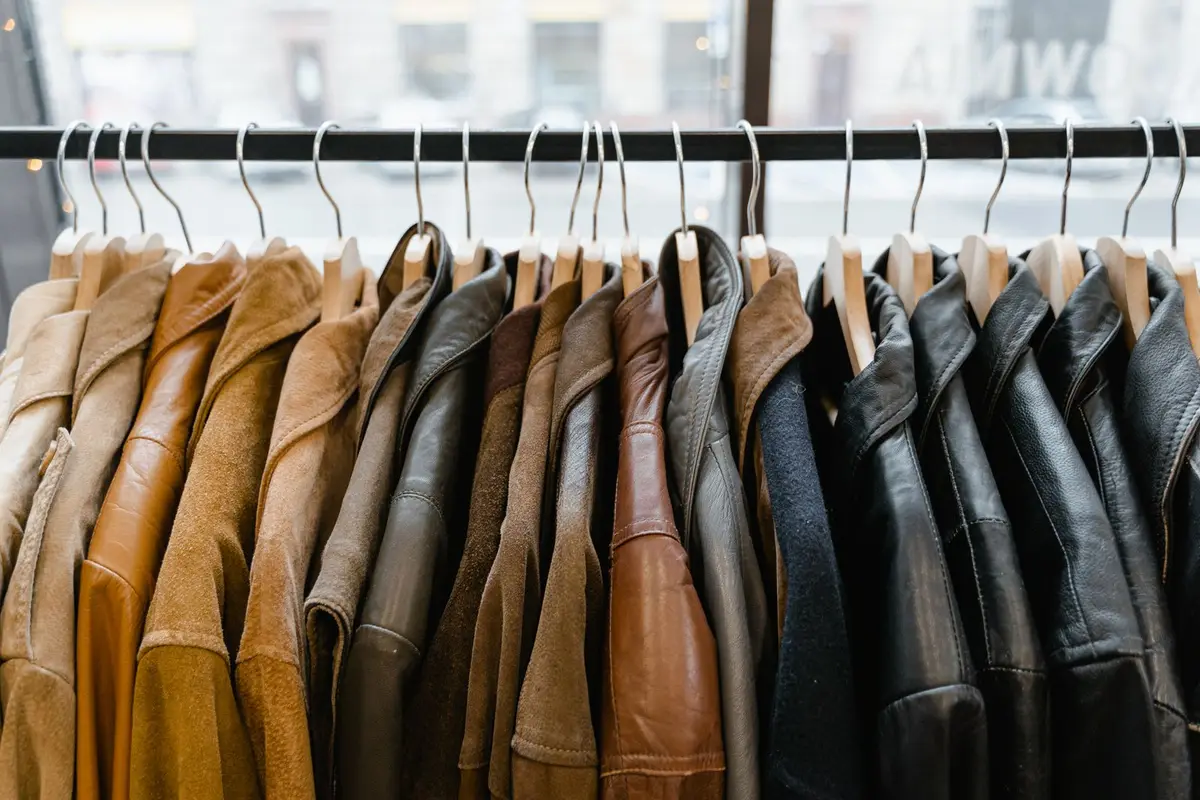
Tees, polos, hoodies, hats are the four everyone orders. Add a quarter-zip or softshell for cooler months, a women's cut of your top seller (not just smaller sizes of the men's), and one or two non-apparel items that match your crowd — a good bottle or a tote. That's a store. You can add seasonal drops later; see our company swag ideas list for what earns its spot.
For franchises: think in tiers
Multi-location brands do well organizing the catalog into three tiers: crew gear (the uniforms techs and staff wear daily), office and manager gear (polos and quarter-zips a notch dressier), and a giveaway tier (the tees and stickers a location can order fifty of for a community event without a special quote). Same store, same brand files — three different jobs covered.
Match the decoration to the item
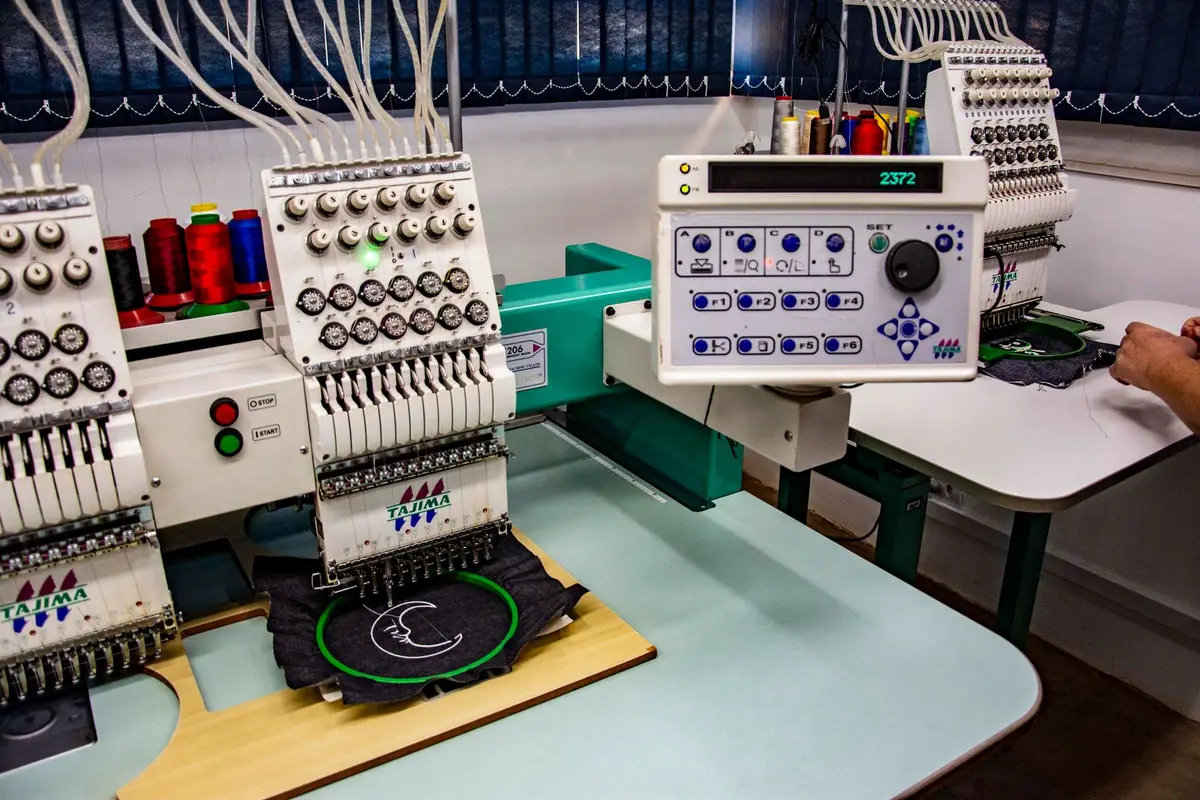
Embroidery for polos, hats, and outerwear — it reads premium and survives hundreds of washes. Screen printing for tees and hoodies where the design is bigger and softer. DTF for full-color art and small mixed runs. A good shop picks the method per item; if every product in a catalog uses the same decoration, someone chose what was convenient to produce, not what's best on the garment.
How to set one up, step by step
1. Lock your art. Get your logo in production-ready vector form, approve an embroidery digitization (the stitch file), and decide placements — left chest, back, hat front. This is the step that makes every future order match, so it's worth doing carefully once.
2. Pick the catalog. Choose your eight-or-so items in approved colors. Order physical samples and put real hands on them before anything goes live — a store full of gear nobody likes is worse than no store.
3. Choose the money model. Open, funded, budget-coded, or a mix. Decide whether any section is public for customers.
4. Launch it like you mean it. Send the link with a reason to click — a launch discount, a free-hat window for the first month, new-hire kits from day one. For a franchise system, put the store link in the onboarding packet so every new location starts there.
5. Keep it alive. Add a seasonal item or two a couple of times a year and retire what doesn't move. A store that never changes stops getting visited; a small fall drop is usually all it takes to bring people back.
Timeline from 'let's do it' to live store is typically two to three weeks, most of which is art approval and samples.
The mistakes that kill swag stores
We've watched enough of these launch to know exactly where they go sideways, so here's the short list to steer around.
Launching with cheap garments. The store's whole promise is that people order because they *want* the gear. A scratchy $4 tee gets ordered once, worn never, and quietly teaches your team the store isn't worth visiting. Spend the extra two dollars on the blank — it's the cheapest marketing decision you'll make.
Skipping the samples. Colors read differently on screen than on fabric, and a logo that looks great on a white mockup can vanish on a heather gray. Put physical samples in real hands before launch. Every single time we've skipped this step at a customer's request, we've ended up reprinting something.
Announcing it once. A store announced in one email is forgotten in a week. Put the link where people already look — the onboarding packet, the intranet, the breakroom QR code — and give it a reason to be visited again each season.
For franchise systems: leaving the store out of the brand standards. If the franchise agreement's brand-standards section doesn't name the store as the approved merch source, a few locations will drift back to the local shop that's 'basically the same green.' One sentence in the standards manual closes that door — your trademark counsel will thank you, since consistent use is part of protecting the mark itself.
What a swag store costs
Here's the math that surprises people: with the right partner, the store itself costs little to nothing to stand up. What you pay for is the merch, per item, as it's ordered — and in an open store, the people ordering are the ones paying. The trade-off to be honest about: per-item pricing runs higher than a 200-piece bulk run, because on-demand production can't spread setup across a big batch. Our screen printing cost guide shows that bulk curve.
So the real comparison isn't store-versus-free — it's store-versus-bulk-order. Bulk wins on unit price when you know exactly what you need. The store wins when sizes are unpredictable, people are spread out, hiring is continuous, or the alternative is somebody's garage full of size-medium hoodies. Most brands end up using both: bulk for big planned events, the store for everything ongoing.
If you want real numbers for your brand, tell us your headcount and locations and we'll spec a catalog with per-item pricing. If a bulk order is honestly the better fit for your situation, we'll tell you that too — we sell both, so we don't have to pretend!
Frequently asked questions
- What's the difference between a swag store and a swag bag?
- A swag bag is a one-time bundle of items handed out at an event or onboarding. A swag store is the ongoing system — an online shop where people order approved branded gear in their own size whenever they need it. Most companies use a store to produce their swag bags, since the same catalog feeds both.
- Do swag stores have minimum orders?
- On-demand stores don't — one hat is a normal order, because items are produced when they're purchased. Some providers run stores on pre-ordered inventory instead, and those do carry minimums, so it's worth asking which model a store actually uses before signing on.
- How long does it take to set up a swag store?
- Typically two to three weeks from kickoff to a live store. Most of that is the one-time work of approving art files, digitizing embroidery, and reviewing physical samples — the storefront itself goes up quickly once the catalog is locked.
- Who handles production and shipping?
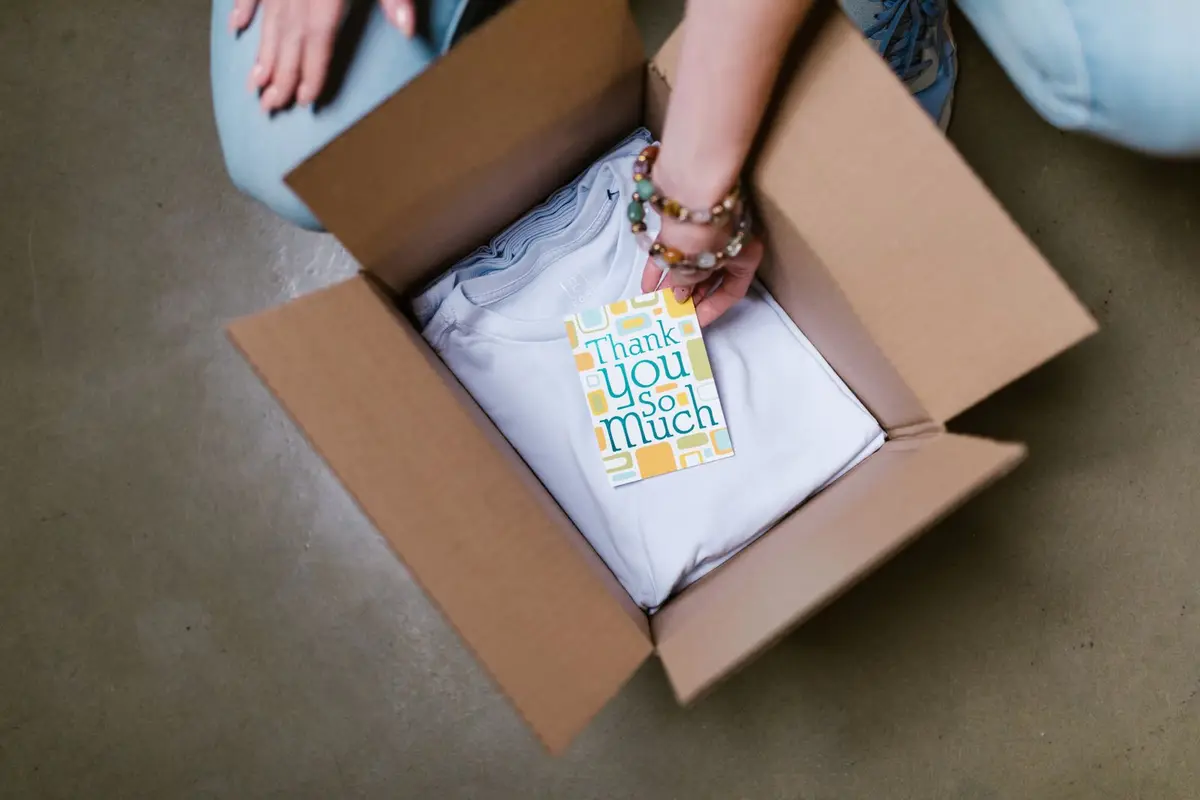
- The shop behind the store. At Heart & Hook, orders come to us, we embroider or print them from your saved art files, and ship to the person or the location. Your team's involvement after launch is approving the occasional new item.
- Can customers buy from our swag store, or just employees?
- Your call — stores can be private (employees and franchisees only), public, or split, with an internal section at program pricing and a public section at retail. Service brands with loyal customers often add a public section later once staff gear is running smoothly.
- How does a swag store work for a franchise?
- Corporate approves the catalog, colors, and logo files once; every franchisee orders from that same store against their own budget. Locations stay visually identical, new territories get outfitted by sending a link during onboarding, and corporate never has to front inventory or invoice anyone for shirts.
- What should we put in a swag store to start?
- About eight items: tees, polos, hoodies, and hats as the core, plus a quarter-zip or jacket, a true women's cut of your best seller, and one or two non-apparel items like a quality bottle. Launch small with gear people genuinely like, then add seasonal drops a couple of times a year.
Got a project in mind?
Send us your idea and quantities — we'll come back with a free mockup and quote.
Get a free quote