Mechanic shirts have to shrug off grease, survive an industrial wash, and still look sharp at the service counter. Here's what auto techs actually wear, the fabrics and colors that hold up, and how to get name patches and shop logos on them so they last.
The mechanic shirt is one of the few pieces of workwear that became a look. Navy button-up, oval name patch, shop logo on the back — people buy that shirt as fashion now. But if you're actually running a shop, you need the working version: something that sheds grease, survives a hot wash twice a week, and still looks presentable when the tech walks out to the counter to explain a repair.
Here's the practical version — what auto techs actually wear, the fabric that makes the difference, why almost every shop lands on dark blue, and how to get name patches and logos on there so they're still readable in two years. We outfit trade and service crews all over Arizona, so this is the shop-owner answer, not the catalog answer.
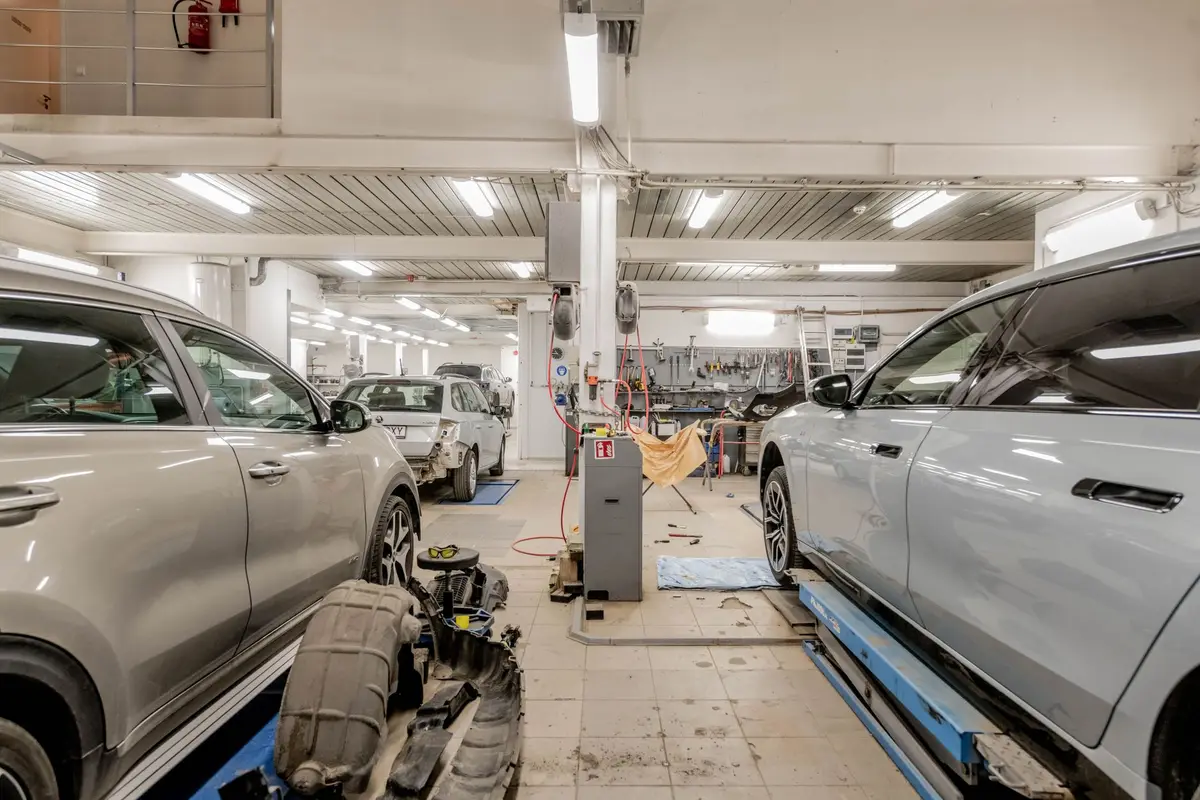
What kind of shirts do mechanics wear?
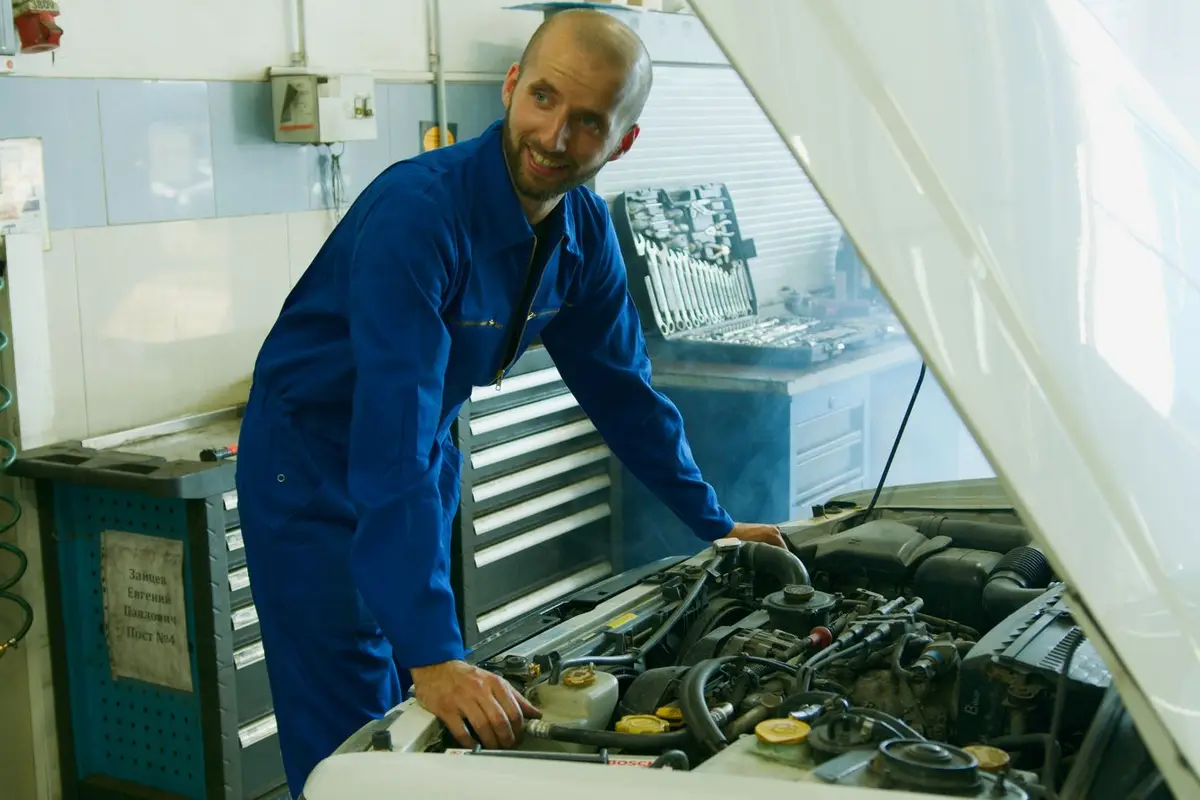
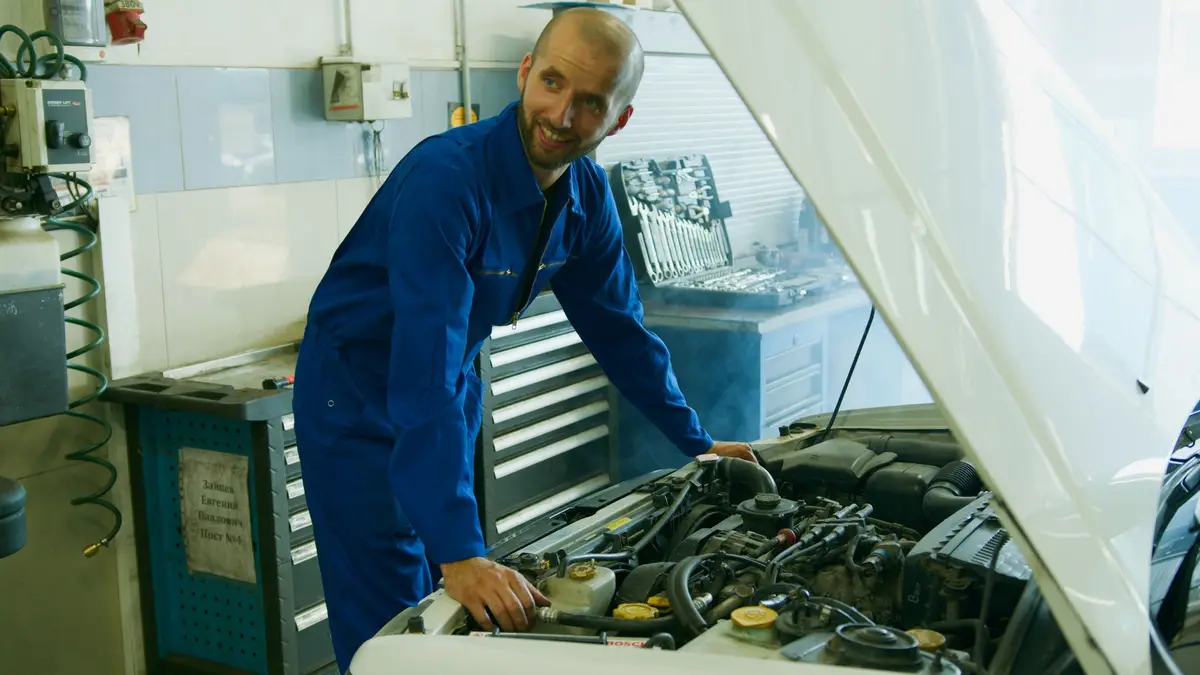
Most mechanics wear a short-sleeve button-up work shirt in navy or charcoal, made from a poly-cotton blend with an oil-release finish, with an embroidered name patch on one chest and the shop logo on the other. Tees and polos are common for lube techs and service advisors, and coveralls for heavy or dirty jobs. Outfitting a whole shop? Our mechanic uniform page covers what we make for auto shops, name tapes, and reorders.
That button-up is the classic for a reason: the collar looks professional at the counter, the chest pockets are genuinely useful, and the heavier twill takes abrasion without going thin. But almost no shop runs one garment. A typical rotation is button-ups for technicians, polos for service writers and the front desk, and a stack of tees for quick-lube bays and hot months.
The main mechanic shirt styles
Button-up work shirts
The industry standard. Look for hidden or covered snaps rather than exposed metal buttons — that one detail keeps a tech from scratching a customer's paint when they lean over a fender, and it's the kind of thing you only think about after it happens once. Two chest pockets, a soil-release finish, and a cut with enough room to reach overhead.
Mechanic tees
Cheaper, cooler, and easier to replace, which matters in an Arizona shop in July. A heavyweight poly-cotton tee with a chest logo and a big back print is the everyday shirt for a lot of quick-service bays. Just accept that tees are consumable — they'll pick up stains no wash gets out, and that's fine at their price.
Polos for the front counter
Service advisors, estimators, and managers talk to customers all day, and a clean embroidered polo does a lot of quiet work there. Give the front-of-house a different color than the bay and everybody — customer included — can tell who to ask.
Coveralls and shop coats
Coveralls protect everything underneath and are still the right call for transmission work, undercarriage jobs, and anything genuinely filthy. Shop coats do the same for a lighter mess and are easier to get in and out of. Most shops keep a few on hand rather than putting the whole crew in them.
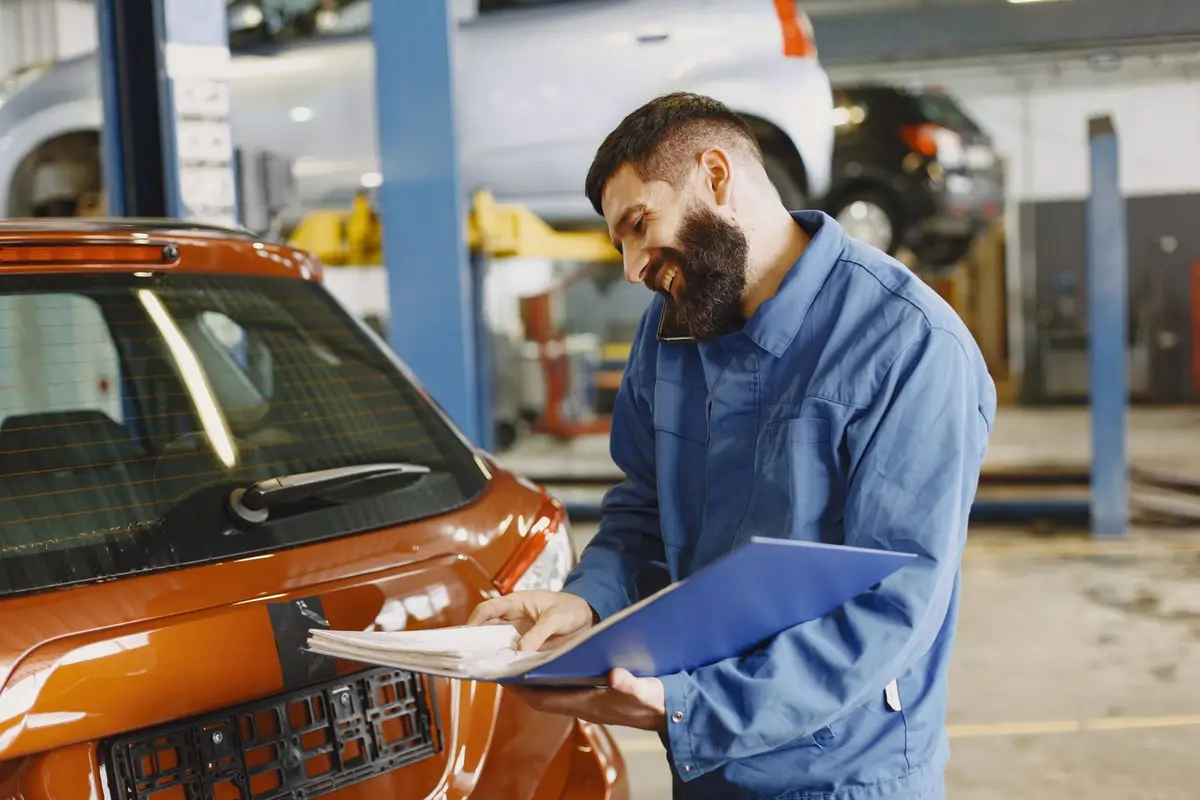
Fabric: what actually survives grease
This is the decision that separates a shirt that lasts a year from one that looks ruined in a month, and most shops don't know the option exists.
Look for an oil-release or soil-release finish
This is the single most useful thing in this article. Oil-release (sometimes called soil-release) is a chemical finish that lets grease and oil let go of the fibers during a normal wash instead of setting permanently. It's why rented shop uniforms come back looking clean and a regular cotton tee doesn't. If you're buying shirts to keep, ask specifically for a soil-release finish — plenty of workwear brands offer it and it costs a little more up front.
Poly-cotton blends over pure cotton
A 65/35 poly-cotton blend is the workwear standard: it resists shrinking, holds its color through repeated hot washes, dries fast, and stands up to abrasion better than 100% cotton. Cotton feels nicer for an hour and then holds every bit of moisture and grease it meets.
Flame resistance where it's needed
If your techs do welding, cutting, or heavy fuel-system work, that's a different garment — a rated FR shirt, not a regular work shirt. OSHA's PPE requirements put the responsibility for hazard-appropriate protective clothing on the employer, so if there's an ignition risk in your bay, buy the rated garment and decorate it with methods approved for FR fabric.
Why mechanic shirts are almost always navy
Because it works. Dark blue and charcoal hide grease, oil, and brake dust in a way that no light color can, so a tech still looks presentable on the fifth car of the day. Navy also reads as dependable and clean — which is exactly the impression you want when someone is deciding whether to trust you with a $2,000 repair.
The practical move is to keep the shirt dark and put your brand color in the logo, the name patch, and the trim. If your shop's colors are red and yellow, a navy shirt with a red-and-yellow chest logo looks sharper than a red shirt does after a week in the bay. And if you want a lighter option, keep it for the front counter where it won't touch an engine.
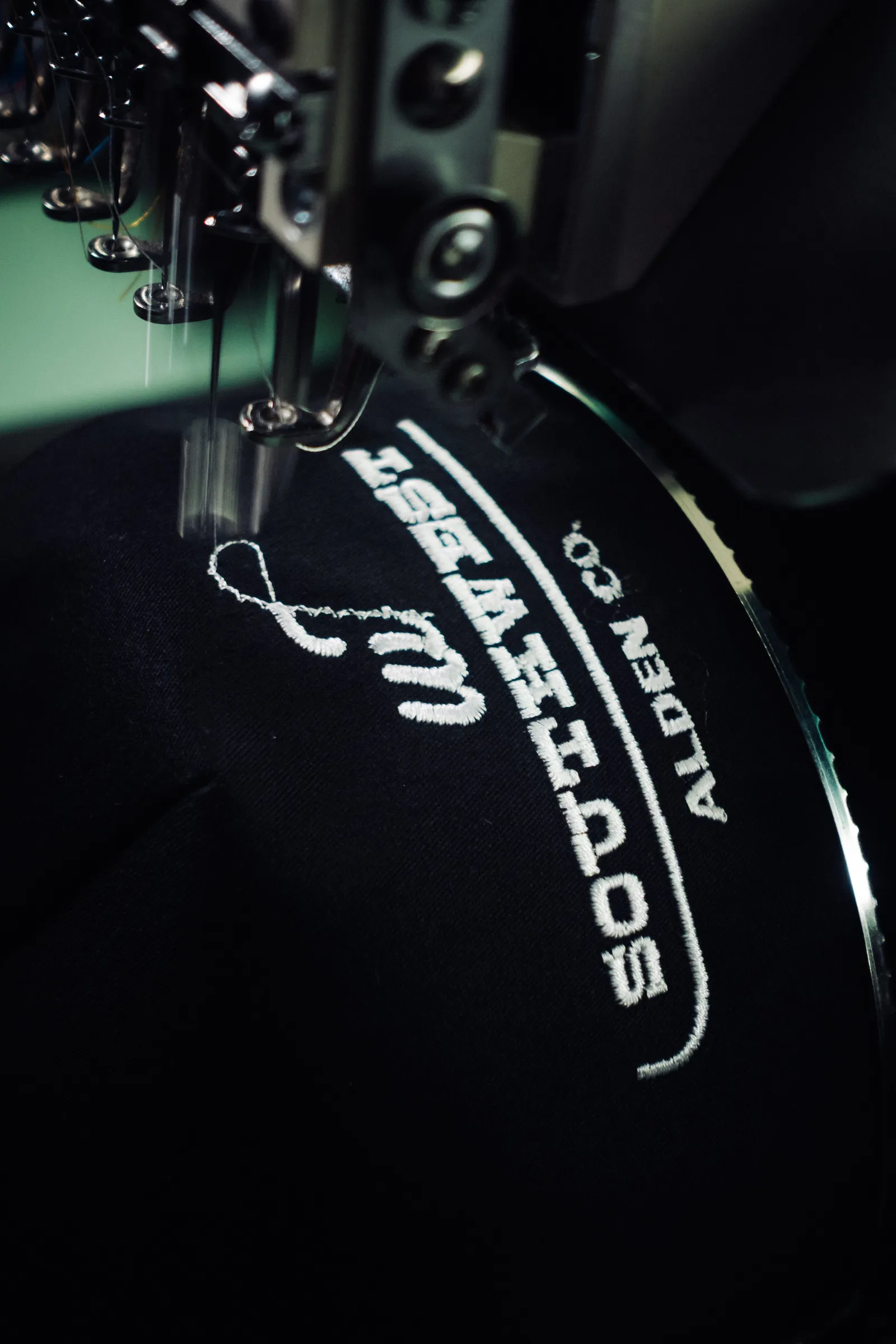
Name patches, logos, and what to put on a mechanic shirt
The classic layout is still the best one. Tech's first name on the wearer's left chest, shop logo on the right chest, and the shop name plus phone number across the back. The name is not decoration — it's the thing that makes a customer feel like they're dealing with a person, and it makes it easy for a service writer to say *Danny's already got it on the lift*.
A few details worth getting right: keep the chest logo around 3.5 inches wide so it reads as a uniform rather than a billboard; use an oval or rectangular name patch if you want the traditional look, or direct embroidery if you want it cleaner and cheaper; and consider adding ASE certification or your affiliations if your techs have them, because that's a genuine trust signal sitting unused on most shop shirts.
On the back, go bold and readable. A car in your lot with your name and number on the tech's back is free advertising for every customer sitting in the waiting room and every person driving by.
Embroidery, screen print, or DTF for shop shirts?
Embroidery is the right call for names and chest logos. Stitched thread survives industrial washing, solvents, and years of wear without cracking or peeling, which is exactly what a shop shirt goes through. Digitizing your logo is a one-time cost, so every reorder skips that step.
Screen printing is the most economical way to put a big back print on a run of tees — thick, durable ink, and the price per shirt drops sharply past 48 pieces. DTF handles full-color logos, small batches, and names on performance fabrics. A lot of shops end up with embroidered button-ups and polos plus screen-printed tees, which is the right answer more often than not. There's a fuller comparison in our embroidery vs. screen printing guide.
One caution: skip cheap iron-on vinyl. Solvents, brake cleaner, and hot washes lift it, and a peeling logo looks worse than no logo at all.
Buying versus renting, and keeping techs stocked
Most shops start with a uniform rental service because it handles the laundry, then get frustrated by the per-week-per-employee cost, the contract length, and the charges for a lost shirt. Buying costs more up front and less over time, and you own the garments — but then you own the reorders too, and that's where it usually falls apart. We wrote the honest comparison in our uniform rental guide.
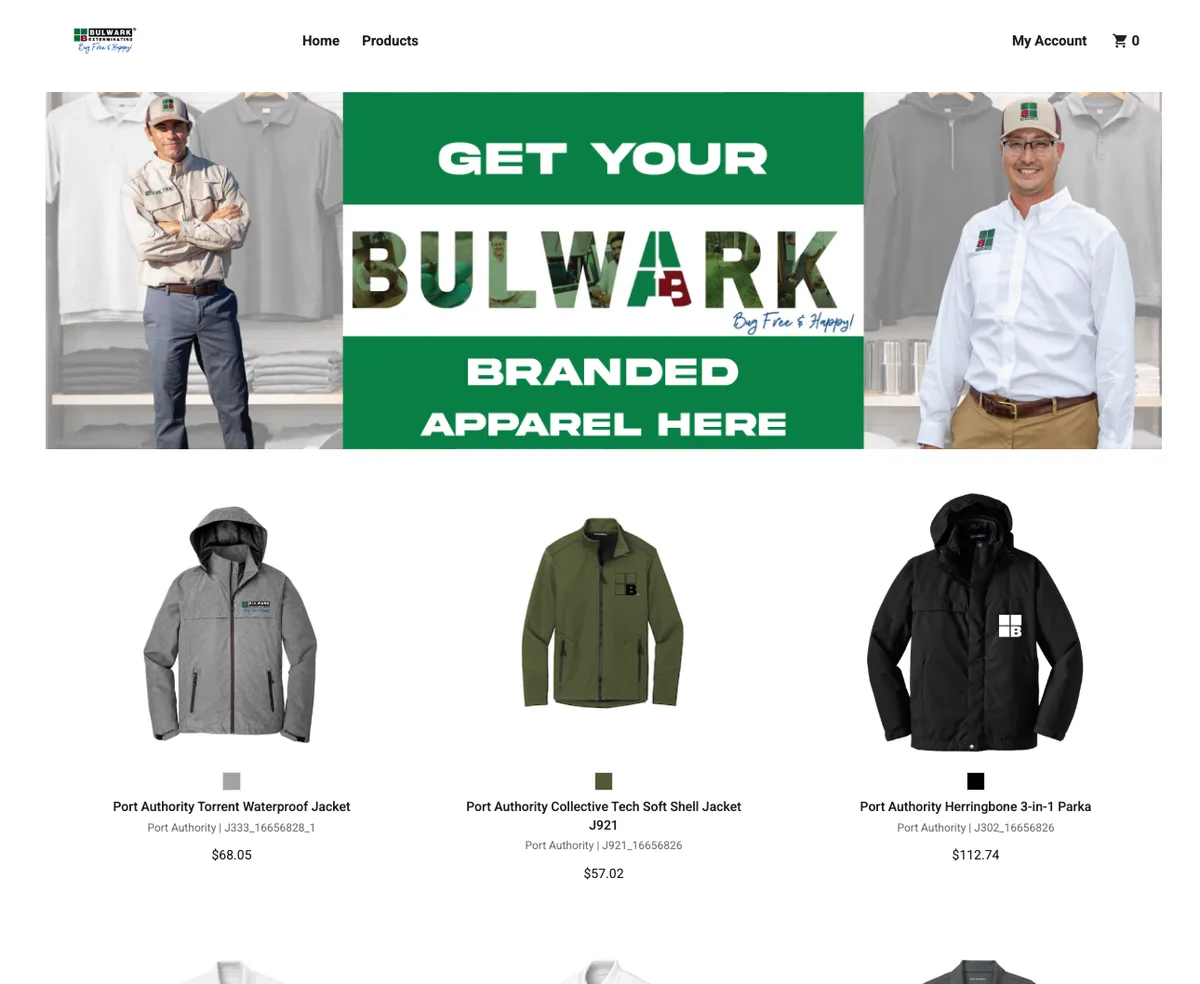
The fix for the reorder problem is an online company store. Your artwork, garments, sizes, and even individual names stay loaded, and a tech orders what they need from a link — no minimum, no re-running setup, no digging for the logo file. Put it on the shop card or give each tech an annual allowance; either way a new hire has their name on a shirt in their first week. If you'd rather run it formally, that's what a uniform program is.
For one-time runs our minimums stay shop-friendly: screen printing at 48 pieces, embroidery and DTF at 12, and no minimum at all through a store. Worth doing well — automotive service technicians are one of the larger skilled trades in the country, and in a tight hiring market a shop that hands you a shirt with your name on it on day one feels like a real place to work.
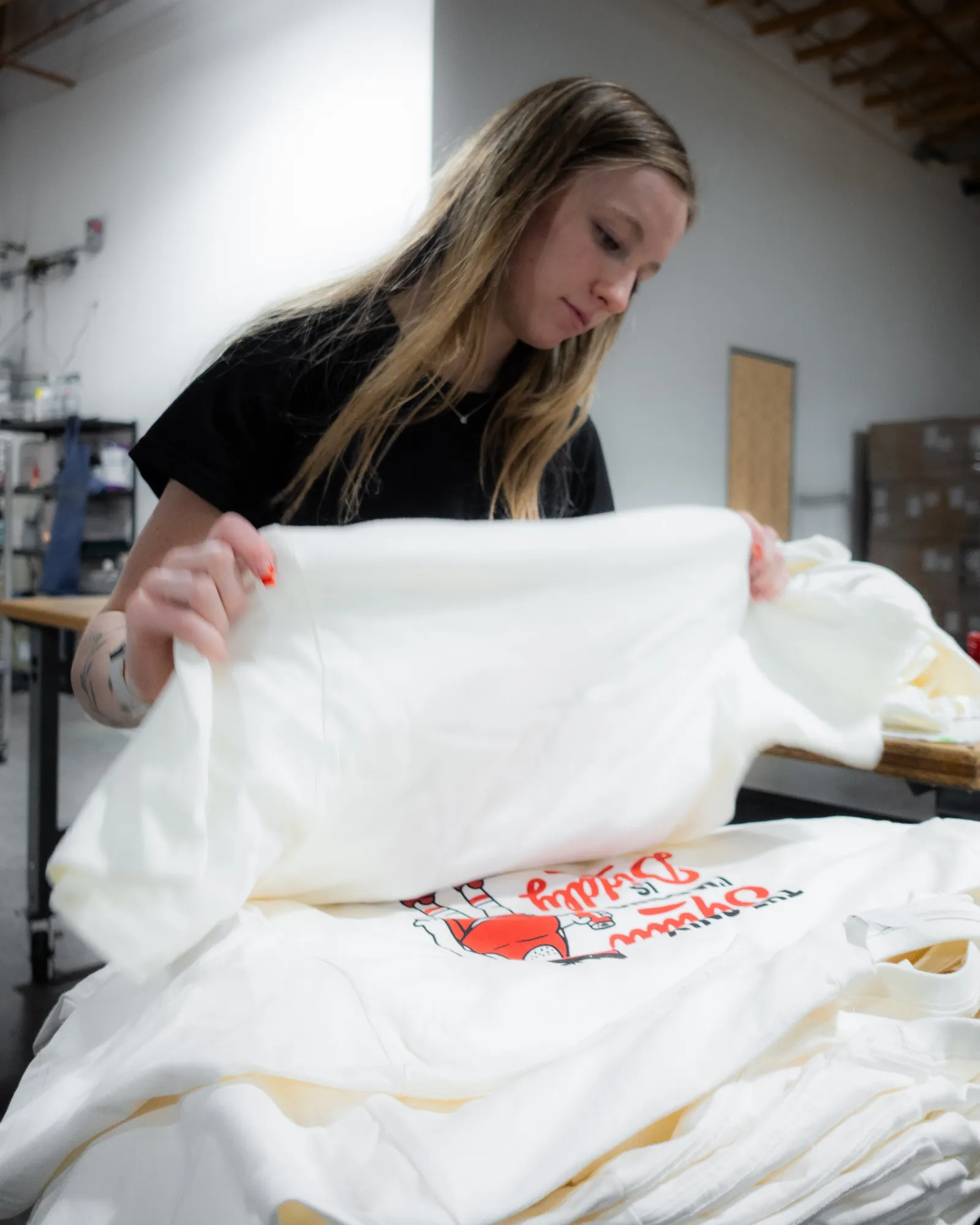
Custom mechanic shirts from Heart & Hook
We outfit auto shops, dealerships, fleet garages, and HVAC and trade service companies across Arizona and ship anywhere — embroidered work shirts, name patches, custom work shirts, polos for the front counter, tees for the bays, and hats. Everything runs through our own Mesa shop, so you hear about a backordered garment from us before it becomes your problem.
Send over your logo, your tech names, and a headcount, and we'll come back with a free mockup and a straight quote — garment, color, and the decoration that'll actually survive your shop. Just let us know what you need!
Frequently asked questions
- What kind of shirts do mechanics wear?
- Most mechanics wear a short-sleeve button-up work shirt in navy or charcoal, made from a poly-cotton blend with an oil-release finish, with an embroidered name patch on one chest and the shop logo on the other. Tees and polos are common for lube techs and service advisors, and coveralls for heavy or dirty jobs.
- Why are mechanic shirts always blue?
- Dark blue hides grease, oil, and brake dust better than any light color, so a technician still looks presentable late in the day. Navy also reads as clean and dependable, which matters when a customer is deciding whether to trust your shop with an expensive repair.
- What is an oil-release finish on a work shirt?
- It's a chemical finish that lets grease and oil release from the fibers during a normal wash instead of setting permanently. It's the main reason rented shop uniforms come back looking clean, and it's worth asking for by name when you buy shirts to keep.
- What is the best material for mechanic shirts?
- A 65/35 poly-cotton blend is the workwear standard — it resists shrinking, holds color through hot washes, dries fast, and handles abrasion better than 100% cotton. Add a soil-release finish, and choose a rated flame-resistant garment if your techs do welding or fuel-system work.
- Should mechanic shirts have snaps or buttons?
- Hidden or covered snaps are better than exposed metal buttons. They're far less likely to scratch a customer's paint when a tech leans over a fender or catch on moving parts under the hood.
- How do you put a name on a mechanic shirt?
- Either an embroidered oval or rectangular name patch sewn onto the chest for the traditional look, or direct embroidery onto the shirt, which is cleaner and usually cheaper. Both survive industrial washing far better than a printed or iron-on name.
- Is embroidery or screen printing better for auto shop shirts?
- Embroidery for names and chest logos, because stitched thread survives solvents and hot washes without cracking or peeling. Screen printing is the economical choice for large back prints on tee runs. Avoid cheap iron-on vinyl entirely — brake cleaner and hot washes lift it.
- Should I rent or buy mechanic uniforms?
- Renting handles the laundry but costs per employee per week on a multi-year contract, with charges for lost garments. Buying costs more up front and less over time, and you own the shirts — the tradeoff is that you handle reorders, which an online company store solves.
- What is the minimum order for custom mechanic shirts?
- For a one-time run, screen printing starts at 48 pieces, embroidery and DTF at 12. Through an online company store there's no minimum at all, so you can order one shirt with one tech's name on it.
Need uniforms for your crew?
Tell us how many people need gear and what they wear on the job. We'll send a free logo mockup and a quote, and keep your logo on file so every reorder matches.
Get a free uniform quote